

Enterprise Risk Management (ERM)
Enterprise Risk Management (ERM) is the framework organizations use to identify, assess, prioritize, and manage risks across every business function in an integrated way, rather than treating risk categories in isolated silos.
Why ERM Exists
Traditional risk management operated in silos: financial risk in treasury, operational risk in operations, cyber risk in IT security. Silos produce blind spots. An event that touches multiple silos can be underestimated because no single function sees the aggregate exposure.
ERM addresses this by pulling risk data from every business function into a single view. That view supports enterprise-level prioritization, resource allocation, and board reporting.
Cyber Risk in ERM
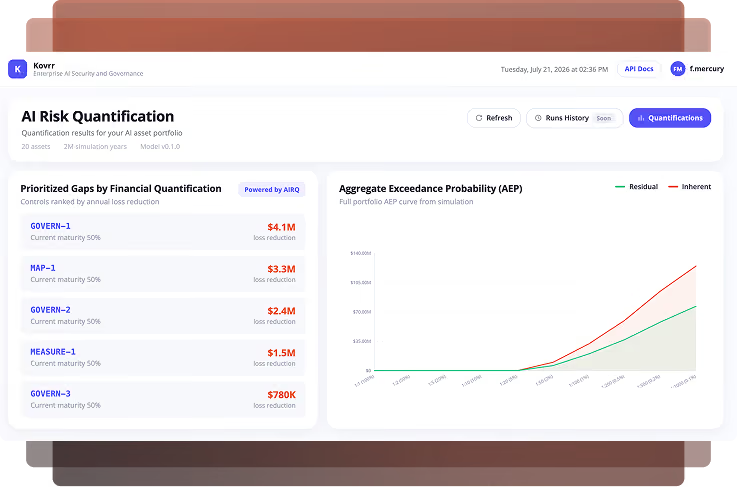
Cyber risk fits into ERM as one category alongside financial, operational, strategic, and compliance risk. For cyber to sit meaningfully in an ERM framework, it has to be expressed in the same terms as other risks. That is largely a quantification challenge.
Cyber risk expressed qualitatively (red/yellow/green ratings) cannot be integrated with financial risk expressed in dollars. Cyber risk expressed through CRQ can. That is a key reason enterprise-mature organizations have moved decisively toward quantified cyber reporting.
ERM Frameworks
Common ERM frameworks include COSO ERM (widely used in financial reporting contexts) and ISO 31000 (broader international standard). Both provide structure for ERM programs without dictating specific risk models. Cyber-specific standards like NIST CSF 2.0 nest inside ERM rather than replacing it.
Related Terms


Turn Cyber Risk Into Financial Exposure the Board Can Act On
Security leaders are being asked to defend budgets, prioritize controls, and report cyber risk in the same terms as every other enterprise risk. Kovrr's CRQ Platform models loss scenarios, benchmarks control performance, and gives the C-suite a defensible view of where cyber sits on the balance sheet.