
Blog Post
8 Questions on Healthcare Cyber Risk Quantification and Compliance
August 19, 2026
Healthcare carries the highest average breach cost of any industry and has for well over a decade, and it operates under a rule that has required risk analysis since 2003. Those two facts sit uncomfortably together, and federal regulators have started saying why.
Enforcement has moved from asking whether an organization performed a risk analysis to asking what it did about the findings. Eight questions cover the consequences for a healthcare risk program, what the proposed rule changes and does not, and where financial modeling earns its place rather than adding another document.
1. Does HIPAA Require Quantifying Cyber Risk?
Not in dollars, and the language is closer than most people notice. A compliant risk analysis has to identify where electronic protected health information is created, received, maintained and transmitted, evaluate threats and vulnerabilities, and determine the likelihood and potential impact of each.
Likelihood and impact is the vocabulary of quantification. The rule does not prescribe a unit, so organizations have historically satisfied it with severity bands, and severity bands are what produce a register nobody can sequence. Expressing likelihood as a frequency and impact as a figure satisfies the same requirement while producing something that supports the next obligation, which is what quantifying exposure in practice delivers.
2. What Changed in How Regulators Enforce It?
The Office for Civil Rights has formally extended its enforcement initiative from risk analysis to risk management. The distinction is that a risk analysis is diagnostic and risk management is what happens next, and the agency has been explicit that finding the second inadequate is now common.
Officials have described the recurring pattern as organizations that document their risks and then do nothing, with the same vulnerabilities appearing in security reviews year after year, unmitigated, until exploited. The finding describes a prioritization failure rather than an identification failure, and an unranked register is how it happens. Keeping the register as a working tool rather than a record is the difference.
Enforcement Does Not Require a Breach
Compliance reviews, complaints and audits can all trigger action without any incident having occurred. Incomplete or missing risk analysis remains the most frequently cited deficiency in investigations, and 2025 produced twenty-one settlements and civil monetary penalties, the second highest annual total on record.
3. Is the Updated Security Rule in Force?
No, and a considerable amount of published material implies otherwise. The notice of proposed rulemaking appeared in the Federal Register in January 2025, the comment period closed that March, and more than two thousand eight hundred comments were submitted. No final rule has been issued.
Target dates have moved. An earlier agenda pointed at spring 2026, and the regulatory agenda has since indicated a considerably later date, with a coalition of more than one hundred hospital and provider groups asking for the proposal to be withdrawn on cost grounds. First-year compliance was estimated at around nine billion dollars across the sector. Treating the proposal as settled law is the error to avoid, and treating it as unlikely is the other one.
What the Proposal Would Change
The most consequential element removes the distinction between required and addressable specifications, making every implementation specification mandatory. Encryption of health information at rest and in transit, multi-factor authentication for systems accessing it, annual penetration testing, network segmentation written into the technical safeguards, and a seventy-two hour incident reporting obligation all feature. A compliance window of roughly two hundred and forty days is proposed.
The practical consequence for planning is that the documentation pathway for deferring a control would disappear. An organization relying on a risk analysis to justify skipping encryption would need a different answer, and building the modeling to support prioritization now is cheaper than building it under a deadline.
4. What Should a Healthcare Loss Model Include?
Remediation and notification are the components organizations model first and they are rarely the largest. A single significant breach opens several parallel tracks that accrue independently.
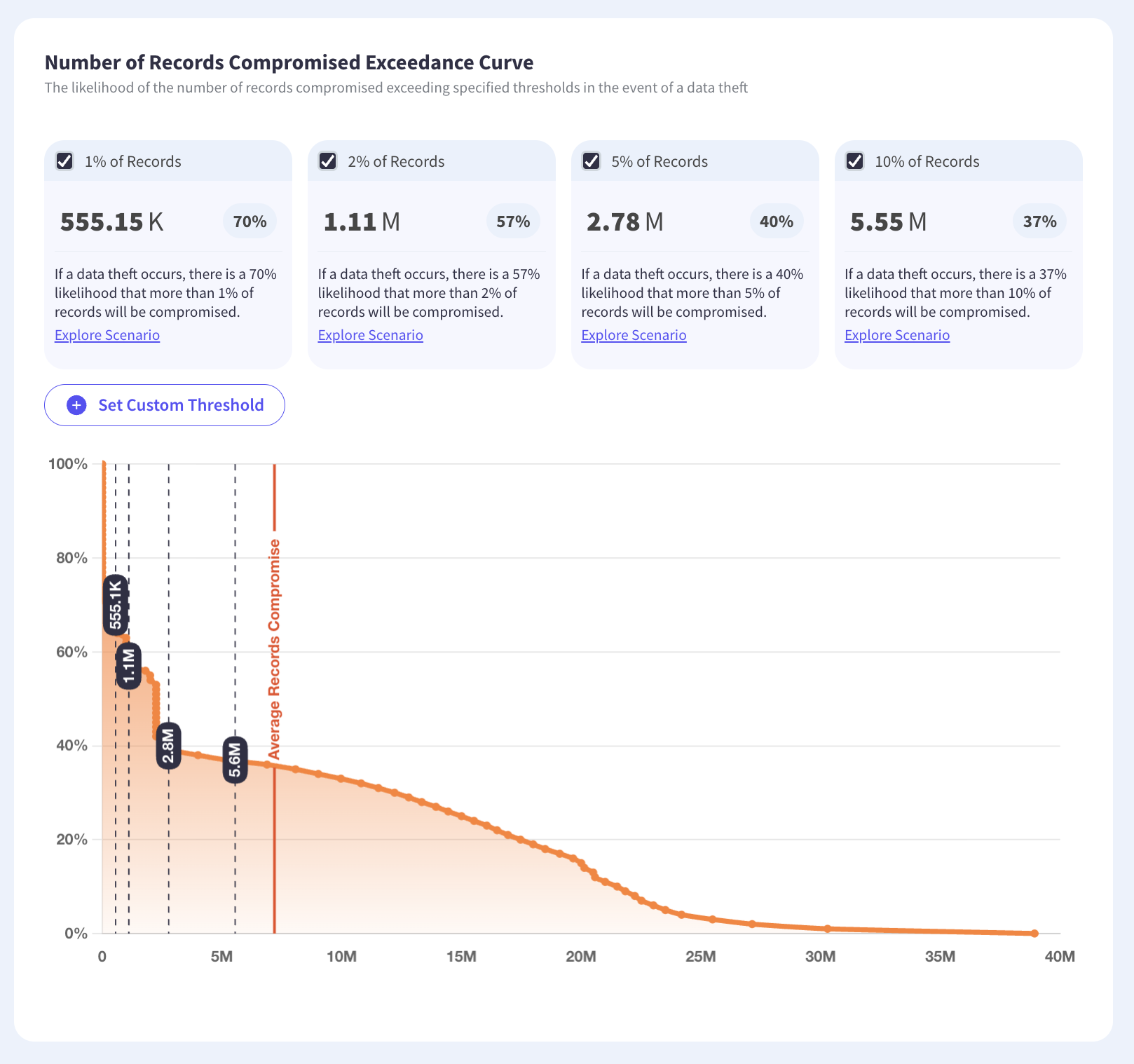
Regulatory enforcement runs alongside state attorney general action, since some state regimes treat a federal violation as a state one. Class action litigation follows almost automatically at scale, with the largest recent healthcare incident consolidating dozens of actions. Publicly traded entities carry disclosure obligations, and directors carry oversight exposure of their own. Modeling only the first track understates the figure substantially. Materiality analysis covers similar ground for disclosure purposes, and determining cyber materiality uses the same underlying figures.
Penalty Tiers Are the Smallest Component
Civil monetary penalties are tiered and inflation-adjusted annually, running from a few hundred dollars per violation at the lowest tier to over two million at the willful neglect tier. Those numbers are real and they are usually a minor share of total exposure once litigation, remediation, notification and interruption are counted. Reporting the penalty ceiling as the risk figure understates it in the direction that matters.
5. Why Is Healthcare Breach Cost the Highest?
Three factors compound rather than one dominating. Regulated data attracts notification and penalty exposure that other sectors do not carry. Clinical operations cannot degrade gracefully, so interruption converts directly into diverted patients and postponed procedures. Litigation exposure is high because the affected population is identifiable and sympathetic. Scenario modeling handles this better than an average, and scenario-based quantification separates the small incident from the severe one.
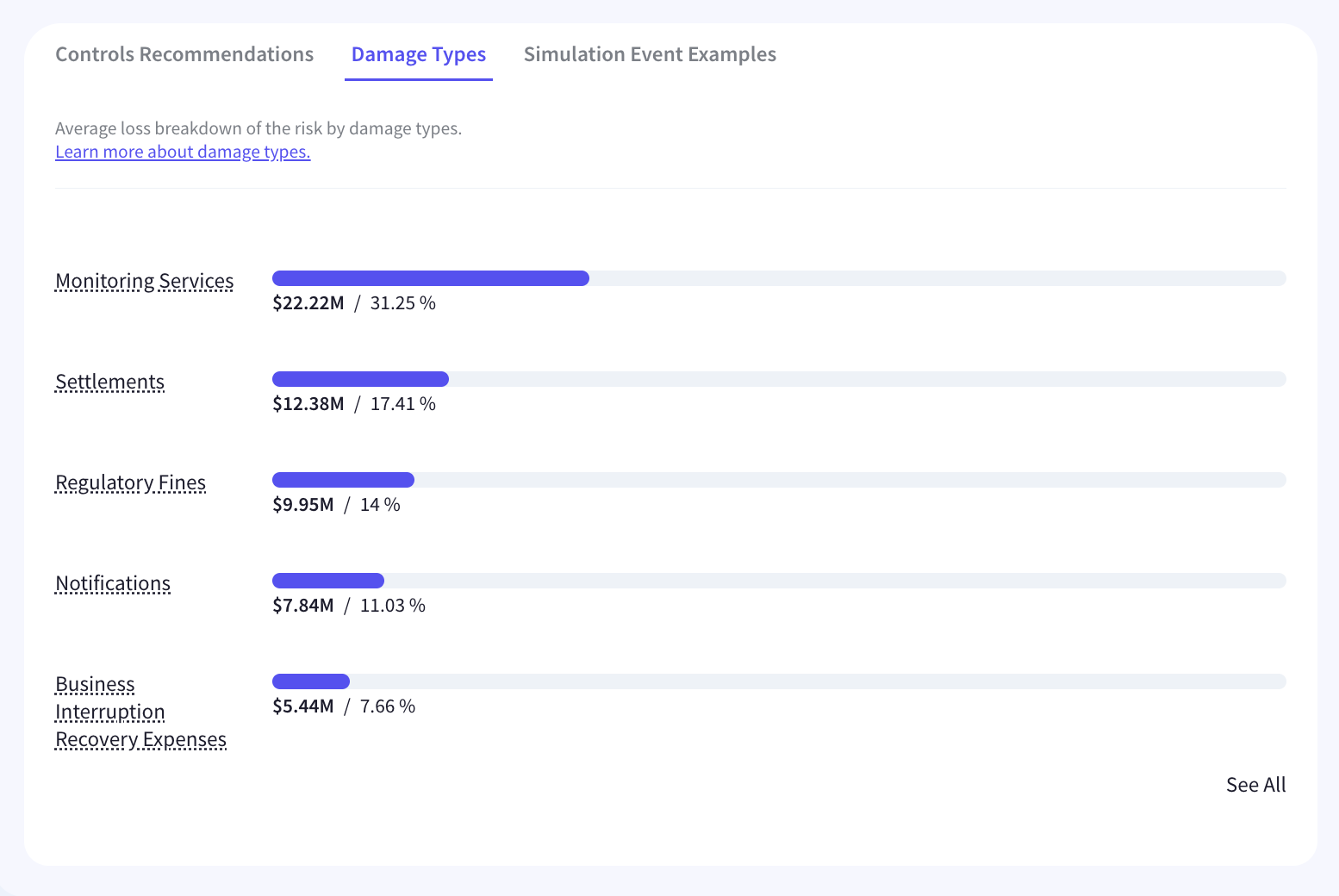
The composition also changes with severity, so a small incident is mostly recovery expense while a large one is mostly credit monitoring and settlements. Insurance structuring depends on that, since those components sit under different coverage lines with their own sub-limits, and coverage failures concentrate exactly there.
6. How Does HITRUST Relate to the Requirement?
A certification demonstrates that a control framework was implemented and independently assessed. It is genuinely useful for customer assurance and it does not substitute for the risk analysis, because the rule requires an organization-specific assessment of its own information flows, threats and impacts rather than conformance to a control set.
The two connect productively. Certification evidence populates much of what a risk analysis needs about control state, leaving the organization-specific likelihood and impact work as the remainder. Mapping one control set outward to several obligations rather than maintaining separate programs is the approach that scales, as framework crosswalking sets out.
7. How Does Quantification Support the Risk Management Half?
The two threads meet here. If regulators now examine what an organization did about its findings, the defensible answer is a documented sequence with a stated basis, and severity bands cannot produce one because forty high-rated items have no internal order.
Ranking remediation by the exposure each item removes produces a sequence, a rationale for what was deferred, and a figure for what was accepted. An examiner asking why a known vulnerability sat unaddressed for two years is answered by showing it ranked below eleven others that were addressed in that period, which is a considerably stronger position than showing it was rated medium. Risk-focused prioritization is what converts an analysis into a management record.
Deferral Needs a Recorded Reason
The finding regulators describe is documented risk followed by inaction, and the difference between inaction and deliberate sequencing is whether the reasoning was written down at the time. An accepted item with a named owner, a stated figure and a review date is a decision. The same item with a severity rating and no note is the pattern being enforced against.
8. What About Business Associates?
Business associates carry their own risk analysis obligation and their own penalty exposure, and enforcement actions have reached them directly. For a covered entity the more useful question is concentration, because clearinghouses, transcription services and revenue cycle vendors sit behind large numbers of providers simultaneously.
The sector learned this recently and expensively. A failure at a single processing intermediary disrupted claims and payments across thousands of organizations that had each assessed that vendor individually and adequately. Assessing the shared dependency rather than the contract is the change, and aggregation through a shared supplier is the documented pattern.
Analysis Was Never the Hard Part
Healthcare has been performing risk analyses for two decades and carries the highest breach costs of any sector, which tells you the analysis was not the binding constraint. Regulators reached the same conclusion and moved their attention to what organizations do with the output. A register expressed in currency produces a sequence, a defensible deferral and a price for what was accepted, which is the evidence the current enforcement posture asks for. Kovrr's healthcare cyber risk modeling produces those figures from the same quantification methodology used across other regulated sectors.
To see modeled exposure by records affected, damage type and loss scenario for your own environment, book a demo with our cyber risk experts.

Healthcare Cyber Risk FAQs
Speak to an ExpertDoes HIPAA require quantifying cyber risk in financial terms?

Has the updated HIPAA Security Rule been finalized?
What changed about how HIPAA security is enforced?
What should a healthcare cyber loss model include?
Does HITRUST certification satisfy the risk analysis requirement?
How does quantification help with the risk management expectation?
Do business associates have their own obligations?
Why is healthcare breach cost the highest of any industry?