Blog Post
AI Governance Evidence That Costs Nothing to Produce
October 6, 2026
The usual case for governance return is that it speeds up enterprise sales, because buyers ask security questions and a prepared answer closes faster. It is true and it is the weaker argument.
The stronger one is loss avoidance, and almost nobody makes it, because it needs a loss figure that most governance programs do not have. What makes it affordable is a distinction between two kinds of evidence.
Which Evidence Is a Byproduct?
Whatever a system produces while operating, whether or not anybody intended it as evidence.
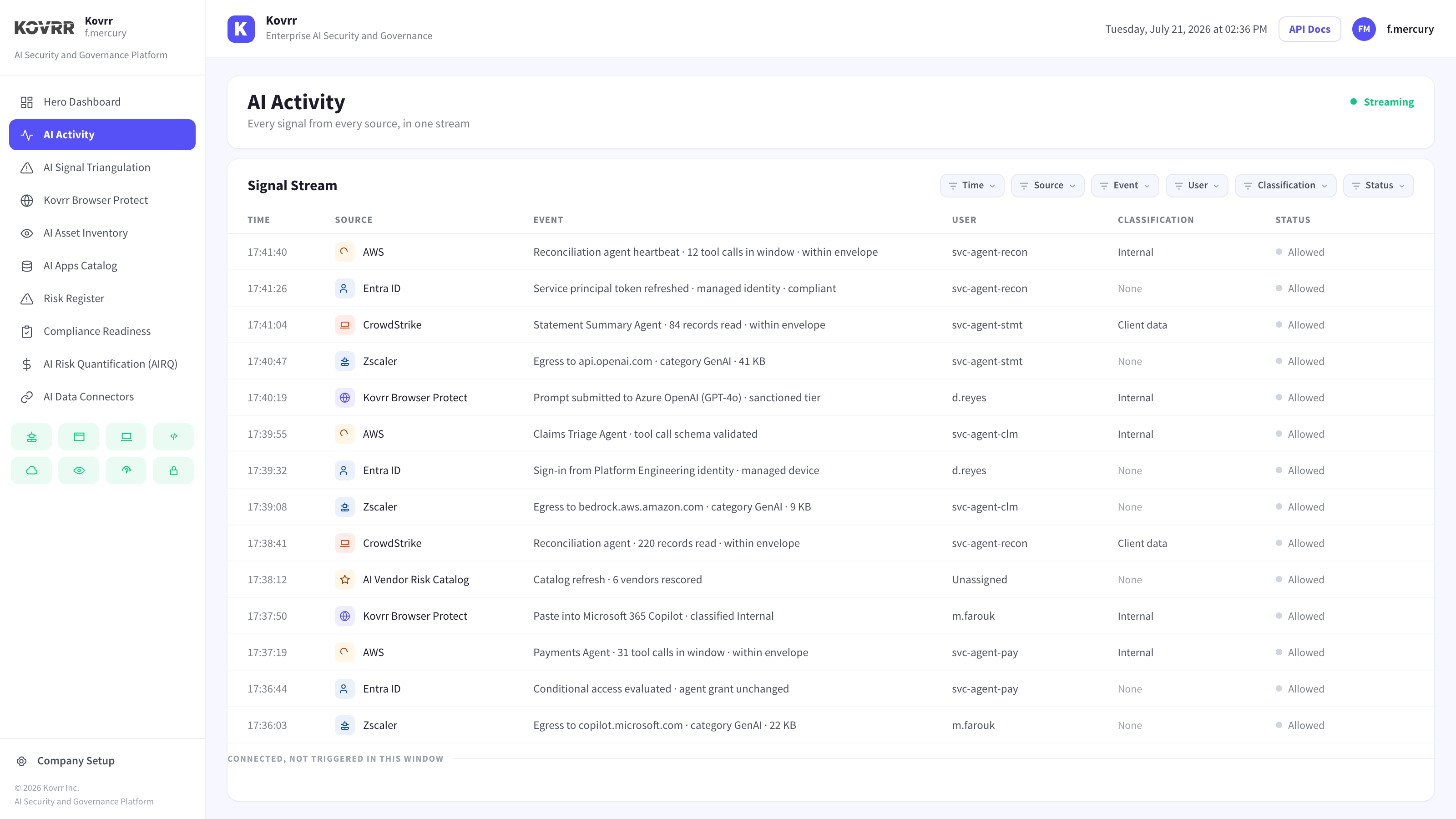
Records of which identity reached which application and when. Enforcement outcomes, meaning what was blocked, warned or redacted and the justification somebody typed. Inventory state and its change history, so appearances and disappearances both register. Entitlement snapshots. Counts of refusals and deviations from a baseline.
Which Costs Nothing Per System
The instrumentation is a fixed cost paid once. After that, a hundred systems produce a hundred systems' worth of records at no additional effort, and the volume grows as AI use grows rather than against it.
Which Evidence Has to Be Manufactured?
Anything describing intent or reasoning, which no system can emit because it was never in a system.
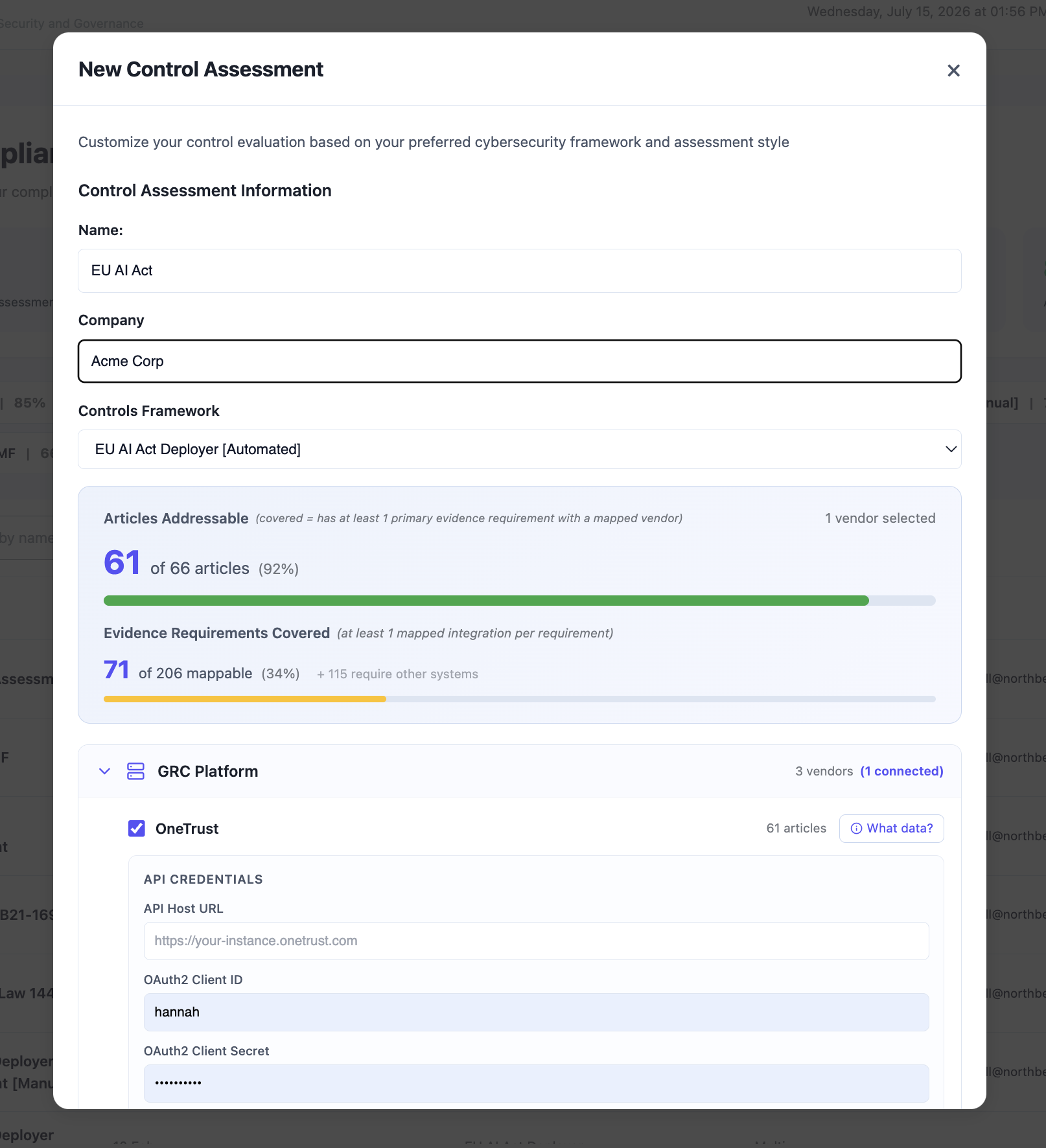
The stated purpose of a deployment and why that purpose was chosen. Risk and impact assessments. The reasoning behind a control decision. How human oversight was designed and on what basis. Which training measures suited which population and why. Each requires a person to sit down and write it.
Which Costs Per System and Recurs
Manufactured evidence scales with the number of systems and has to be refreshed when anything changes. So a program weighted toward it has a cost curve that rises as AI use spreads, which is the structural reason governance falls behind rather than a resourcing failure.
Which Kind Is Stronger?
The byproduct kind, which is the part that makes this more than a cost argument.
A dated activity record was created at the time by a system with no stake in the outcome. A risk assessment written last month about a decision made last year is a reconstruction, and an auditor reading both knows which is which. Contemporaneity is an evidential property rather than a convenience.
Which Inverts the Usual Effort Allocation
Governance programs spend most of their effort producing the expensive kind, and the expensive kind is the weaker kind. Reversing that is not a cost-cutting exercise, it improves the evidence while reducing the work, and records that survive an audit turns on exactly this property.
Is There a Middle Category?
One, and it is where the effort should go.
Some evidence is manufactured once and then verified as a byproduct forever. A stated purpose captured at approval is manufactured. Whether observed behavior still matches that purpose is a comparison the records answer at no cost. So a single expensive capture converts an ongoing manual review into an automatic one.
Which Fields Earn Their Cost?
The ones that make a later comparison possible. Stated purpose, the identity the system runs under, and the data categories it was approved to touch. Three fields at approval, each cheap to capture and impossible to reconstruct, and each converting a recurring review into a query, which building an inventory that stays true depends on entirely.
Why Does Nobody Argue Loss Avoidance?
Because the argument requires a figure, and a governance program without quantification cannot produce one.
Sales acceleration is arguable from anecdote. A deal closed faster, a questionnaire answered in a day. Loss avoidance requires stating what would have been lost and by how much less it now is, which is an exposure model rather than a story. The argument is unavailable rather than unpersuasive.
What Makes It Available?
A figure per scenario and a stated reduction per control, which is the same arithmetic return on security investment has always used, applied to AI exposure instead of cyber exposure. Building the budget case is the mechanics, and the input is the part governance programs lack.
What Should the Ratio Be?
Measured rather than targeted, because the useful thing is knowing which way it is moving.
Take the evidence requirements of whichever framework applies and mark each as byproduct, manufactured, or manufactured-once-then-verified. The proportion in the first two categories is the program's cost curve, and a program at eighty percent manufactured will not survive doubling the number of AI systems.
What Moves the Ratio?
Instrumentation moves requirements from the second column to the first, and approval-time capture moves them to the third. Neither is a governance activity in the usual sense, which is why the ratio rarely gets attention from the function that suffers from it.
What Does the Byproduct Column Not Cover?
The obligations that ask about reasoning, which is most of what a regulator wants and none of what a system can emit.
An impact assessment asks why a deployment is justified. A conformity file asks how requirements were satisfied. A complaint mechanism asks what a person can do about a decision. None of those is answerable from activity records, so a program that instruments everything and writes nothing has optimized the cheap half and left the expensive half empty.
The Ratio Has a Floor
A substantial proportion of any framework's requirements will stay manufactured permanently, and treating that as a failure produces the wrong response. The goal is moving what can move rather than driving the manufactured column to zero.
Where Does the Byproduct Column Help Anyway?
It makes the manufactured documents shorter and more defensible. An impact assessment that can cite what the system reached in practice, rather than what it was expected to reach, is both quicker to write and harder to challenge, and producing evidence on somebody else's timeline becomes possible when the factual half is already there.
What Should Be Established?
Three things, and the first is a half-day exercise.
Which of your framework's evidence requirements can be answered from records that already exist, which need writing, and which could move between those columns with instrumentation. Whether purpose, runtime identity and approved data categories are captured at approval, since those three convert recurring reviews into queries. Then what a scenario's exposure figure is, because the loss-avoidance argument cannot be made without one. An AI Interaction Data Fabric is what produces the byproduct column, and AI compliance readiness is where the requirement-by-requirement mapping lives.
The Cheap Evidence Is the Strong Evidence
Governance evidence divides into what systems produce while operating and what a person has to sit down and write. The first has a fixed instrumentation cost and no marginal cost per system, so it grows as AI use spreads, while the second scales with the number of systems and recurs whenever anything changes. The byproduct kind is also the stronger kind, because a dated record made at the time by a system with no stake in the outcome is not a reconstruction, and an auditor reading both knows the difference. A middle category is manufactured once and verified free thereafter, which is where effort earns most. Loss avoidance also goes unargued because it needs an exposure figure rather than because it is unpersuasive. Kovrr's AI compliance readiness maps requirements to what existing records already answer.
To see how many of your evidence requirements existing records already satisfy, book a demo mapped to your own estate.

Governance Evidence FAQs
Speak to an ExpertWhat is byproduct evidence in AI governance?

Which AI governance evidence cannot be automated?
Why is contemporaneous evidence stronger than reconstructed evidence?
Is AI governance return best argued as loss avoidance or sales acceleration?
How do you make AI governance scale as AI use spreads?
Which fields are worth capturing at deployment approval?