
Blog Post
Cyber Risk Appetite Statements That Can Be Breached
August 9, 2026
Most cyber risk appetite statements cannot be breached. A board approves language about maintaining a low tolerance for disruption, the statement enters the policy library, and no observable event in the following three years violates it. A statement no event can cross is a value rather than a control.
Making one testable requires four terms that get used interchangeably and mean different things, thresholds expressed in units something can exceed, and a defined response for when it does. The strategic case for quantifying appetite is covered in the framework for decision-making. What follows is the operational half.
Four Terms, Four Different Jobs
Conflating these produces statements that sound rigorous and cannot be enforced. Each answers a separate question and they sit in a fixed order.
- Capacity: The maximum loss the balance sheet absorbs without a financing conversation. A fact, not a choice.
- Appetite: The loss the organization chooses to accept in pursuit of its objectives. A decision, made by the board.
- Tolerance: The variance permitted around appetite before someone has to act. An operating band.
Limits complete the set as the operational triggers that keep activity inside tolerance, and they belong to management rather than the board. Capacity constrains appetite, appetite sets tolerance, and tolerance produces limits. An appetite exceeding capacity is not a bold position, it is an arithmetic error somebody should have caught.
Capacity Comes First and Is Rarely Calculated
Capacity depends on liquidity, covenant headroom, insurance recoveries and the tolerance of lenders rather than on any security consideration, which is why it belongs to finance. Organizations skipping this step set appetite by intuition and discover the constraint during an actual event. A one-in-one-hundred-year modeled loss exceeding available liquidity is a capital planning problem wearing a cybersecurity costume. Regulatory thresholds interact here too, since materiality analysis may impose a disclosure obligation at a figure below stated appetite.
Thresholds Something Can Exceed
A testable threshold names a metric, a number and a period. Anything less produces a statement nobody can evaluate, which is why so many appetite documents survive years without ever being referenced.
Three Metrics Carry Most Statements
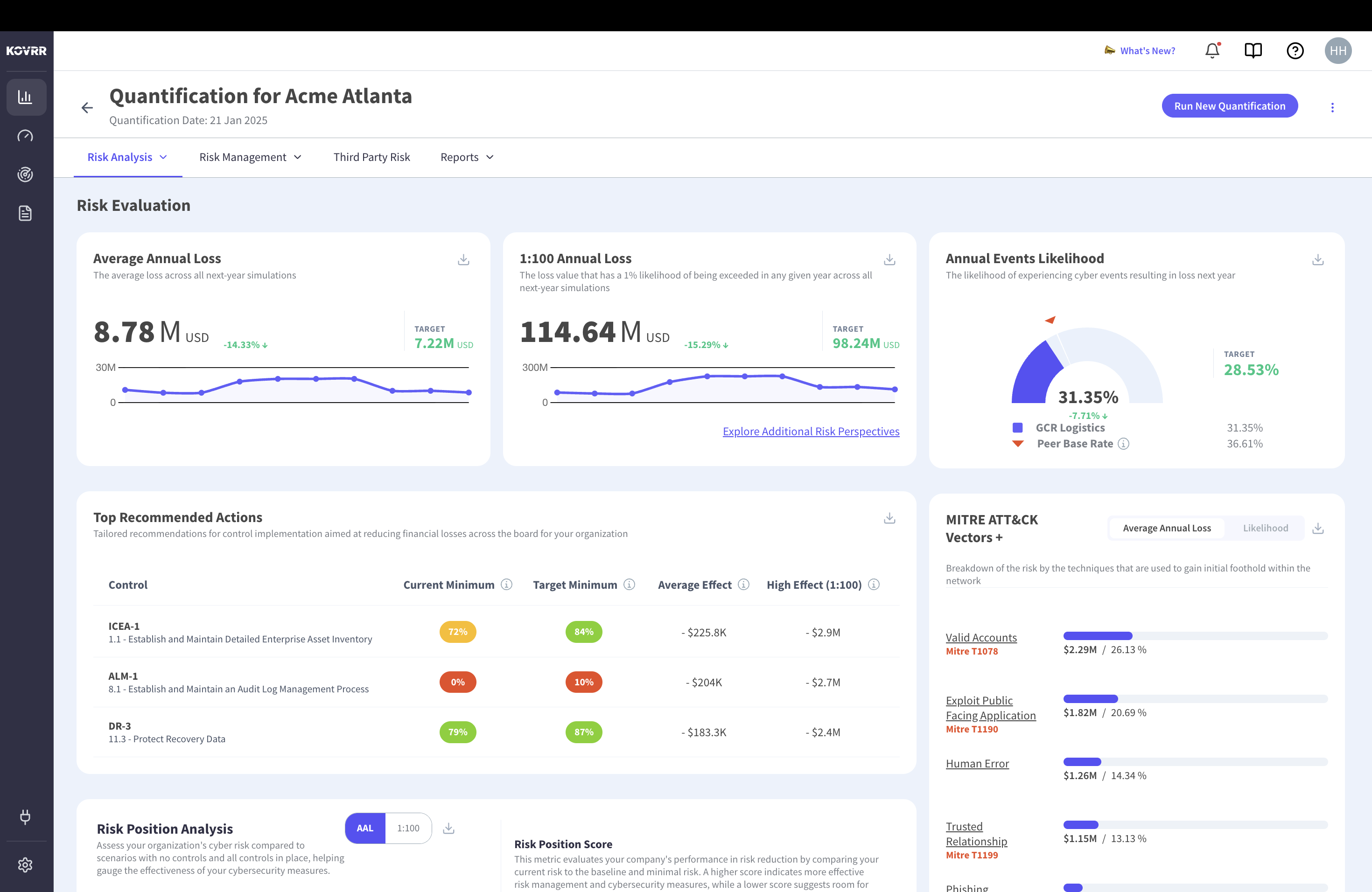
Expected annual loss suits budgeting and answers what a normal year costs. A return-period loss such as the one-in-one-hundred-year figure suits resilience and insurance decisions. Event frequency suits operational tolerance, since an organization can hold a view on how often disruption is acceptable independent of severity. Expressing appetite in more than one of these prevents the failure where a modest expected loss conceals an unacceptable tail.
Percentage of Revenue Travels Better Than Absolute Figures
A threshold stated as a share of annual revenue survives growth, acquisition and currency movement without renegotiation, while an absolute figure quietly loosens as the business expands. Materiality thresholds behave the same way, and data-driven loss thresholds give the percentage a defensible basis rather than a round number chosen for looking reasonable.
Scenario Statements Complement Aggregate Ones
Aggregate appetite covers the portfolio and says nothing about concentration, so a statement permitting an acceptable total can still allow an unacceptable single scenario. Adding scenario-level thresholds for the loss types that would genuinely hurt closes that, and scenario-based quantification supplies the per-scenario figures those thresholds need.
The Breach Procedure Is the Control
A threshold with no defined consequence is a measurement. Appetite becomes a control at the point where crossing it obliges someone to do something specific, and writing that down in advance is what separates governance from documentation.
Define the Response Before You Need It
The procedure needs four elements settled in advance. Who is notified and within what period. What decision rights activate, covering whether spending can be authorized outside the normal cycle. What options are on the table, since remediation, risk transfer and accepting a revised appetite are all legitimate. What evidence accompanies the escalation so the recipient can act rather than ask questions.
Breaches Are Not Failures
Treating a breach as a performance problem guarantees the threshold gets set where it will never be crossed, which defeats the purpose. Exposure moves because the business grows, because an acquisition arrives, or because the threat environment changed, and none of those reflects poorly on the security team. Recording breaches and their resolution in the risk register demonstrates the system working, much as board oversight is evidenced by decisions rather than by absence of incident.
Distinguish a Real Breach From a Model Change
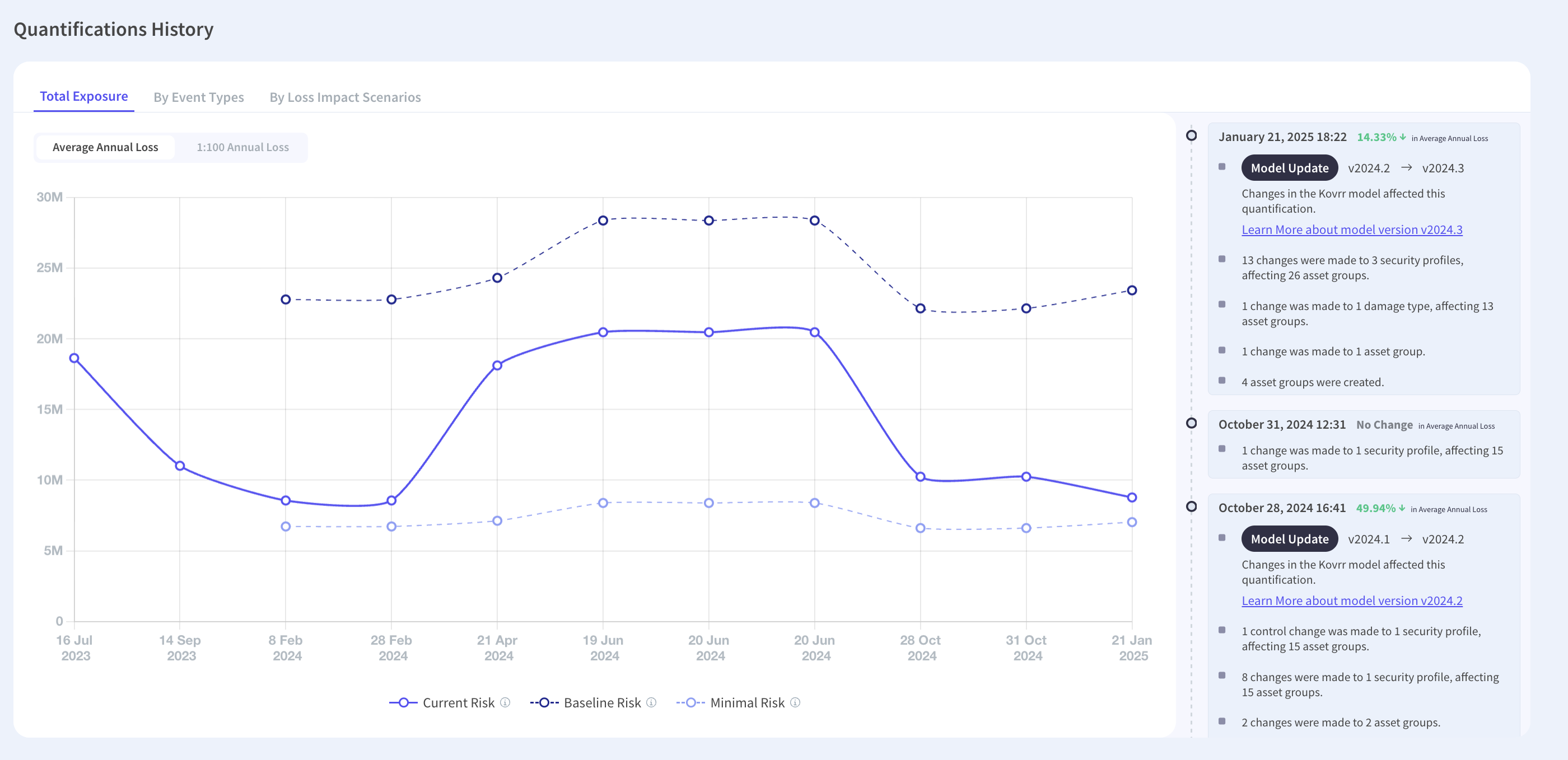
Exposure crossing a threshold because the methodology was updated is not the same event as exposure crossing it because risk increased, and escalating the first as though it were the second burns credibility quickly. Recording model version alongside each measurement lets the reviewer tell them apart without asking, and it protects the reporter when a number moves for uninteresting reasons.
Testing the Statement Before It Goes to the Board
A statement worth approving has been tested against history and against plausible futures. Both tests are cheap and both are usually skipped.
Backtest Against Prior Assessments
Run the proposed threshold against the last several quantifications and count the crossings. Zero crossings across two years suggests a threshold set outside the range of plausible outcomes, and constant crossings suggest one set below normal operating variance. Something in between is usually where a useful threshold sits.
Test Against a Modeled Scenario
Ask what the statement would have required during a realistic severe event, then check whether the escalation path described in it would have functioned. Statements failing this test typically nominate a committee meeting quarterly as the escalation destination. Preparation for extreme outcomes is where a data-driven appetite earns its keep, since the tail is where a vague statement provides no guidance at all.
Where Appetite Statements Fail
Failures repeat across organizations and none of them are technical.
- Unfalsifiable Language: Qualitative wording no event can violate, which makes the statement decorative.
- No Named Owner: A threshold nobody monitors, so a crossing goes unnoticed until an unrelated review finds it.
- Set Once: A statement approved and never revisited while the business it described changed shape.
A fourth failure is subtler. Appetite set by the security function rather than the board produces a statement management can revise when inconvenient, which removes the constraint the document exists to impose. Ownership sitting with the board and monitoring sitting with management is the split that holds, and the same logic applies to the expanding role of executives in cyber risk.
Connecting Appetite to Decisions
A statement earns its cost by changing decisions rather than by existing. Three decision types should reference it routinely, and if none do, the statement is not operating.
Control investment references appetite when a proposed improvement is justified by the exposure it removes relative to the threshold. Insurance structuring references it when retention and limit are set against stated tolerance instead of against last year's program, which is what coverage optimization is for. Business decisions reference it when a new product, market or vendor changes modeled exposure enough to matter. Simulating a control change supplies the first of those figures directly, and all three need the same unit to be comparable.
Report Position Against Appetite, Not Just Position
A board seeing current exposure asks whether it is acceptable, which nobody can answer without the threshold beside it. Reporting the figure and the threshold together answers the question before it is asked and converts a status update into a decision item. Programs already doing board-level quantified reporting need only add the line.
A Statement You Could Lose
The test for a cyber risk appetite statement is whether a plausible year could violate it. One that could not is a mission statement in the wrong folder, and one that could carries a named metric, a number, a period, an owner and a written response for the crossing. Building it in that order produces something a GRC team can defend under questioning, because every element points at something observable. Kovrr's cyber risk quantification produces the figures those thresholds are set against, tracked on the same methodology each period.
To see modeled exposure expressed against a threshold your board could approve, book a demo with our cyber risk experts.

Cyber Risk Appetite FAQs
Speak to an ExpertWhat is the difference between risk appetite, tolerance and capacity?

How do you write a cyber risk appetite statement that can be tested?
What should happen when risk appetite is breached?
How do you know if a threshold is set at the right level?
Who owns cyber risk appetite?
How does risk appetite change decisions in practice?