
Blog Post
Cybersecurity GRC in Practice: Where Programs Break Down
August 18, 2026
Governance, risk and compliance programs rarely fail at the design stage. The policies exist, the register exists, the assessment calendar exists, and an auditor examining the documentation finds a coherent program. The failures are operational and they share a shape, which is that a mechanism runs without ever reaching a decision.
Six of those are common enough to be predictable. None is a matter of insufficient tooling or inadequate belief in the function, and each has a specific fix that costs less than the program redesign usually proposed instead.
The Register Accumulates and Never Drains
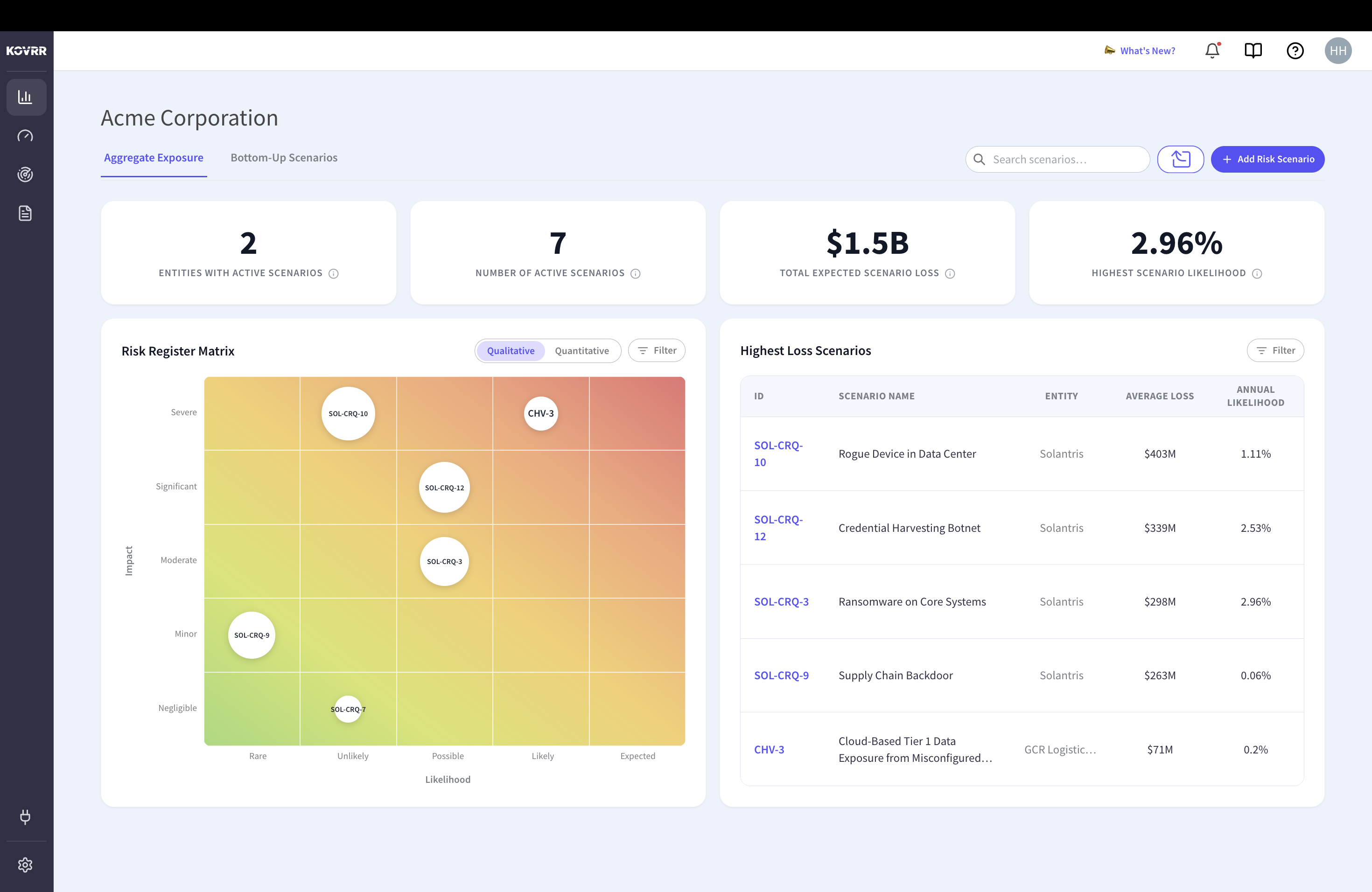
Findings enter a risk register and stay. There is an intake process, an owner field and a severity rating, and no exit criteria. Twelve months later the register is longer than it was, which gets read as thoroughness rather than as a queue nobody clears.
A Register Needs a State Machine
Every entry should be in exactly one of a small number of states, with a defined transition out of each and a date attached. Identified, assessed, treatment selected, in progress, closed or accepted. An entry sitting in assessed for nine months is visible as a process failure rather than as a risk, which is the distinction a status field without dates cannot make. Building the register around transitions rather than around fields is the structural change.
Severity Bands Produce Ties, Not Sequence
Forty items rated high cannot be worked in order because the rating provides no order. Ranking by modeled loss produces a sequence somebody can defend, since prioritization depends on measurement, and it also reveals that several high-rated items carry less exposure than a couple of medium ones. A register built for decisions rather than for recording is what makes the difference.
Exceptions Outlive Their Justification
A policy exception is granted because a business need is real and the control cannot be met yet. It comes with a compensating measure and a review date. The review date passes.
Exception registers grow monotonically in most organizations because nothing forces expiry. The fix is mechanical rather than cultural, since an exception that lapses automatically unless renewed transfers the effort of continuation onto whoever benefits from it. Renewal then requires restating the business need and confirming the compensating measure still operates, which is an access review by another name.
Nobody Prices the Exception Portfolio
Summing the exposure attributable to active exceptions produces the amount the organization has chosen to carry through deliberate non-compliance, which is a considerably more useful figure than a count. It also makes an exception whose exposure has grown, because the underlying system grew, visible as a decision worth revisiting rather than a settled matter.
Scope Contracts Toward What Is Easy to Assess
Assessment coverage is reported as a percentage, and percentages create an incentive. Systems with willing owners, good documentation and modern interfaces get assessed. Legacy systems with no owner, an undocumented integration and a nervous team get deferred to the next cycle, repeatedly.
The result is a register describing the tractable estate while the difficult systems, which are frequently the ones carrying the most exposure, remain undescribed. Coverage rises, confidence rises, and the assessed population becomes progressively less representative. Reporting coverage weighted by exposure rather than by system count corrects it immediately, because the deferred systems stop being invisible in the metric.
Deferral Needs to Be Recorded as a Finding
A system deferred from assessment for three consecutive cycles is a governance finding in its own right, separate from whatever the assessment would have discovered. Recording the deferral, with the reason and the number of cycles, converts an absence into an item somebody owns.
The Metric Measures the Process, Not the Outcome
Programs report assessments completed, controls tested, policies reviewed and training delivered. All are activity measures, and all can improve while exposure does not move at all.
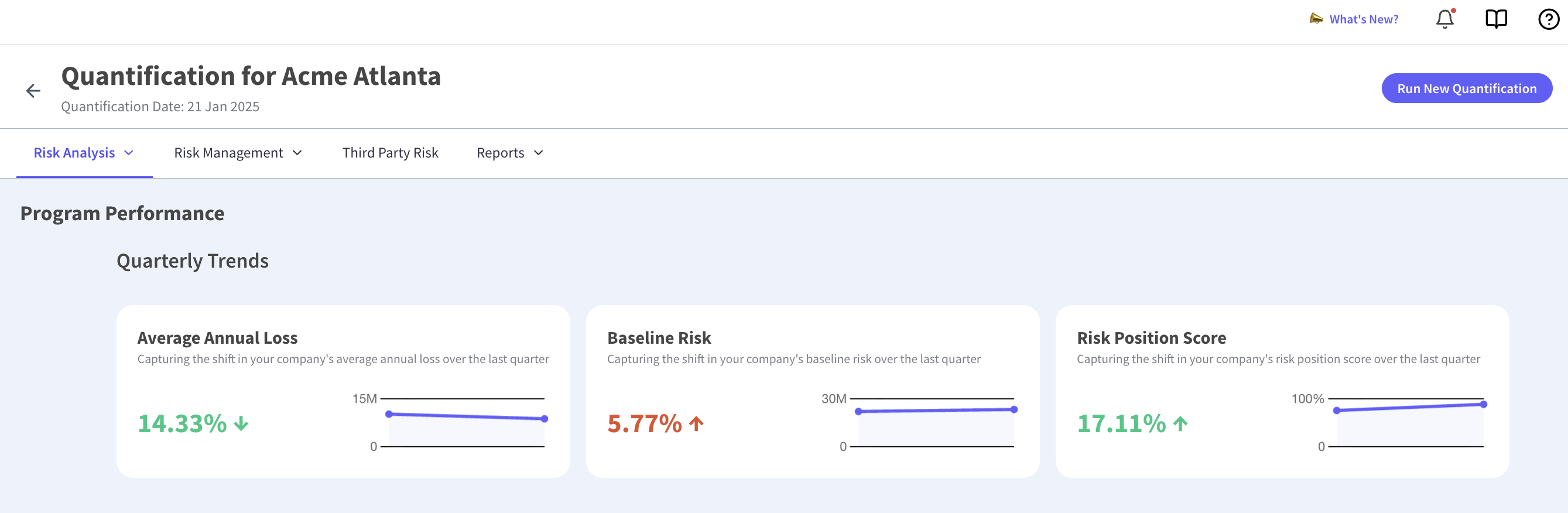
The substitution happens because activity is easy to count and outcome requires a model. Reporting both is the answer rather than replacing one with the other, since a quarter with high activity and no movement is a legitimate finding that activity metrics alone conceal. Performance management built on exposure gives the activity numbers something to be checked against.
Maturity Is an Input, Not a Result
A maturity score rising from two to three describes the program getting better organized. Whether that removed exposure is a separate question with a separate answer, and the two diverge more often than anyone expects, particularly where the improved controls were already adequate. Quantified maturity keeps both numbers in view.
The Second Line Is Not Independent
Three lines of defense assumes the function that operates a control and the function that tests it are separate. In practice the risk function frequently reports through the same executive as the security function, and the same team sometimes writes a control and assesses it.
The consequence is not dishonesty. It is that an uncomfortable assessment conclusion becomes a conversation with your own management chain, and people resolve that predictably. An examiner will identify the reporting line before examining the assessments, so the arrangement is worth fixing before it is found.
Effective Challenge Needs Standing, Not Just Scope
A function permitted to raise a concern and not permitted to block anything performs review rather than challenge. Where separating reporting lines is not available, the workable substitute is a documented escalation path that reaches a body outside the chain, with the escalation recorded whether or not it changed the outcome. Recording rejected recommendations is what demonstrates the mechanism functioned, and board oversight is evidenced by that record rather than by an absence of disagreement.
Visibility Without Decision Rights
The most common structural failure is a function that identifies, assesses, reports and recommends, while every action requires somebody else to agree. The program produces excellent information and no outcomes, and the annual review concludes that stakeholder engagement needs improving.
Decision rights have to be explicit somewhere. Either the function can require remediation within defined thresholds, or an owner outside it is obliged to accept the risk formally, in writing, with their name attached. Both work. What fails is a third state where recommendations are noted and nobody is required to do either.
Formal Acceptance Is the Underused Mechanism
Forcing a named individual to accept a risk in writing, with the exposure figure stated, changes behavior more reliably than escalation does. Most people asked to sign their name against a specific number will fund the fix instead, and the ones who accept have made a defensible decision the organization can stand behind. Tying that to a stated appetite threshold gives the acceptance a boundary rather than leaving it to judgment.
The Compliance Calendar Crowds Out Risk Work
A GRC function serving several frameworks with staggered audit cycles can spend its entire year preparing for and responding to examinations. Risk analysis becomes the thing that happens when there is time, and there is never time.
The structural answer is mapping obligations to a single control set so one evidence base serves several audiences, which is what mapping once and reporting many times achieves. Where that is already in place and the calendar still consumes the function, the honest conclusion is that the team is staffed for compliance and being measured on risk.
Every Mechanism Needs an Exit
The pattern across all six is a process that runs without terminating in a decision. Findings enter a register with no exit state. Exceptions are granted with no expiry. Coverage is measured in a way that rewards avoiding the hard systems. Activity is reported where outcome is the question. Assessment happens without independence. Recommendations arrive without an obligation to act. Fixing any one of them is a process change rather than a platform purchase. Kovrr's cybersecurity GRC approach attaches modeled exposure to register entries, which is what turns a queue into an order and an acceptance into a decision.
To see a register where every entry carries a figure and a state rather than a severity band, book a demo with our cyber risk experts.

Cybersecurity GRC FAQs
Speak to an ExpertWhy do cybersecurity GRC programs fail in practice?

How do you stop a risk register from becoming a backlog?
What should happen to policy exceptions?
Why does assessment coverage become misleading?
What is the problem with GRC activity metrics?
How do you fix a GRC function with no authority?