Blog Post
What It Takes to Say an AI Control Reduces Loss by a Number
September 22, 2026
Saying a control reduces exposure is easy and almost always true. Saying it reduces exposure by a specific amount is a different claim, and the machinery for producing one is well established. Set a baseline from frequency and magnitude ranges, simulate, re-estimate the ranges with the control in place, simulate again, and report the difference.
The method is sound. Applied to AI controls it runs into two problems, one about which term the control touches and one about what the estimate rests on.
Which Lever Does the Control Pull?
Conventional practice says a control either reduces how often something happens or reduces what it costs when it does. Several AI controls do neither, which makes the mapping a decision rather than an observation.
Constraining an agent's available actions does not reduce frequency, since the same compromise occurs as often. It caps magnitude before any event rather than reducing it during one, which behaves like a magnitude reduction in the arithmetic and arrives through a different mechanism. Shortening detection time reduces neither directly, and reduces magnitude through duration where the consequence accrues per hour.
Why Does Getting That Wrong Matter?
Because the terms compound differently. A frequency reduction scales the whole distribution proportionally. A magnitude cap truncates the upper tail while leaving the body alone, so it moves the extreme figure substantially and the average barely. Presenting a cap as a frequency reduction overstates the effect on expected annual loss and understates it on the one-in-hundred case.
What Does the Calibration Rest On?
The calibration question is the harder problem and the one that determines whether the output is a figure or a judgment in interval notation.
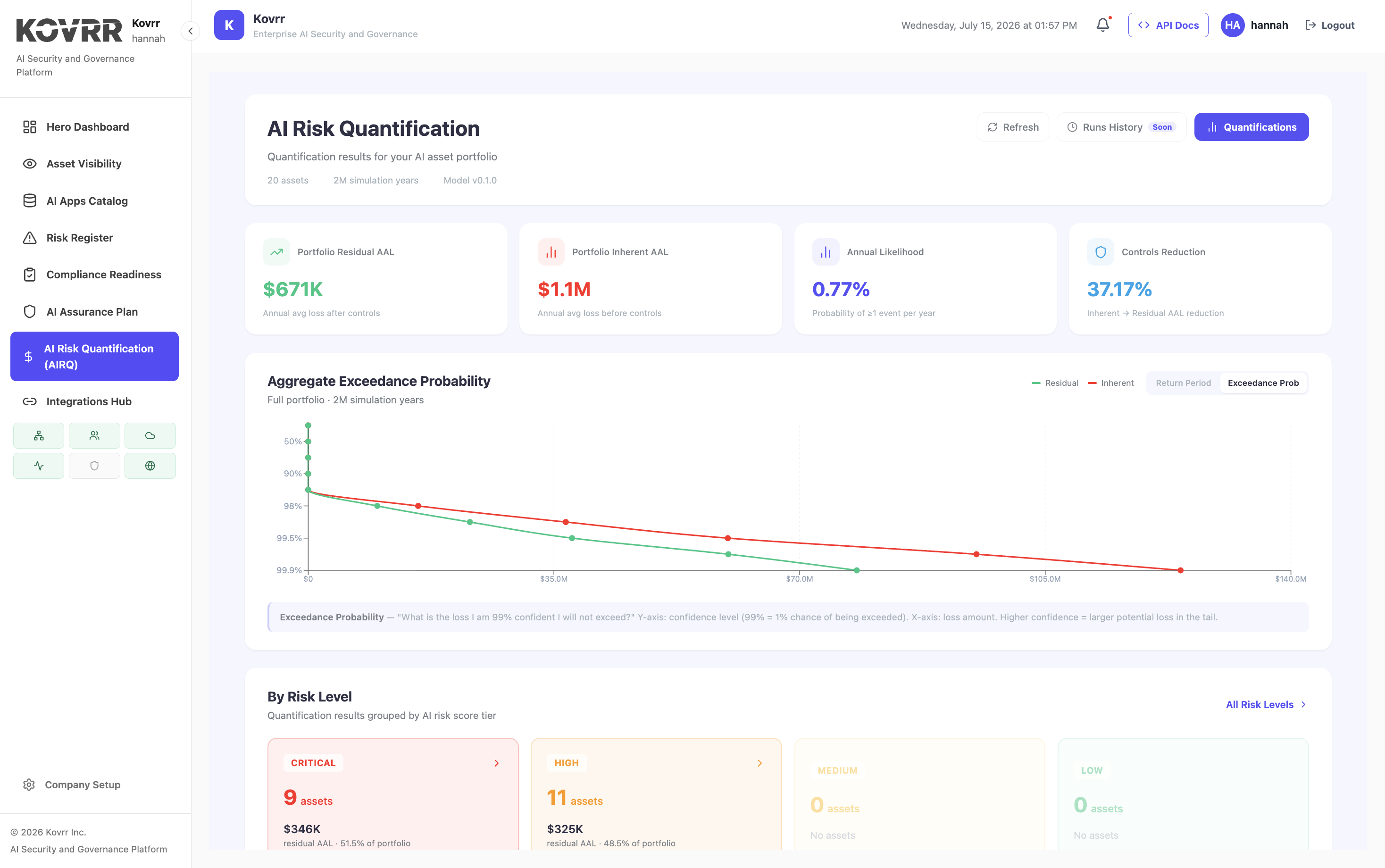
Calibrated estimation works because trained estimators have relevant experience to calibrate against. Asked how often credential abuse succeeds against multi-factor authentication, an experienced practitioner is drawing on observation across many organizations and a substantial body of published incident data.
Asked how much constraining an agent's tool set reduces the chance of an unauthorized action, the same practitioner has almost nothing to draw on. The estimate is reasoning from first principles, which is legitimate and is not calibration, and attaching a confidence interval to it produces something that looks calibrated.
What Is the Test?
Ask the estimator what they are calibrating against. An answer naming prior experience of similar events, published incident data or the organization's own history has a basis. An answer explaining the reasoning is a judgment, and labeling it as one is what keeps the model honest, which the requirements before an agent figure deserves weight sets out for the wider case.
What Does an Uncalibrated Control Support?
A direction and an ordering, which between them answer most of the questions a budget conversation asks.
Saying a control reduces exposure requires very little evidence. Saying it reduces exposure more than another control requires a comparison rather than a measurement, and comparisons survive weak calibration considerably better than absolute figures because the estimation error is partly shared. Saying it reduces exposure by a stated amount requires the calibration that frequently does not exist.
Which Decision Needs Which?
Choosing between two controls needs the ordering. Deciding whether a control is worth its cost needs the figure, because the comparison is against a number in a different unit. So the honest position is that most prioritization decisions are available without calibration and most justification decisions are not, and ranking by exposure removed per unit cost assumes the figure exists rather than producing it.
What Should Be Done Where Calibration Is Absent?
Bound it rather than estimate it, which turns an unanswerable question into a checkable one.
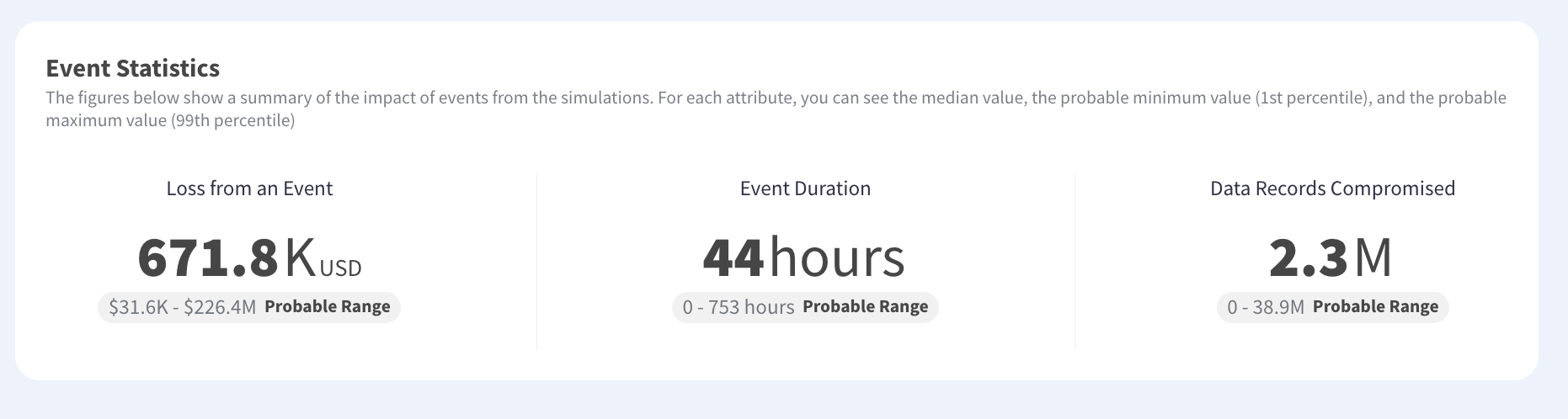
Run the model twice with the control at no effectiveness and at full effectiveness, and report the resulting range. Where the decision is the same at both extremes, the calibration is irrelevant to that decision and the exercise is finished. Where the decision changes between them, the width tells you how much the missing evidence is worth and whether acquiring it is justified.
Which Is a Stronger Position Than a Point Estimate
A single figure invites a challenge to the estimate. A range with its extremes named and a statement that the decision holds throughout invites a challenge to the decision, which is the argument worth having. Producing a point estimate from an uncalibrated input and defending it is the failure mode this avoids.
What Should an Auditor Ask?
Five questions, and none requires statistical training to interpret.
- Which term does the control touch: Frequency, magnitude or duration, named explicitly rather than implied.
- What is the calibration basis: Prior observation, published data, internal history or reasoning.
- Who produced the estimate: And whether that person is independent of whoever is requesting the budget.
Two more matter. Whether the control narrows the distribution or moves it, since those are different effects reported identically by a mean. Then what happens at the extremes, because a decision that survives both is defensible whatever the middle estimate was.
Why Does the Narrowing Question Matter?
Because a control reducing uncertainty and a control reducing exposure are different purchases, and the mean conceals which one you bought.
Improved monitoring frequently narrows the distribution without moving its center much, since it reduces the chance of the worst outcomes while leaving the typical case similar. Constraining an agent's authority moves the upper bound directly. Reporting only the average annual figure makes both look like a modest improvement, where one has removed a tail and the other has moved a middle, and reading a distribution at more than one point separates them.
Which Should a Board Be Shown?
Both, with the extreme case first where the control was bought to address a tail. A program funded to prevent a catastrophic outcome and reported on its effect on the average will look ineffective, and the reporting rather than the control is what failed.
Where Does Real Calibration Data Come From?
Three sources, in descending order of strength, and the third is the one organizations already own and rarely use.
Observed events across a population are the strongest, which for agent-specific controls means almost nothing yet exists. Adjacent categories come second, since a control preventing credential misuse by an agent is preventing credential misuse, and that has a substantial evidence base whatever the principal happens to be.
Your own near misses are the third. Every blocked attempt, refused action and triggered constraint is an observation about how often the control was needed, and that record accumulates from the day the control is deployed.
Why Is the Third Source Underused?
Because it is treated as noise rather than as data. A policy layer refusing forty actions a month is producing a frequency observation about a specific control in a specific environment, which is better evidence than any external estimate for that control. Programs discard it because the refusals are uninteresting individually, and continuous verification is where the counting would happen.
How Long Before It Is Usable?
Sooner than people assume for frequency and considerably longer for magnitude. Refusal counts accumulate quickly and tell you how often the control acts. What an unrefused instance would have cost stays unobserved by definition, so the magnitude side continues to rest on judgment even after the frequency side has real data behind it.
What Can Be Established This Quarter?
Three things, and the first frequently reorders an existing list.
For every AI control in the register with a claimed benefit, which term it touches, since a misassigned lever misstates the effect in a predictable direction. For each, whether the post-control estimate has a calibration basis or is reasoning, labeled rather than blended. Then for the ones without a basis, the bounded range at both extremes, which either settles the decision or prices the missing evidence. AI risk quantification, or AIRQ, that records the lever and the basis alongside each figure is what makes the second and third possible.
Name the Lever, Then the Basis
The method for showing a control reduces expected loss by a stated amount is established and it assumes a control reduces either frequency or magnitude. Several AI controls do neither, since constraining authority caps magnitude before an event and shortening detection reduces it through duration, and assigning the wrong lever moves the average and the extreme figure in different directions. The calibration problem is sharper still, because estimators have observation to draw on for conventional controls and almost none for agent constraints, so an interval attached to reasoning looks calibrated without being so. An uncalibrated control supports a direction and an ordering, which covers most prioritization decisions and no justification ones. Kovrr's AIRQ records which term each control touches and what the estimate rests on.
To see control benefit reported with its lever and calibration basis attached, book a demo mapped to your own estate.

AI Control Benefit FAQs
Speak to an ExpertWhich lever does an AI control pull?

Why is calibration harder for AI controls?
What is the test for whether an estimate is calibrated?
What does an uncalibrated control estimate support?
What should be done where calibration is absent?
Why does it matter whether a control narrows or moves the distribution?