

AI Attack Surface
The AI attack surface is the total set of points where an AI system's models, training data, inputs, tools, integrations, and outputs could be exploited or manipulated by an adversary.
What Makes the AI Attack Surface Different
Traditional attack surface concepts focus on infrastructure, applications, and identity. The AI attack surface extends those into layers that did not exist in pre-AI enterprise environments.
- Model layer: The trained model itself, susceptible to extraction, inversion, and adversarial input attacks.
- Data layer: Training data, fine-tuning data, and retrieval sources, susceptible to poisoning and leakage.
- Interaction layer: Prompts, inputs, upstream content, and connected tools, susceptible to injection and manipulation attacks.
Each layer maps to a different attack category and a different set of controls. Prompt injection targets the interaction layer. Data poisoning targets the data layer. Model extraction targets the model layer.
Why the AI Attack Surface Is Expanding
Enterprise adoption of generative AI and agentic AI is expanding the AI attack surface faster than most governance programs can catalog it. Each new integration, each new tool the agent can call, each new data source the model can retrieve from, adds surface. See what keeps a CISO up at night: managing an expanding, evolving attack surface for the broader dynamic.
Managing the AI Attack Surface
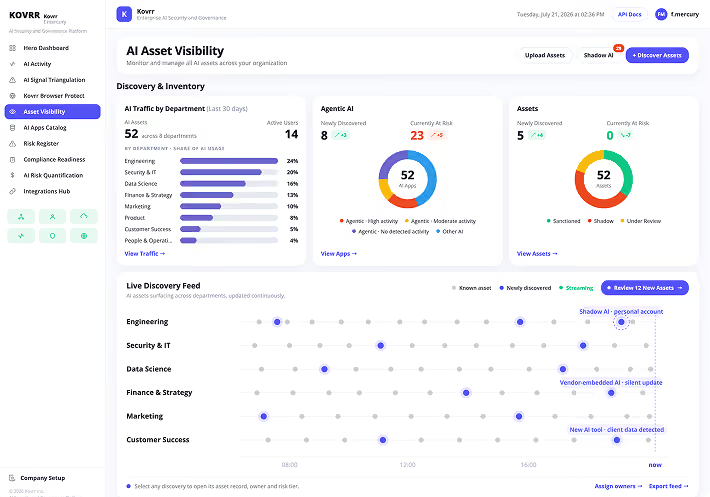
The starting point is AI asset discovery. An unknown AI system cannot be assessed for attack surface exposure. From discovery, mature programs map each AI system's specific attack surface, apply appropriate controls, and monitor continuously for changes.
Related Terms


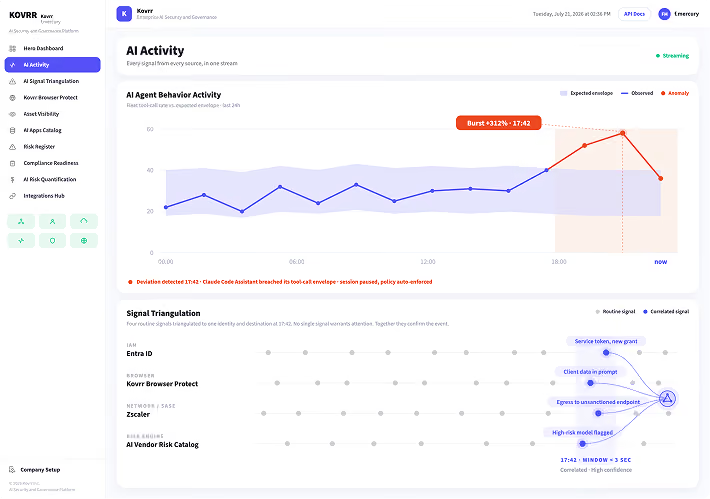
Full AI Visibility. Full Control. One Connected Platform.
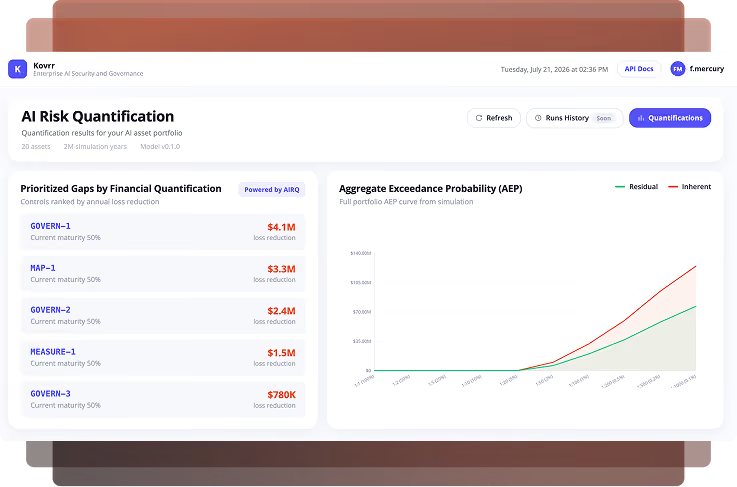
Enterprise AI is expanding faster than most governance programs can track. Kovrr connects every AI signal across browser, endpoint, network, identity, and vendor systems into a single platform so security, governance, and risk teams work from the same evidence.