

Generative AI
Generative AI refers to AI systems that produce new content such as text, images, audio, video, or code by learning statistical patterns from training data and generating novel outputs in response to prompts.
What Generative AI Actually Does
Generative AI systems, including LLMs, image generators, and audio synthesis models, generate outputs by sampling from probability distributions learned during training. The output is not retrieved from a database. It is produced fresh each time, based on the model's learned patterns and the specific input.
This is what distinguishes generative AI from traditional ML classifiers or predictive models, which produce categorical or numerical outputs from a fixed set of possibilities.
Generative AI in the Enterprise
Enterprise generative AI adoption has been faster than any prior technology category. Content generation, code assistance, customer support, document summarization, and internal knowledge access are all common enterprise generative AI use cases. Each brings its own risk profile.
See agentic AI vs generative AI: what enterprises need to know.
Governing Generative AI
Generative AI has unique failure modes that governance programs address: hallucination (generating false but plausible content), data leakage through generated outputs, prompt injection vulnerabilities, and transparency obligations around AI-generated content under regulations like Article 50 of the EU AI Act.
Related Terms


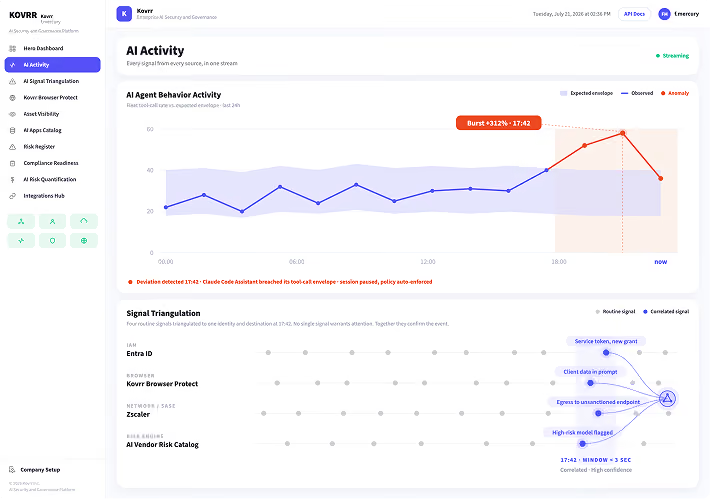
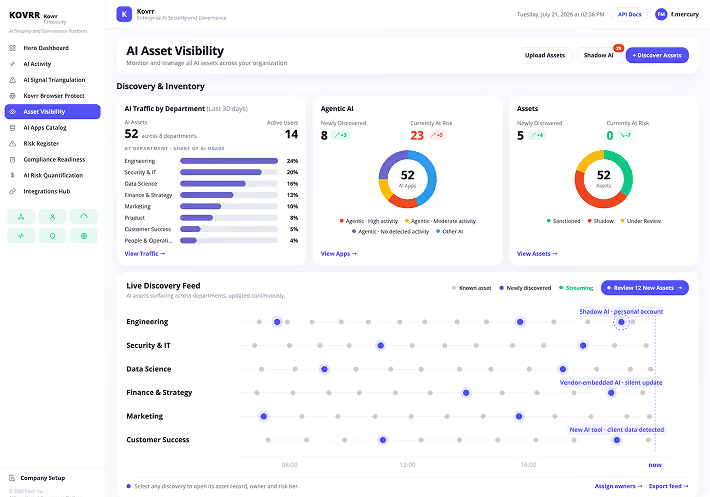
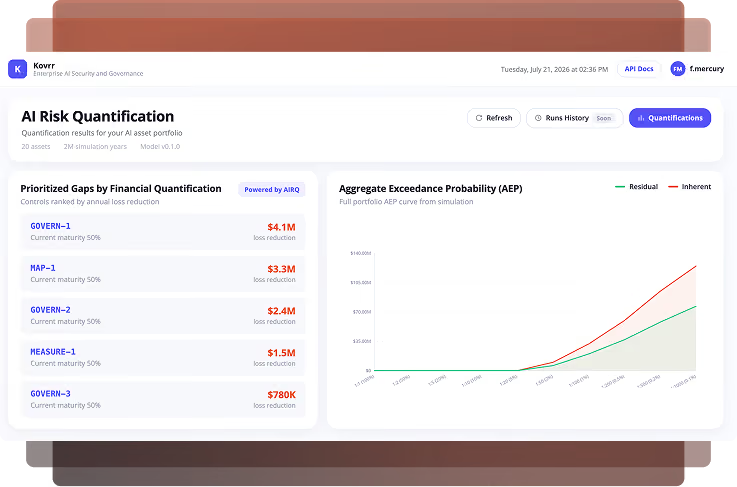
Full AI Visibility. Full Control. One Connected Platform.
Enterprise AI is expanding faster than most governance programs can track. Kovrr connects every AI signal across browser, endpoint, network, identity, and vendor systems into a single platform so security, governance, and risk teams work from the same evidence.