
EU AI Act Article 50 (Transparency Obligations)
Article 50 of the EU AI Act imposes transparency obligations on providers and deployers of certain AI systems, requiring disclosure of AI-generated or manipulated content, notification of AI interactions, and machine-readable marking of synthetic content.
What EU AI Act Article 50 Requires
Article 50 imposes several distinct transparency obligations.
- AI system interactions: Providers must ensure users are informed they are interacting with an AI system, unless obvious from context.
- Synthetic content marking: Providers of AI systems that generate synthetic content must ensure outputs are marked in machine-readable format as AI-generated.
- Deep fake disclosure: Deployers of AI that generates deep fakes must disclose that the content is artificially generated or manipulated.
Additional obligations cover emotion recognition and biometric categorization systems, and specific disclosure duties for AI-generated public interest content.
When EU AI Act Article 50 Applies
Article 50 obligations apply from August 2, 2026. Providers and deployers of covered systems must be prepared to demonstrate compliance from that date, including machine-readable marking technology and disclosure procedures.
Why EU AI Act Article 50 Matters
Article 50 affects a much broader set of AI systems than the high-risk classification does. Any AI system that interacts with people, generates content, or produces synthetic media potentially falls under Article 50 obligations regardless of whether it meets the high-risk threshold. For most enterprises, Article 50 compliance is the first EU AI Act obligation that directly touches customer-facing and content-generating AI systems.
See EU AI Act compliance starts with operationalizing AI governance.
Related Terms


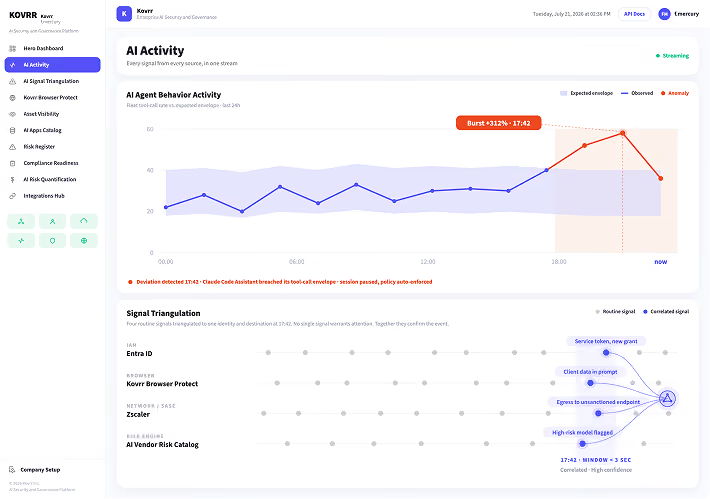
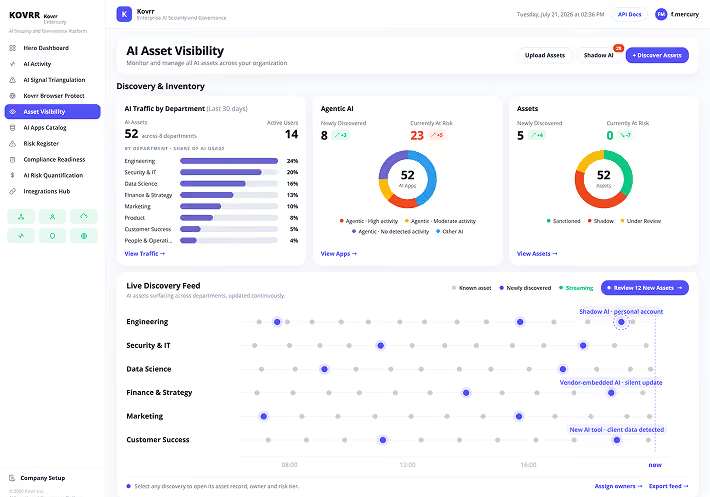
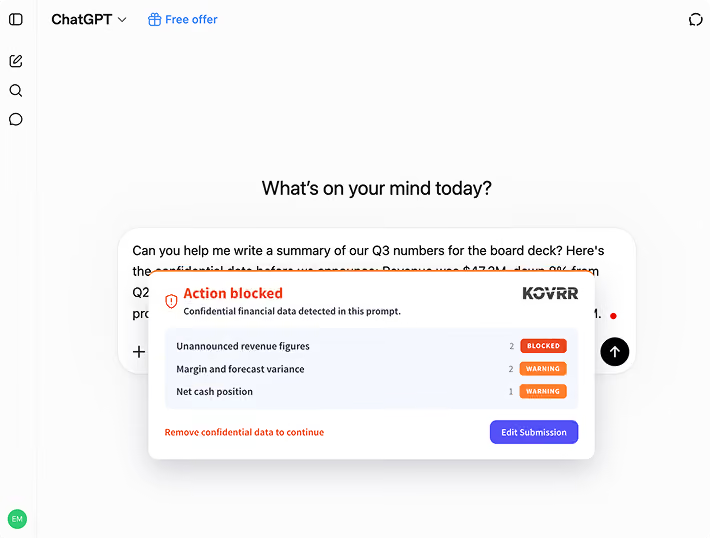
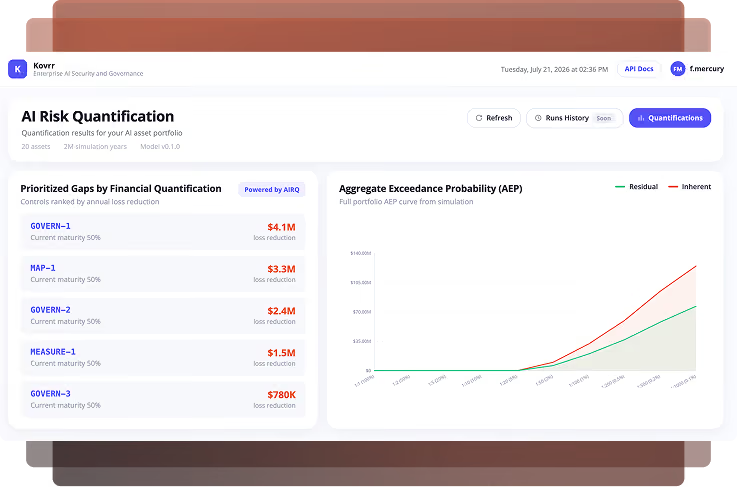
Full AI Visibility. Full Control. One Connected Platform.
Enterprise AI is expanding faster than most governance programs can track. Kovrr connects every AI signal across browser, endpoint, network, identity, and vendor systems into a single platform so security, governance, and risk teams work from the same evidence.