
Large Language Model (LLM)
A Large Language Model (LLM) is a type of AI model trained on massive amounts of text data to understand and generate human language, forming the technical foundation of most enterprise generative AI and agentic AI systems.
What Makes an LLM "Large"
LLMs are distinguished from earlier language models by the scale of their training data and parameters. Modern commercially deployed LLMs have hundreds of billions of parameters, trained on trillions of tokens of text data. That scale is what gives them their broad capabilities: reasoning across domains, following complex instructions, generating coherent long-form content, and adapting to new tasks through prompting alone.
LLMs in the Enterprise
Almost every current enterprise generative AI or agentic AI deployment is built on top of an LLM. That makes LLM behavior, safety, and reliability foundational governance concerns. It also concentrates risk: a small number of LLM providers underlie a large portion of enterprise AI, so provider-side incidents propagate broadly.
LLMs sit within the broader category of foundation models, most of which are LLMs or LLM-based multimodal systems.
LLM-Specific Governance Concerns
LLMs introduce specific failure modes that governance programs address, including hallucinations, susceptibility to prompt injection and jailbreaks, output content and safety concerns, and behavior changes across provider model updates.
Related Terms


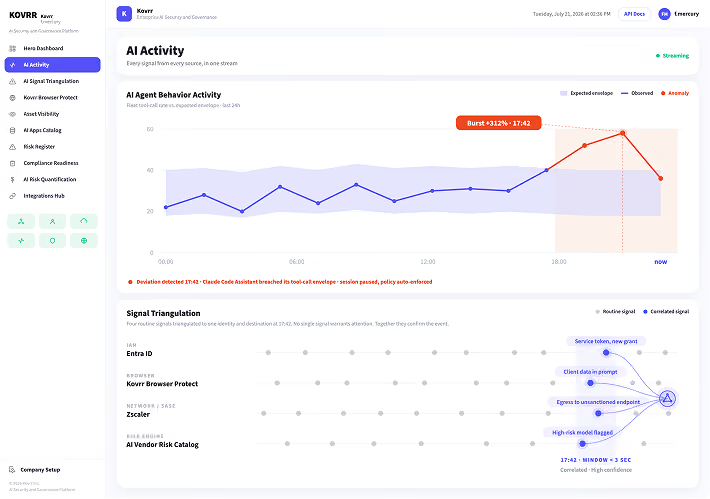
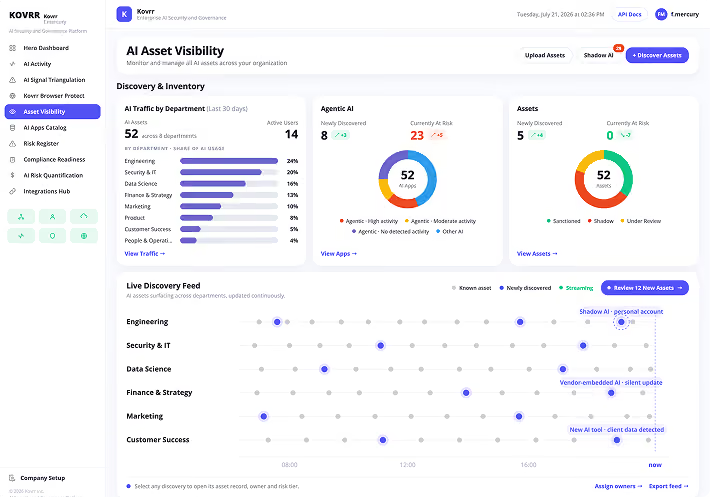
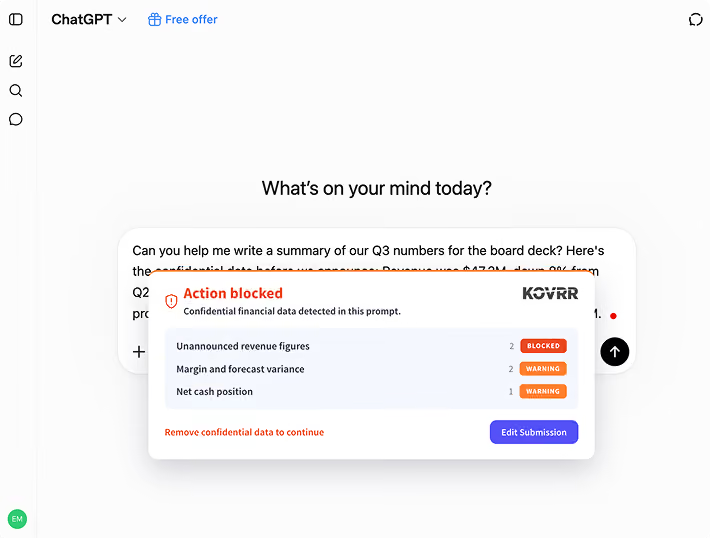
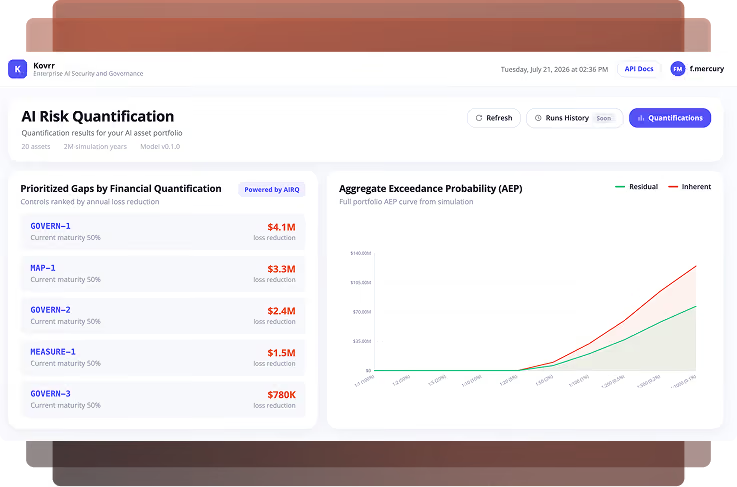
Full AI Visibility. Full Control. One Connected Platform.
Enterprise AI is expanding faster than most governance programs can track. Kovrr connects every AI signal across browser, endpoint, network, identity, and vendor systems into a single platform so security, governance, and risk teams work from the same evidence.