
Blog Post
OpenTelemetry and AI Governance: Where the Standard Stops
August 16, 2026
OpenTelemetry graduated from the Cloud Native Computing Foundation in May 2026, which formally settled a question the industry had answered informally years earlier. It is the standard way applications emit telemetry, second only to Kubernetes in contributor volume, and native across every major observability backend.
A security and governance company has a specific reason to care. Over the past two years the project has been building semantic conventions for generative AI, so the interactions that AI governance depends on are acquiring a standard shape for the first time. What follows covers what OpenTelemetry is, what its AI conventions now describe, and the point at which the standard stops and something else has to begin.
What OpenTelemetry Is
Four loosely coupled pieces, adoptable independently. An API your code calls to create spans, record measurements and emit logs. An SDK implementing that API and handling sampling, batching and export. A wire protocol called OTLP carrying the data over gRPC or HTTP. A Collector that receives, processes and forwards telemetry to one or more destinations.
The value proposition is instrument once and export anywhere. Switching observability backends becomes a configuration change at the Collector rather than a re-instrumentation project, because the data means the same thing at either end. Three signals are stable across the major language SDKs, covering traces, metrics and logs, with continuous profiling arriving as a fourth.
Semantic Conventions Are the Part That Matters Here
The protocol moves data and the conventions decide what the data means. They specify attribute names and shapes organized by what the attribute attaches to, covering the entity producing telemetry, a single operation inside a trace, metric names and units, and log record fields. Without shared conventions, two systems can both speak OTLP and describe the same event in incompatible terms.
The AI Conventions Give Interactions a Shape
The generative AI conventions organize an agent run into a small number of span types, turning a sequence of model calls into a structure something can reason about.
Three Span Types Carry the Run
A root span records the full multi-turn agent session. Child spans record individual model interactions. A separate span type records external tool execution. Together they produce a trace describing what an agent did and in what order, which is precisely the artifact monitoring agent behavior in production requires and has historically lacked.
Tool Calls Became Machine-Readable
The tool execution span type was extended during 2026 to cover Model Context Protocol calls, and it matters more than it sounds. Agent tool invocation moving from a vendor-specific log line to a standard span means the question of what an agent called, and with what, has a portable answer. Agents connecting to external tools has been difficult to govern partly because the evidence was shaped differently by every framework.
Cost and Loop Signals Come Free
Token counts on each interaction and a recorded reason for why generation stopped give a program the raw material for detecting runaway loops and resource exhaustion. Those failure modes present as performance problems and originate as governance ones, so having them in the same trace as the tool calls is a practical improvement over inferring them from a bill.
Where the Standard Stops
The conventions describe what happened. They deliberately do not describe whether what happened was acceptable, and three absences follow from that design choice rather than from immaturity.
No Verdicts, By Design
There are no standard definitions for scoring an output as hallucinated, unfaithful or incorrect, and none for toxicity, privacy leakage or policy compliance. Evaluation remains a separate concern paired with the telemetry rather than encoded in it. The reason is sound, since a convention that tried to standardize a verdict would have to standardize the policy behind it, and policies differ per organization.
No Identity in the Sense Governance Means
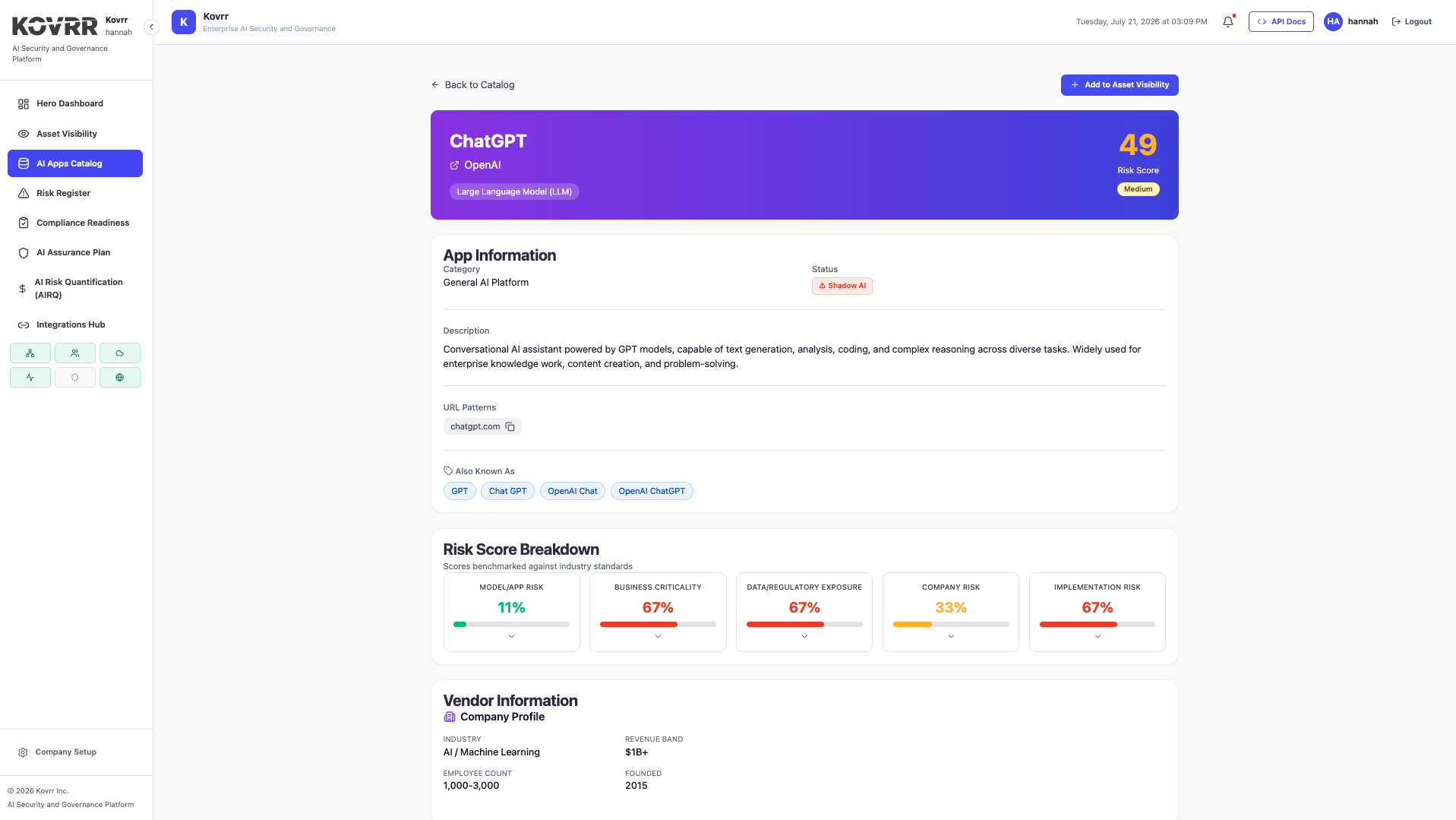
A span carries a service identity and a model provider. It does not carry whether the human on whose behalf the agent acted was authorized for the data it touched, nor whether the agent was operating under a delegated credential or its own. Resolving that is the difference between knowing a call occurred and knowing it should have, which is why agent identity has to be joined to the trace rather than read from it.
No Data Sensitivity
Content capture exists for prompts and completions, and nothing in the convention classifies what that content was. Whether a prompt contained regulated data, and which category, is a determination applied afterward. For anyone concerned with regulated data reaching AI tools, the trace is the input to that question rather than the answer.
Development Status Is a Planning Constraint
The AI conventions remain at development stability, meaning they change and have already undergone attribute renames across 2026 release cycles. In June the definitions moved out of the main conventions repository into a dedicated one, specifically to allow faster iteration.
The practical implication is not to wait. It is to avoid coupling anything directly to attribute names that will move. Normalizing incoming telemetry into an internal representation, with the Collector's attribute transformation handling the translation, means a convention change is a mapping update rather than a rebuild. Anyone who has maintained a framework crosswalk will recognize the pattern, since mapping to a normalized internal set solves the same class of problem for controls.
Vendor Support Is Ahead of the Spec
Major observability platforms already ingest the AI spans natively, which is a useful signal about direction regardless of stability labels. It also means the pragmatic reason to emit conventional telemetry today is portability, since instrumenting to a moving standard is still cheaper than instrumenting to a proprietary one.
What Sits On Top
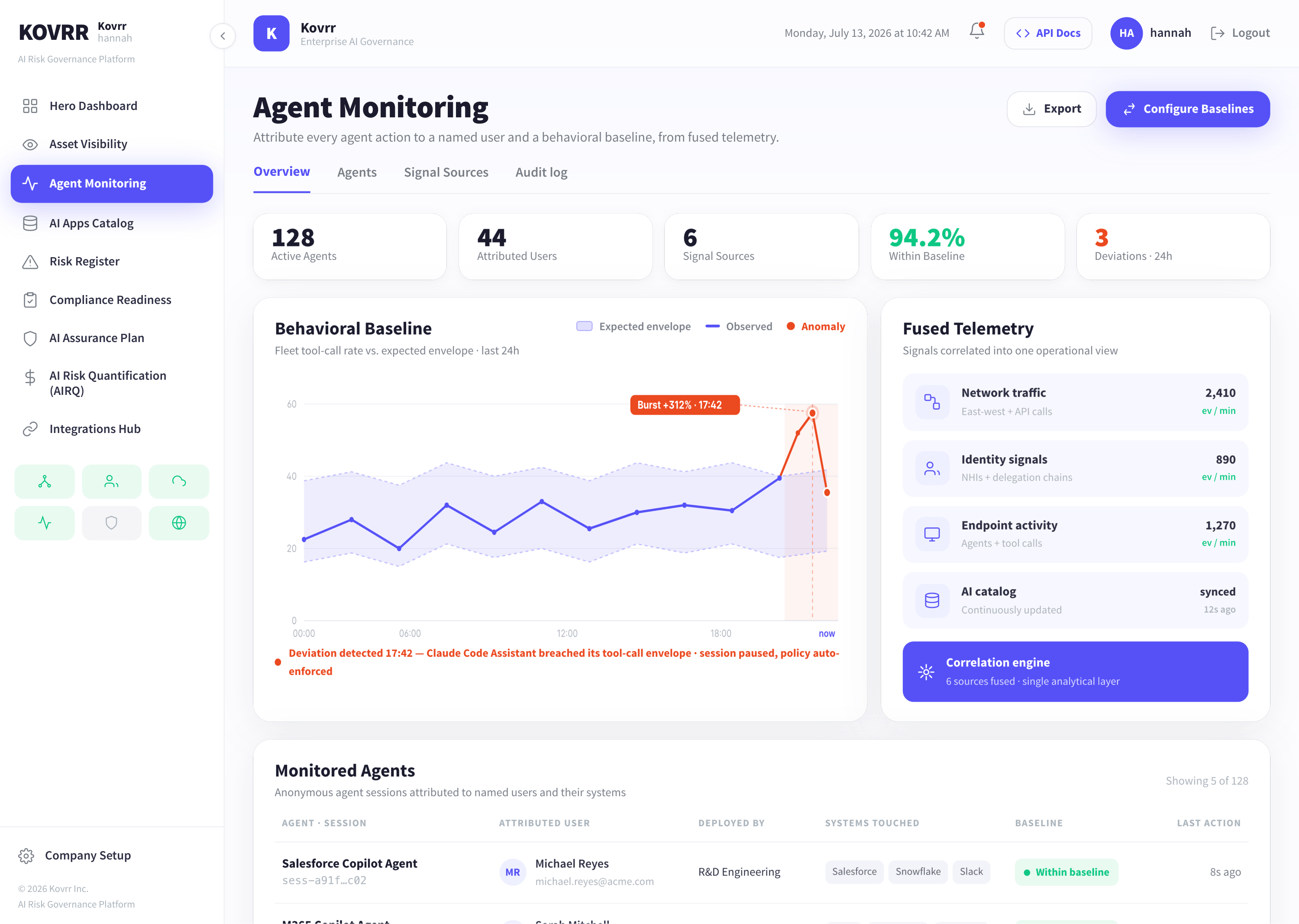
The distinction between structure and judgment is where our own work concentrates. A trace establishes that a model was called, which tools it invoked, in what order and at what cost. Governance needs three things the trace does not contain, and each is a join rather than a field.
- Identity Resolution: Which person or machine identity the session belongs to, and what that identity was permitted to reach.
- Content Classification: Whether the data in the interaction was regulated, and under which regime.
- Policy Evaluation: Whether the observed behavior sits inside the approved envelope for that identity and that system.
Kovrr's AI Interaction Data Fabric exists to perform those joins across telemetry arriving from browsers, endpoints, model APIs, tool calls and cloud environments. Conventional telemetry makes the input side of that considerably cheaper, because a standard shape means one parser rather than one per source.
Fused Signals Answer Questions Single Sources Cannot
A tool call span in isolation is unremarkable. The same span joined to an identity outside its normal pattern, touching a data category it has not touched before, at a volume above its baseline, is a finding. Producing that requires several sources correlated rather than one source enriched, and it is the reason asset visibility and behavioral monitoring have to sit on the same record.
Why This Is Worth Watching
Standardized telemetry changes what governance can promise. Coverage stops depending on which vendors an organization happens to use, evidence becomes portable between tools, and an audit trail assembled from conventional spans is reconstructable by someone who did not build it. Those are the properties an examination tests, and they have been difficult to deliver while every framework emitted its own shape.
The honest caveat is that none of this is settled. The conventions are moving, the coverage of agent frameworks is uneven, and organizations running AI outside instrumented applications, which includes most browser-based use, emit nothing conventional at all. Standardization helps the instrumented half of the estate and does nothing for the rest, so discovery remains a separate problem.
A Standard for the Facts, Not the Verdict
OpenTelemetry is becoming the common language for what AI systems did, and it stops short of whether they should have. That boundary is deliberate and it is where governance work lives, joining identity, data classification and policy to a structure the standard provides. Building on conventional telemetry rather than proprietary formats is the right bet on the input side, and expecting the standard to carry judgment is the mistake to avoid. Kovrr's AI Security and Governance Platform is built around that division of labor.
To see fused AI interaction telemetry resolved to identities, data categories and policy outcomes, book a demo mapped to your own environment.

OpenTelemetry and AI Telemetry FAQs
Speak to an ExpertWhat is OpenTelemetry?

What are semantic conventions and why do they matter?
What do the OpenTelemetry AI conventions capture?
What do the AI conventions not capture?
Are the AI conventions stable enough to build on?
Does standardized telemetry solve AI visibility?