
Blog Post
How to Identify and Track AI Use Across Business Units
July 10, 2026
Tracking AI use across business units requires a purpose-built approach that combines endpoint monitoring, browser-level telemetry, network security tools, and a centralized AI governance platform. Most organizations rely on some combination of IT asset management, SaaS monitoring, and manual surveys to understand what AI tools employees are using. The problem is that these methods were never designed for AI, and they miss the fastest-growing category of unsanctioned technology in the enterprise: shadow AI.
Effective AI tracking starts with continuous, automated discovery of every AI tool and model operating across the organization, whether it was approved by procurement, embedded inside a third-party vendor's product, or quietly adopted by a single team through a free browser extension. From there, organizations need to connect that discovery data to risk assessment, compliance mapping, and financial quantification so that visibility translates into action, not just a spreadsheet.
This article walks through the methods, tools, and frameworks enterprises are using to identify and monitor AI use at scale, with a focus on what separates surface-level tracking from the kind of connected intelligence that security, risk, and governance teams need to make decisions.
Why Tracking AI Use Across Business Units Is Harder Than It Looks
Traditional IT asset management was built for a world of licensed software, managed endpoints, and centralized procurement. AI breaks every one of those assumptions. Employees can access powerful AI tools through a browser tab with no installation, no license key, and no IT ticket. A marketing team can start using an AI writing assistant through a Chrome extension. A finance analyst can paste sensitive data into ChatGPT during lunch. A developer can spin up an open-source model on a personal device and connect it to internal APIs.
The result is that most organizations have far more AI in use than they realize. According to Microsoft, nearly every Fortune 500 company is now tracking AI usage in some form, but the methods vary widely in depth and effectiveness. The challenge is not whether to track AI use. The challenge is doing it in a way that catches what manual processes miss and connects technical discovery to governance outcomes.
Several factors make AI tracking uniquely difficult compared to traditional software monitoring:
- Decentralized access. AI tools do not require centralized deployment. Any employee with a browser and an email address can sign up for dozens of AI services without involving IT.
- Embedded AI in existing platforms. Vendors are adding AI features into products organizations already use, such as Google Workspace, Microsoft 365, Salesforce, and ServiceNow. These embedded AI capabilities often activate automatically without a separate procurement decision.
- Third-party and supply chain AI. Vendors in your supply chain are deploying their own AI models, which means your data may be processed by AI systems you never approved and cannot directly monitor. Learn more about third-party AI risk monitoring.
- Rapid proliferation. New AI tools launch weekly. A point-in-time audit is outdated the moment it finishes.
Methods for Identifying AI Use Across the Enterprise
Organizations typically combine several technical and procedural methods to build a complete picture of AI usage. No single approach captures everything, which is why the most effective programs layer multiple detection methods together.
Endpoint Monitoring and Browser Telemetry
Security and IT teams deploy endpoint detection tools and browser extensions that analyze web traffic, DNS logs, and application-level behavior to identify when employees access AI services. Browser telemetry is especially important because most AI tools are accessed through web interfaces rather than installed applications. Tools that monitor browser activity can detect visits to AI platforms, track prompt volume, and flag attempts to upload sensitive documents.
Solutions like Kovrr's AI Security Extension operate at the browser level to provide real-time detection of AI tool usage, including tools accessed through personal accounts or incognito windows that traditional network monitoring misses.
Cloud Access Security Brokers (CASB)
CASBs sit between users and cloud services to enforce security policies and monitor traffic. Security teams use CASBs to identify unauthorized AI web traffic by analyzing URL patterns, API calls, and OAuth consent grants. When an employee authorizes an AI tool to access their Google Workspace or Microsoft 365 account, the CASB logs that consent event and can flag it for review.
CASBs are valuable for catching AI tools that connect to enterprise data through APIs, but they have blind spots. They may not detect AI tools accessed entirely through a browser without an OAuth handshake, and they typically cannot see AI usage on unmanaged devices.
SaaS Management and Spend Analytics
Finance and procurement teams often discover AI usage through expense reports, credit card transactions, and SaaS management platforms. When departments start paying for AI subscriptions, those charges show up in financial systems before they appear in IT inventories. This approach catches sanctioned purchases but misses free-tier and trial usage entirely.
Microsoft 365 and Enterprise Platform Analytics
For organizations running Microsoft 365, built-in analytics provide visibility into Copilot usage, prompt volumes, user interaction rates, and operational token costs. Google Workspace offers similar telemetry for its Gemini integrations. These platform-native analytics are useful for tracking AI usage within your existing productivity stack, but they only cover the vendor's own AI features and miss everything else.
Network-Level Detection
Network security tools can analyze DNS queries, TLS certificates, and traffic patterns to identify connections to known AI service domains. This method casts a wide net and can detect AI usage across managed and partially managed devices. The limitation is that it produces raw traffic data that requires correlation and enrichment to become actionable intelligence.
Manual Surveys and Self-Reporting
Some organizations supplement technical discovery with manual surveys asking business units to report what AI tools they use. While this approach can surface tools and use cases that technical methods miss, it depends entirely on employee awareness and honesty. Research consistently shows that self-reporting underestimates actual AI usage, sometimes dramatically
Moving from Discovery to Connected Governance
Identifying AI use is necessary but not sufficient. The organizations that manage AI risk effectively connect their discovery data to a governance framework that turns raw visibility into prioritized decisions. A spreadsheet listing every AI tool in the enterprise is useful for about a week before it goes stale. What security, risk, and compliance teams need is a system that continuously updates and connects four functions:
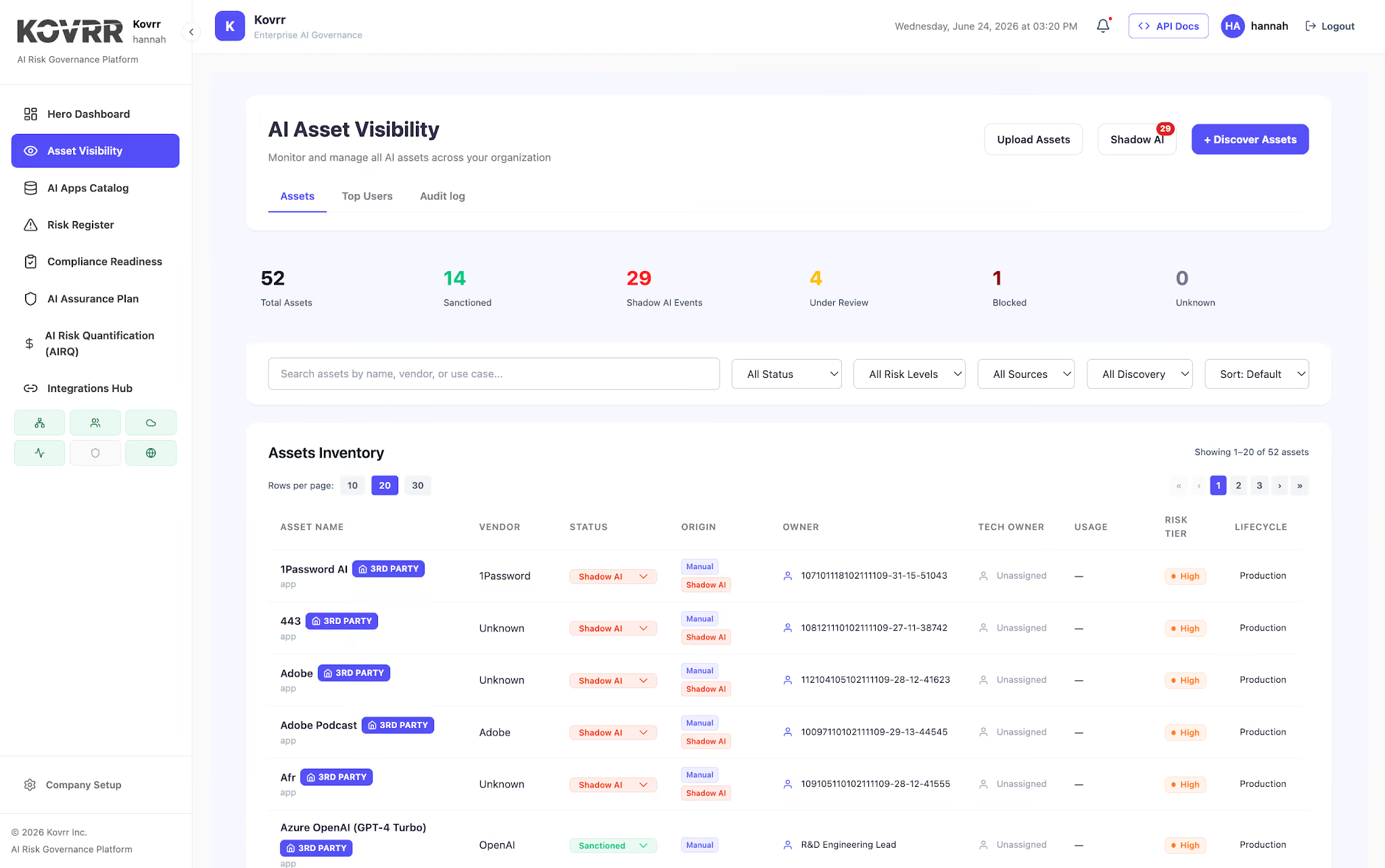
- Asset inventory. A real-time catalog of every AI system, including metadata on the vendor, risk profile, data access, business unit, and approval status. See how AI asset discovery works in practice.
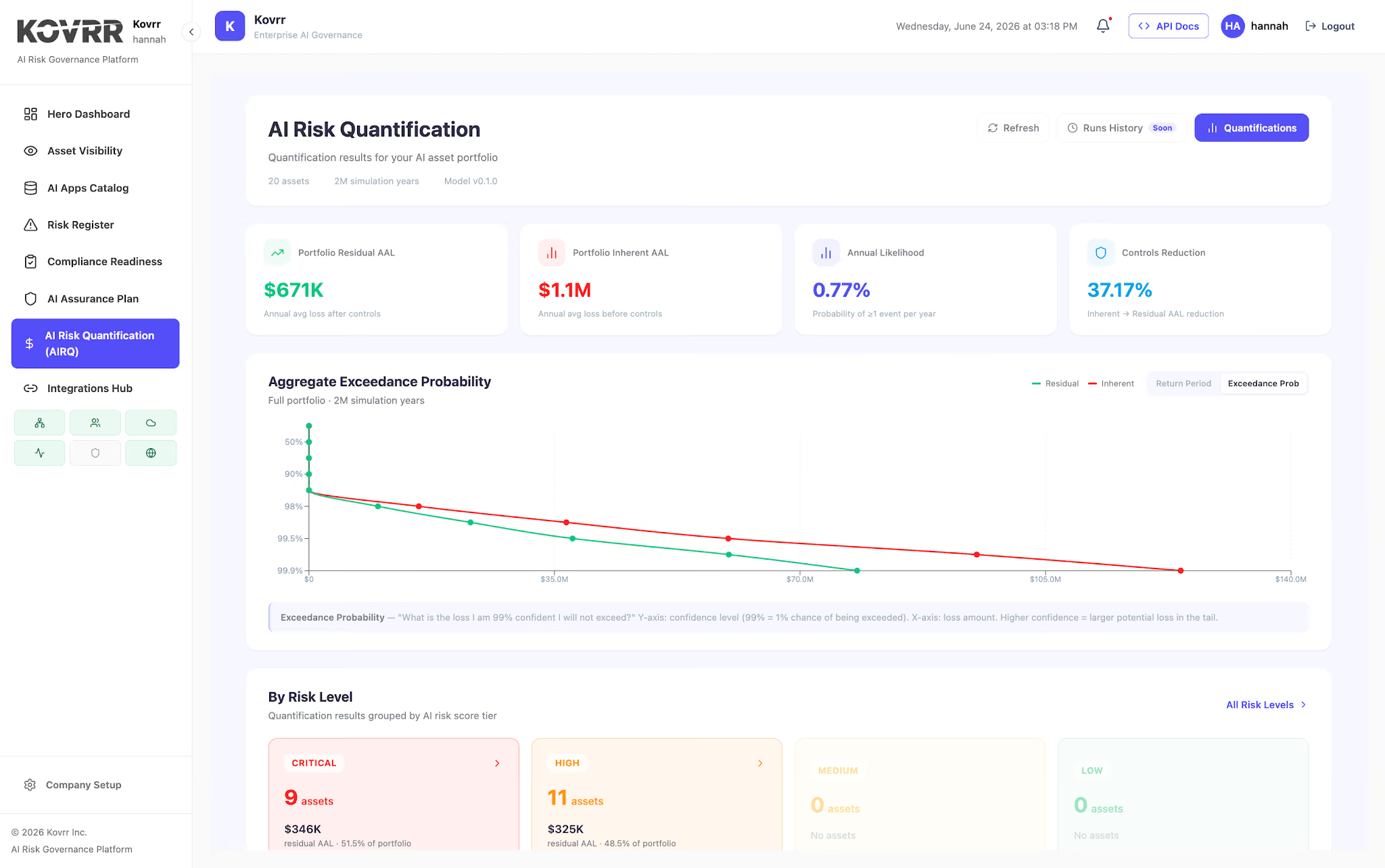
- Risk quantification. Financial modeling that translates AI exposure into dollar terms so executives and boards can compare AI risk against other enterprise risks and allocate resources accordingly. Learn more about AI risk quantification (AIRQ).
- Compliance mapping. Automated assessment against regulatory frameworks like the EU AI Act, NIST AI RMF, and ISO 42001, with evidence collection that reduces audit preparation from weeks to hours. Read more about AI compliance readiness.
- Enforcement and policy. Active controls that block, restrict, or allow AI tools based on organizational policy, applied at the point of use rather than after the fact.
Platforms such as Kovrr's AI Security and Governance Platform connect all four of these functions through a shared telemetry backend. When the browser extension detects a new shadow AI tool, the platform automatically updates the asset inventory, recalculates risk exposure, checks compliance status against applicable frameworks, and applies the relevant enforcement policy. That continuous loop is what separates an AI governance program from an AI tracking project.
Enterprise AI Licensing as a Tracking Mechanism
A growing number of enterprises are using AI licensing strategies as both a governance tool and a tracking mechanism. Rather than trying to block all unsanctioned AI usage, these organizations standardize on approved AI platforms and subsidize enterprise licenses so employees have less incentive to seek out alternatives.
When an organization negotiates an enterprise agreement with OpenAI, Anthropic, or Google, it gains centralized visibility into usage patterns, token consumption, and data handling. Employees who might otherwise paste sensitive information into a free ChatGPT account instead use the corporate instance, where usage is logged, policies are enforced, and data is protected by the enterprise agreement's terms.
This approach works best as one layer in a broader tracking strategy. It addresses the demand side of shadow AI by providing a sanctioned alternative, but it does not eliminate the need for technical discovery. Employees will still find and use AI tools outside the approved stack, especially niche or domain-specific tools that the enterprise license does not cover.
User Behavior Analytics (UBA) for AI Monitoring
Endpoint detection platforms with user behavior analytics capabilities can flag anomalous patterns that suggest unsanctioned AI usage. These systems establish baselines for normal user activity and alert security teams when behavior deviates, such as an employee suddenly uploading large volumes of data to an unfamiliar domain, or a spike in API calls to AI service endpoints.
UBA is particularly valuable for detecting AI usage that other methods miss, such as employees accessing AI tools through personal devices connected to corporate Wi-Fi, or developers integrating open-source models into internal applications without going through a formal review process. Tools like Teramind combine endpoint monitoring with behavior analytics to provide both discovery and risk detection in a single platform.
The limitation of UBA for AI tracking is that it generates alerts rather than a structured inventory. Without a governance layer to contextualize and prioritize those alerts, security teams can drown in noise.
Measuring AI Impact with Outcome-Based Metrics
Forward-thinking organizations are moving past basic usage metrics like "number of active AI users" or "total prompts per month" toward outcome-based measurement that connects AI usage to business performance. Rather than simply tracking time saved, these teams map AI usage directly to strategic KPIs.
Effective outcome-based metrics for AI tracking include:
- Revenue impact. Measuring whether AI-assisted sales teams close deals faster or at higher values.
- Productivity ratios. Comparing output volume and quality between AI-assisted and non-assisted teams performing similar work.
- Cost avoidance. Quantifying how AI tools reduce reliance on external contractors, manual processes, or redundant tooling.
- Risk reduction. Measuring whether AI-enabled security or compliance tools reduce incident frequency or audit findings.
- Customer experience. Tracking whether AI-powered support tools improve resolution times, satisfaction scores, or retention rates.
Some organizations use prioritization frameworks like P.A.I.N. (Pain, Automation Fit, Impact, Necessities) to evaluate their top AI use cases quarterly rather than trying to monitor every individual AI interaction. This strategic layer helps leadership focus on the AI deployments that matter most to the business rather than getting lost in granular usage data.
Third-Party and Supply Chain AI Monitoring
One of the most overlooked dimensions of AI tracking is third-party AI exposure. Your vendors are embedding AI into their products, and your data is flowing through those models whether you approved it or not. A CRM vendor that adds an AI feature to its platform is processing your customer data through a model you never evaluated. A cloud storage provider that introduces AI-powered search is indexing your documents with a system you never tested for data leakage.
Monitoring third-party AI requires a combination of vendor risk assessments, contract reviews, and automated tools that track AI-related changes in your vendor ecosystem. Organizations with mature AI governance programs maintain a vendor AI risk catalog that scores each vendor based on the AI models they deploy, the data those models access, and the controls in place to prevent misuse.
Building an AI Tracking Program: Practical Steps
For organizations looking to establish or improve their AI tracking capabilities, the following steps provide a practical starting point:
- Deploy browser-level discovery. Start with a browser extension or endpoint agent that provides immediate visibility into AI tools being accessed across the organization. Browser-level detection covers the broadest surface area with the lowest deployment friction.
- Integrate with existing security infrastructure. Connect AI discovery data to your CASB, SIEM, and endpoint detection platforms to enrich existing workflows rather than creating a parallel monitoring stack.
- Establish a centralized AI asset inventory. Create a single repository that catalogs all discovered AI tools with metadata including risk scores, business unit ownership, data access levels, and approval status.
- Classify and prioritize. Not all AI usage carries the same risk. Categorize discovered tools by risk level based on the data they access, the sensitivity of the business function they support, and whether they involve autonomous decision-making. Read more about how organizations should prioritize AI security risks.
- Connect discovery to compliance. Map your AI inventory against applicable regulatory frameworks so that compliance issues surface automatically as new tools are discovered. Learn how automated EU AI Act compliance works.
- Quantify financial exposure. Apply risk quantification models to translate AI exposure into financial terms that executives and board members can act on.
- Implement active enforcement. Deploy policy controls at the point of AI usage to block prohibited tools, restrict data uploads to unapproved platforms, and monitor autonomous AI agents in real time.
- Review and iterate quarterly. AI tool proliferation moves faster than annual audit cycles. Conduct quarterly reviews of your AI inventory, risk posture, and policy effectiveness.
The Bottom Line on Tracking AI Use Across Business Units
Identifying and tracking AI use across business units is no longer optional. Regulators expect it, boards are asking about it, and the volume of unsanctioned AI tools flowing into enterprises is accelerating every quarter. The organizations that treat AI tracking as a one-time audit will fall behind those that build continuous, connected discovery into their governance infrastructure.
The most effective approach layers browser-level telemetry, endpoint monitoring, CASB analysis, and platform-native analytics into a unified system that feeds a centralized AI asset inventory. From there, connecting discovery data to risk quantification, compliance mapping, and active enforcement transforms raw visibility into a governance program that reduces risk in real time.
For enterprises looking to move from fragmented tracking to integrated AI governance, the priority is selecting a platform that connects every signal from discovery through enforcement in a single, continuously updated view. Schedule a demo to see how a connected approach works in practice.

Identifying and Tracking AI FAQs
Speak to an ExpertWhat is shadow AI, and why is it risky?

How do I discover what shadow AI tools employees are using?
Can Microsoft 365 or Google Workspace track all AI usage in my organization?
What regulatory frameworks require organizations to track AI use?
How do I report AI usage and risk to the board?
What is the difference between AI tracking and AI governance?