
NIST AI 600-1
NIST AI 600-1, the Generative AI Profile, is a companion document to the NIST AI Risk Management Framework that applies the framework’s four functions to risks specific to generative AI. Published in July 2024, it identifies 12 generative-AI-specific risk areas and provides suggested actions mapped to the Govern, Map, Measure, and Manage functions.
What the Generative AI Profile Adds
The AI RMF was written for AI systems broadly, so it does not address the ways generative AI behaves differently from traditional machine learning. NIST AI 600-1 covers that ground, naming risks that are unique to generative AI or made worse by it, then listing suggested actions against each one.
The 12 risk categories are CBRN information or capabilities, confabulation, dangerous/violent/hateful content, data privacy, environmental impacts, harmful bias or homogenization, human-AI configuration, information integrity, information security, intellectual property, obscene/degrading/abusive content, and value chain and component integration. Each carries more than 200 suggested actions in total, organized against the four core functions and tagged by whether they apply to a developer, a deployer, or an end user. libertifydsalta
That developer-deployer-user tagging matters for most enterprises, since an organization using generative AI rather than building it carries only a subset of the actions.
Why NIST AI 600-1 Matters
Most enterprise AI risk sits in generative tools rather than in models the organization built itself. The Generative AI Profile connects that reality to a framework regulators and insurers already recognize, which makes it the practical starting point for a US organization governing employee use of generative AI and the agents built on it.
Several of its categories line up with obligations elsewhere. CBRN information harm, information integrity, and harmful bias and homogenization map directly to the categories named in Recital 110 of the EU AI Act.
How Kovrr Approaches NIST AI 600-1
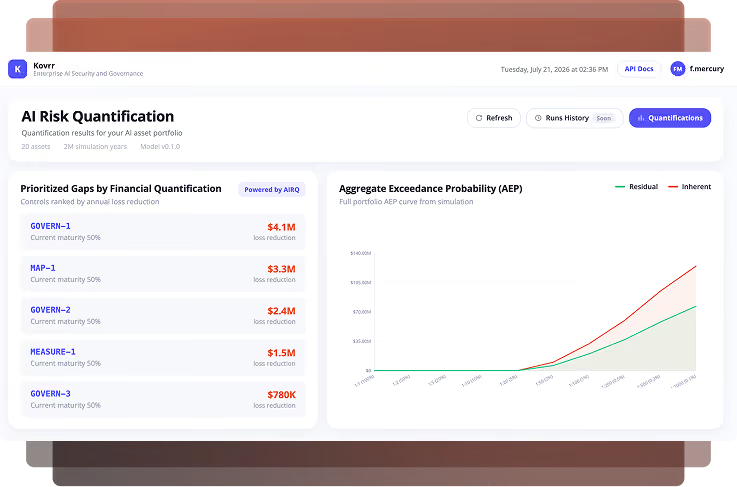
Kovrr’s AI Security and Governance Platform assesses control maturity against the Generative AI Profile alongside the parent NIST AI RMF, producing evidence from live telemetry rather than from questionnaires. Findings map to the four functions and carry through to AI Risk Quantification, so control weaknesses are expressed in financial terms.
Related Terms


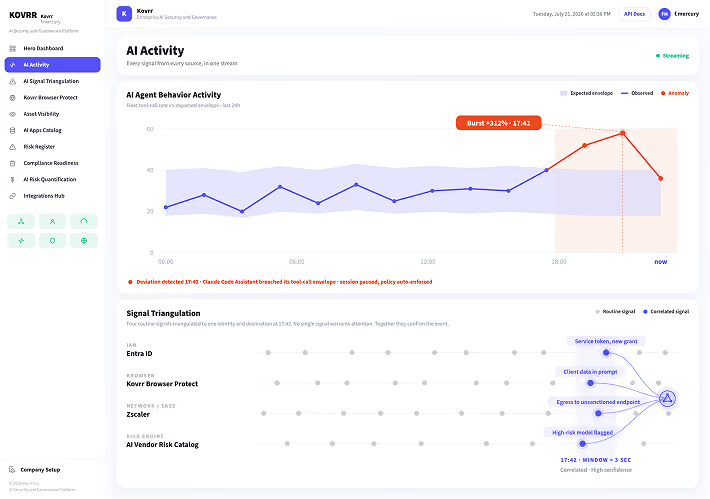
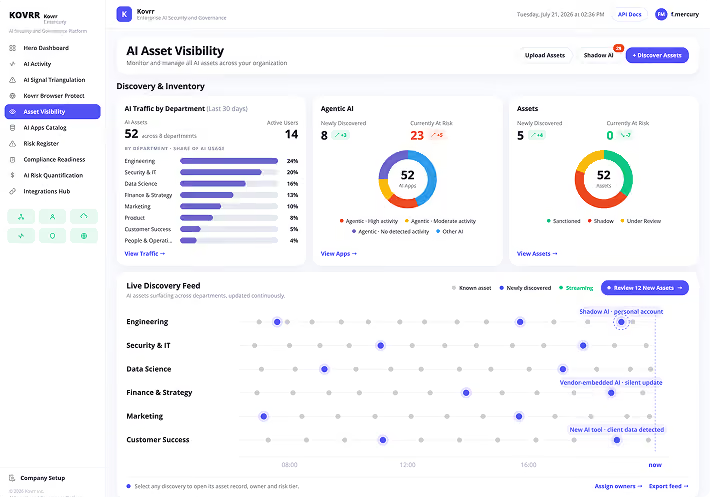
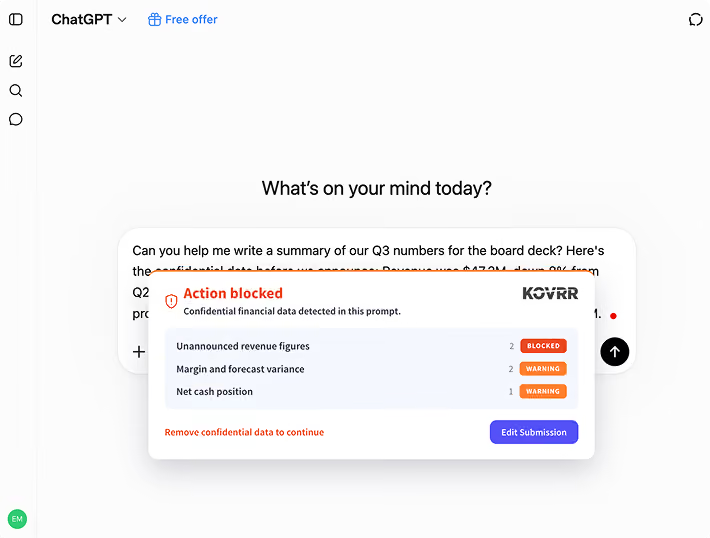
Full AI Visibility. Full Control. One Connected Platform.
Enterprise AI is expanding faster than most governance programs can track. Kovrr connects every AI signal across browser, endpoint, network, identity, and vendor systems into a single platform so security, governance, and risk teams work from the same evidence.