
AI Supply Chain Security Beyond the Contracted Vendor
An organization assesses the vendors it signs with. The AI processing its data often sits one relationship further out, in a sub-processor the vendor added or a model embedded into a product bought before anyone was asking about AI. Kovrr’s AI third-party risk management platform surfaces those dependencies through observed behavior rather than through the contract.

Where AI Supply Chain Security Stop
A vendor assessment reaches the company that signed the contract, and the AI touching corporate data sits further out than that.
1. The Sub-Processor Nobody Named: A vendor adds an AI provider to deliver its own service, and that provider appears in no agreement the organization signed.
2. The Model That Arrived in an Update: A product bought before AI was a procurement question ships a feature that processes corporate data through a model.
3. The Dependency Several Vendors Share: Separate suppliers resolve to the same underlying provider, so a single failure reaches the organization through more than one relationship.
AI supply chain security holds when the dependencies are observed rather than declared.
How Kovrr Maps the AI Supply Chain
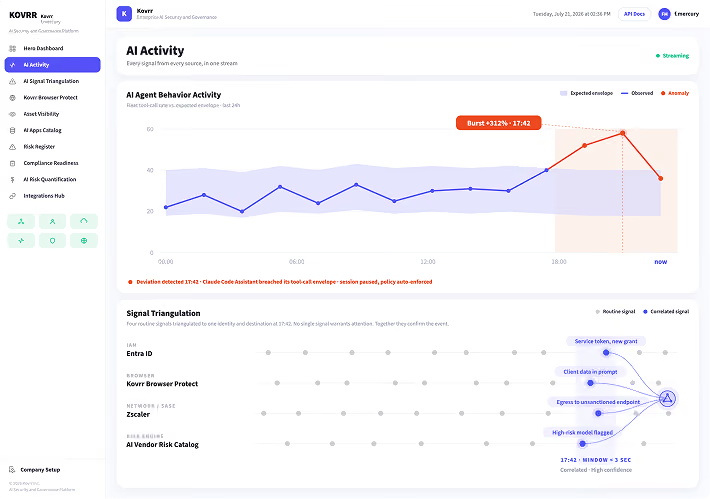
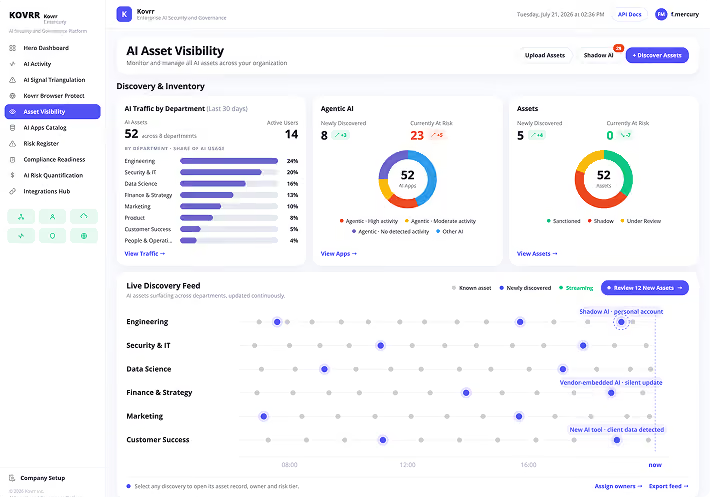
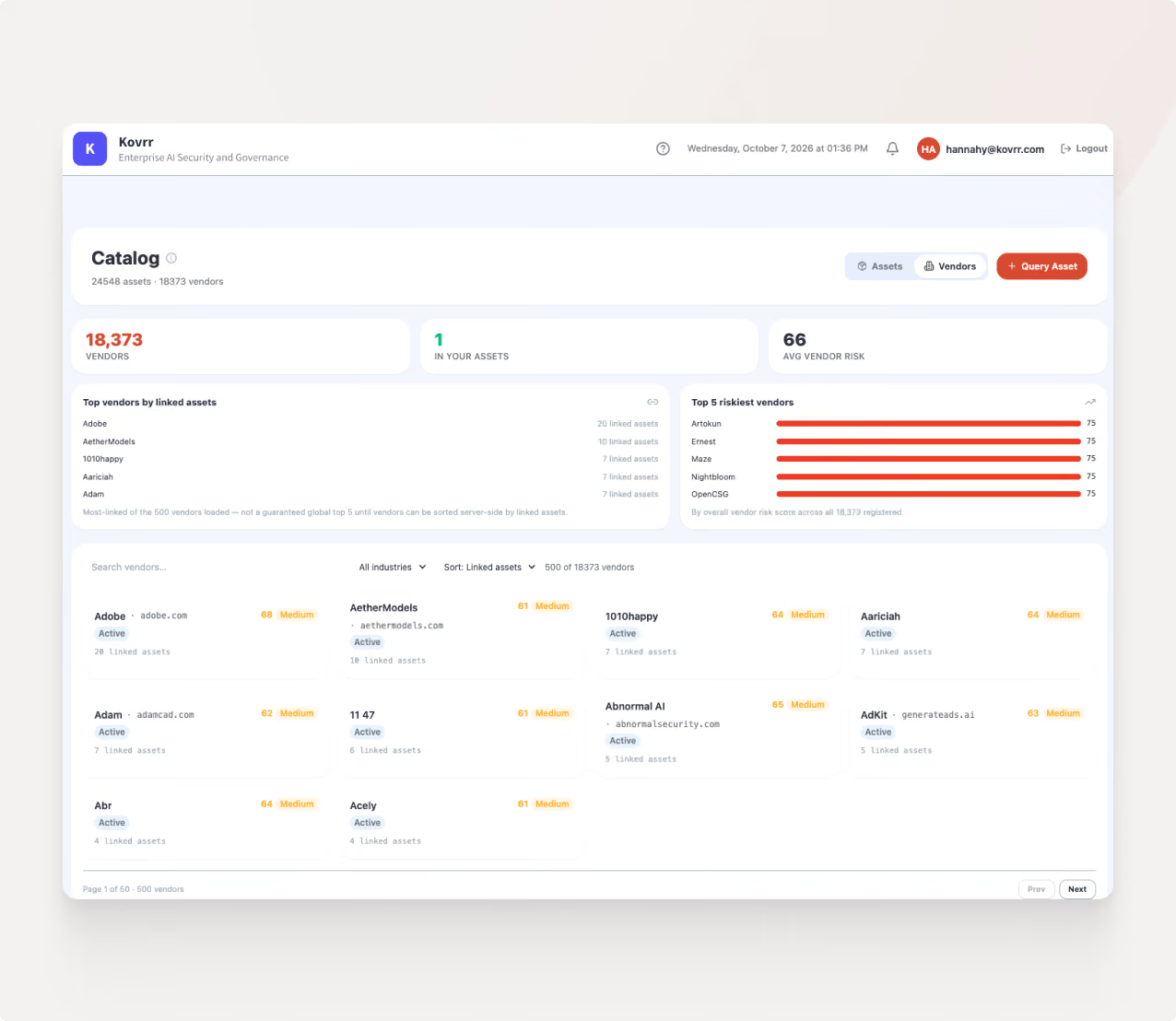
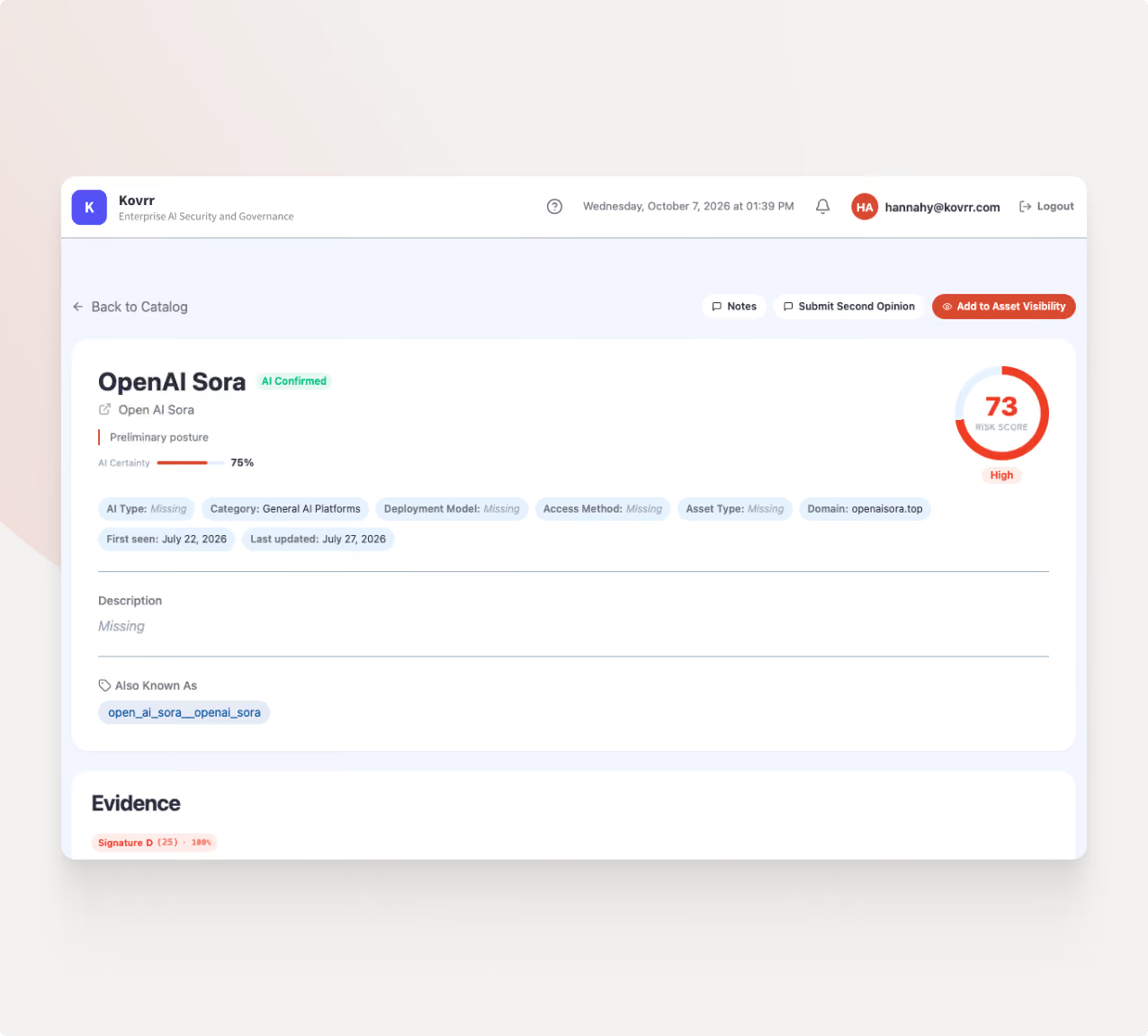
Kovrr builds the dependency picture from what corporate data touches in real time. Each AI provider reached through a vendor relationship enters the record with its own score.
Dependencies Found Through Use: An AI provider reaching corporate data surfaces through telemetry, including the ones no procurement record holds.
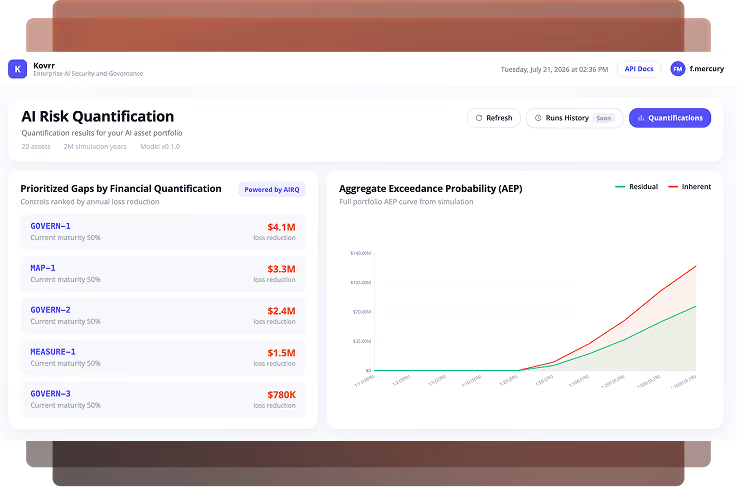
Providers Scored Independently: A sub-processor carries its own risk score on training, retention, and agreement terms rather than inheriting the rating of the vendor that introduced it.
Shared Dependencies Identified: Separate vendors resolving to the same provider are grouped, so concentration is visible before a single failure reaches multiple relationships.
Embedded Models Detected on Arrival: A product that adds AI in a release surfaces as a changed asset rather than waiting for the next review.
Chain Depth Recorded: Each dependency carries the relationship that introduced it, so the path from a signed contract to the AI handling data is documented.


One Integration, Every Tenant It Touched
A compromised AI integration reached corporate data across every organization that had approved it. This AI Interaction Data Fabric Insights issue traces the compromise from the OAuth grant to the records it exposed.


The Assurance a Mapped AI Supply Chain Brings
AI Supply Chain Security FAQs
Schedule a DemoWhat is AI supply chain security?

Why doesn’t an SBOM cover AI supply chain risk?
How does AI arrive through a vendor already under contract?
What is a shared AI dependency?
Can sub-processors be assessed without a direct relationship?
What happens when one AI provider fails?
