
AI Audit Trail
An AI audit trail is a durable record of AI activity showing what happened, under whose authority and with what consequence, retained in a form that lets somebody who did not build it test the conclusion.
What Makes One Credible
How many innocent explanations it rules out rather than how much it contains. A record that admits a benign reading supports an assertion rather than a conclusion, and volume does not change that, since a thousand entries describing authorized application traffic still describe authorized application traffic.
The Confidence Ladder
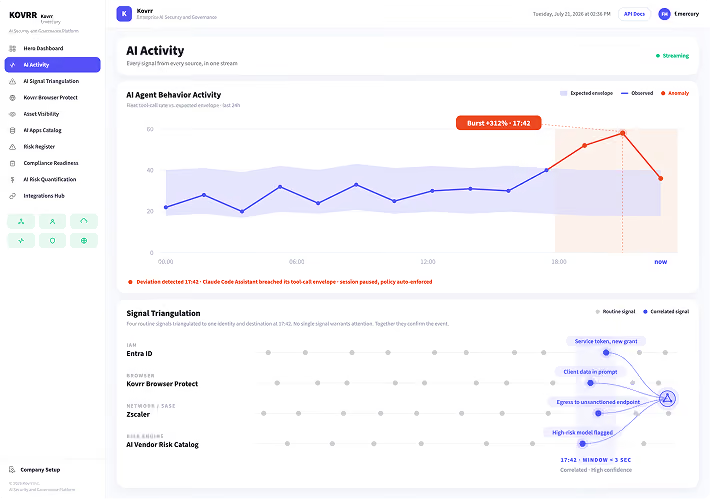
Five rungs, applied to a specific scenario rather than to the trail in general. Assertion, where one source records the activity and a benign reading remains available. Corroboration, where a second source confirms the same fact. Triangulation, where independent sources combine into a reading with no innocent explanation. Attribution, where the finding names an identity, an asset and a counterparty. Then scoping, where it states what else that counterparty can reach.
Each independent source removes an alternative explanation rather than adding detail, which is why three sources of one type are worth less than two of different types.
What to Retain
Preparatory activity deserves retention on the same footing as consequential operations. An actor with enough access to complete an action usually has enough to remove its trace, while enumeration and listing are noisier and less visibly consequential, which makes them the more dependable foundation.
What Regulators Ask Of It
What happened, under whose authority and with what consequence. Those questions map onto the upper rungs rather than the lower, so a trail reaching only corroboration satisfies fewer obligations than its retention volume suggests. See AI accountability for the governance framing.
Related Terms


Full AI Visibility. Full Control. One Connected Platform.
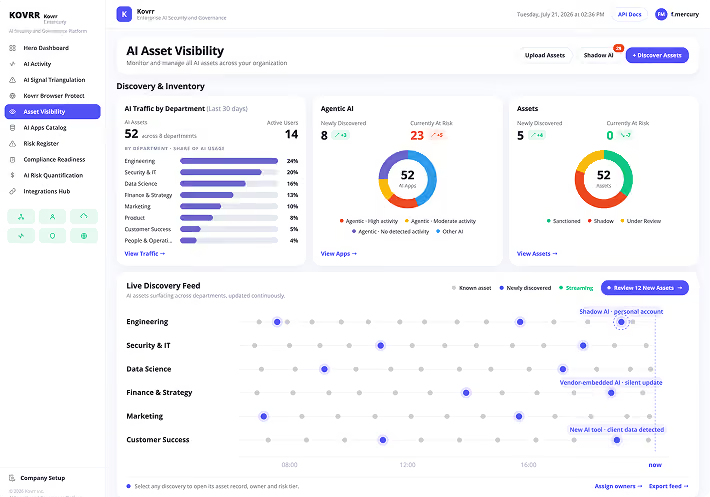
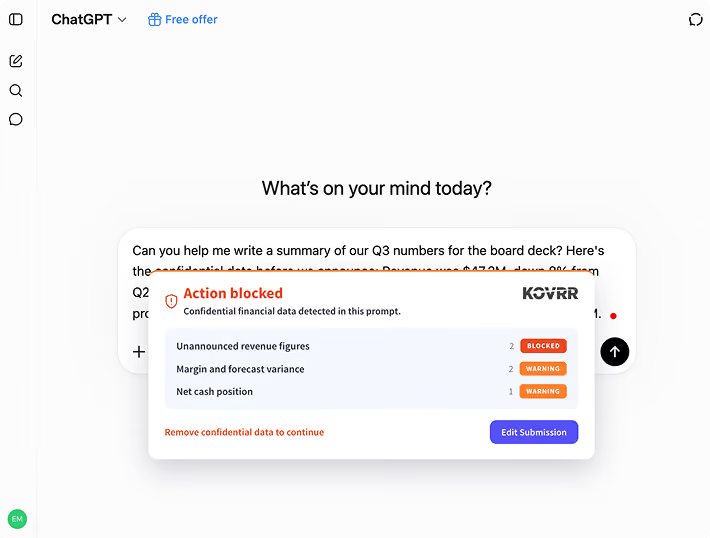
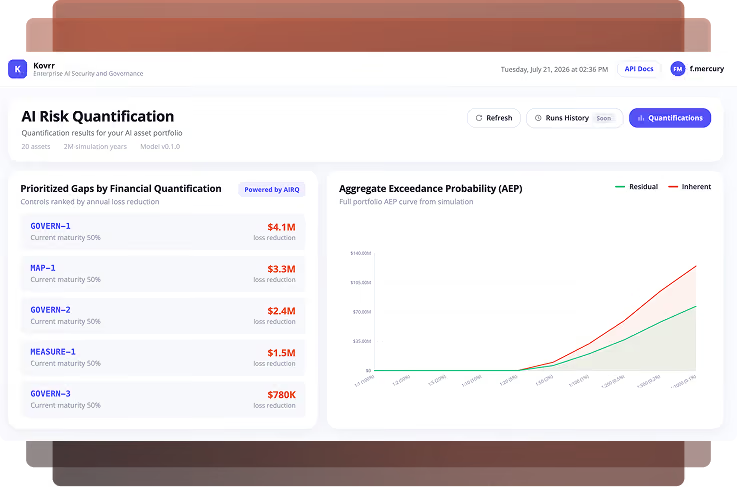
Enterprise AI is expanding faster than most governance programs can track. Kovrr connects every AI signal across browser, endpoint, network, identity, and vendor systems into a single platform so security, governance, and risk teams work from the same evidence.