
AI Agent Audit Trail
An AI agent audit trail is a durable record of an AI agent's activity, capturing identity, session context, tool calls, actions taken and policy events in sequence, so that past behavior can be reconstructed and tested.
Sequence Carries as Much Weight as Content
An agent trail records what an agent did, under whose authority, against which systems, and in what order. Reconstruction after the fact is the purpose, which makes ordering as important as the events themselves. An agent that read a customer record and then sent an email is doing something different from one that sent the email first and read the record to draft a follow-up. A log holding both actions without their order cannot tell those two stories apart.
What the Record Has to Contain
Identity comes first, covering the agent's own identity and the human or service account it acts on behalf of. Session and task context follow, so individual calls can be grouped into the work they belonged to. Tool calls need their own entries, including which MCP server or API was reached and with what arguments. Actions against files and repositories belong in the record, as do the resources the agent read. Policy events complete it, covering what was allowed, blocked, quarantined or escalated for human approval.
Prompt Text Is a Separate Retention Decision
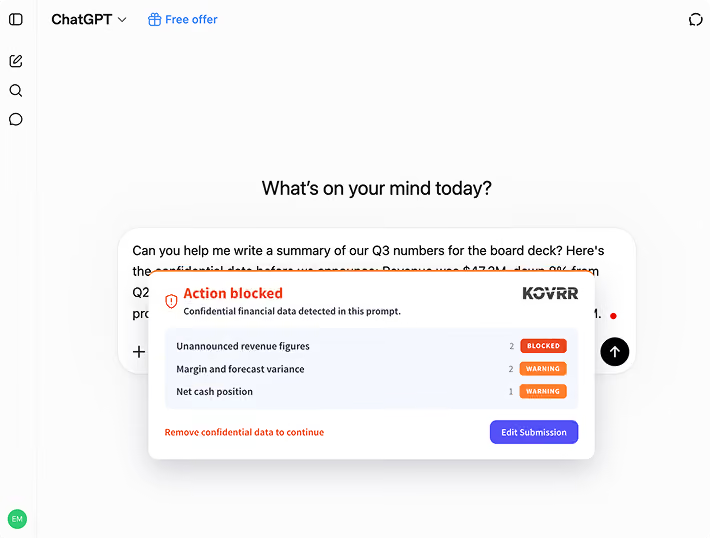
Capturing prompt and response content produces the richest reconstruction and the largest privacy liability. Regulated data, credentials, source code and personal information all pass through prompts. Organizations that capture content tend to do it selectively, triggered by a policy event or an elevated risk score, and hold it for less time than they hold metadata. A category identifier, a severity, the action taken, a timestamp, the application and the identity answer most governance questions without content ever leaving the device, which is the position AI usage monitoring sets out in detail.
Monitoring and Audit Trails Answer Different Questions
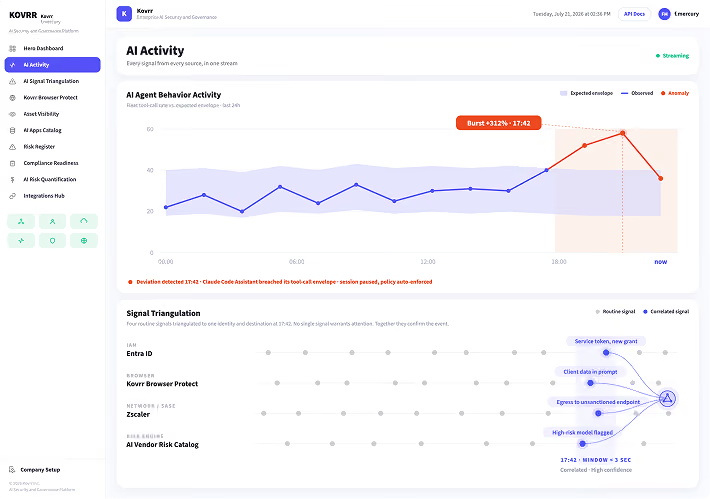
Monitoring watches activity as it happens and raises findings from it. An audit trail is what remains afterward, and its value lies in how many innocent explanations it rules out, a standard covered in general terms under AI audit trail. Agent trails inherit that standard with one added difficulty. An agent working autonomously generates far more events than a person does, and most of them are preparatory. Enumeration and directory listing look harmless in isolation and establish intent when read in sequence, so retaining them matters as much as retaining the consequential operations.
Standards That Expect One
ISO/IEC 42001 requires traceability and accountability records for AI systems under management. SOC 2 and ISO 27001 both carry logging obligations that reach agent activity once agents touch production systems. The EU AI Act imposes automatic logging on high-risk systems, with retention set against the intended lifetime of the system.
Related Terms


Full AI Visibility. Full Control. One Connected Platform.
Enterprise AI is expanding faster than most governance programs can track. Kovrr connects every AI signal across browser, endpoint, network, identity, and vendor systems into a single platform so security, governance, and risk teams work from the same evidence.