
AI Usage Monitoring
AI usage monitoring is the practice of recording which identities reach which AI tools, under which accounts, carrying what categories of data, across every surface where that activity can be observed.
What It Is Not
Model observability tracks latency, drift, token spend and output quality for applications a team built itself. AI usage monitoring watches people and agents rather than models. Search results mix the two markets freely, so establishing which one a product belongs to is the first step in any evaluation.
The Surfaces It Covers
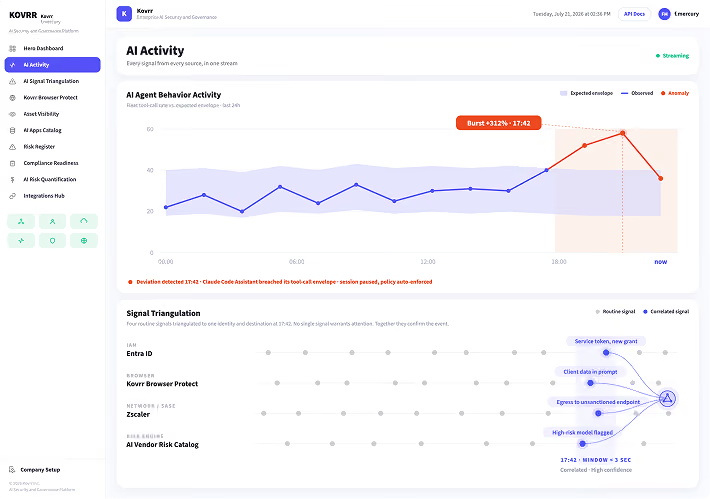
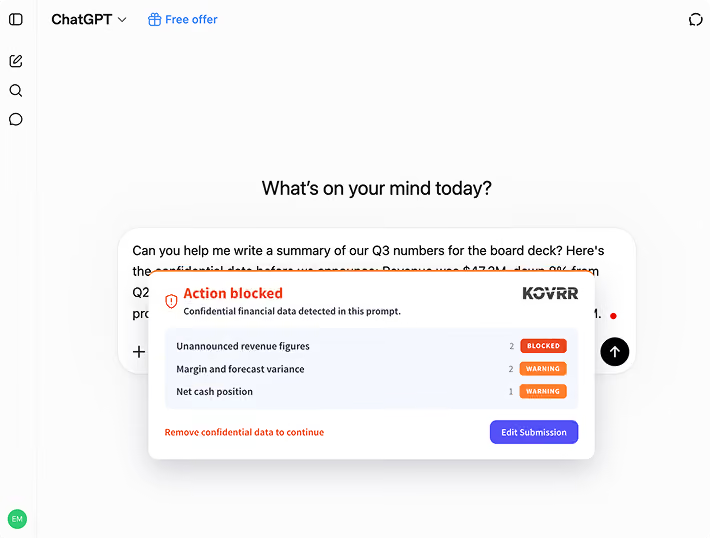
Network telemetry records destinations and volume. Browser signals read composed content before transport encryption applies, including the account used. Endpoint signals observe desktop applications and local processes. Identity records establish which accounts and grants exist.
No single position sees everything, and each has a specific blind spot. Device-level coverage exists because several categories of AI use never reach the network in inspectable form.
What a Record Should Contain
Six fields answer the governance question without over-collecting. A category identifier for what was detected, a severity, the action taken, a timestamp, the application involved and the identity. Prompt text, file contents and keystrokes do not need to leave the device for the record to be useful.
Why It Precedes Governance
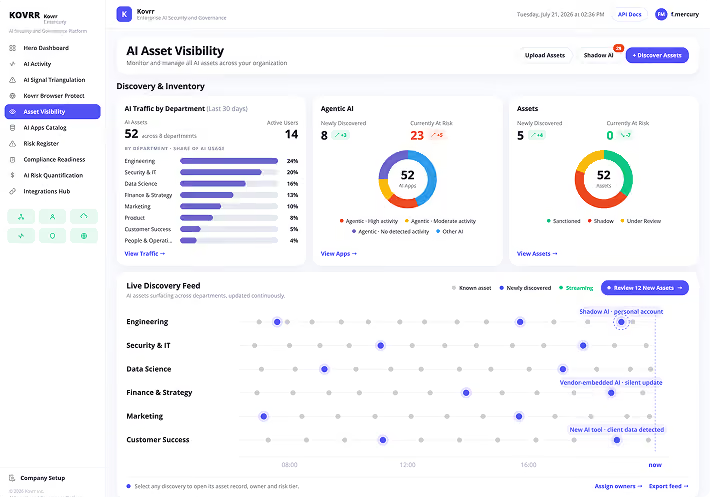
A policy that cannot be observed cannot be enforced, and an inventory nobody maintains describes an estate that stopped existing months ago. Usage monitoring supplies the observation that AI governance acts on.
Related Terms


Full AI Visibility. Full Control. One Connected Platform.
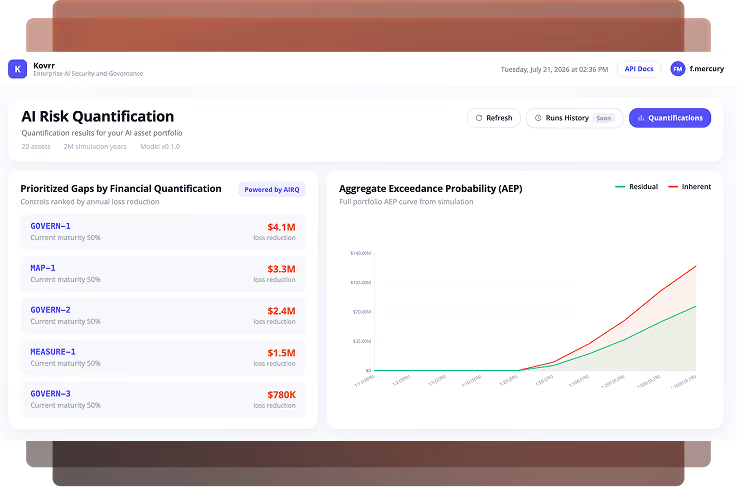
Enterprise AI is expanding faster than most governance programs can track. Kovrr connects every AI signal across browser, endpoint, network, identity, and vendor systems into a single platform so security, governance, and risk teams work from the same evidence.