
AI Interaction Data Fabric
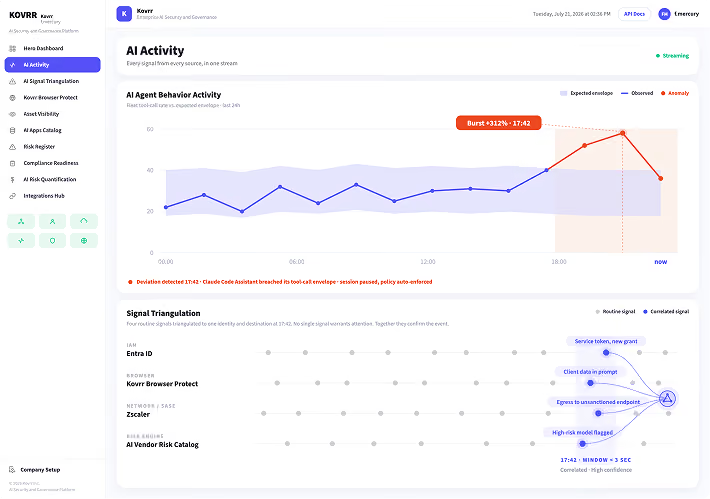
The AI Interaction Data Fabric is Kovrr's correlation layer, collecting signals from every connected source and resolving them onto shared identifiers so that triangulated findings can be produced from events that look ordinary in isolation.
What It Collects
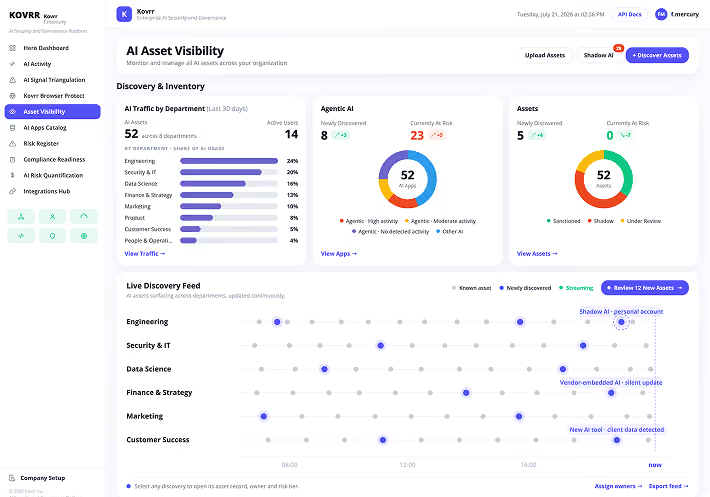
Signals arrive from eight source categories, covering network traffic, endpoint and detection response tooling, the browser, agent and model context protocol servers, cloud observability, model and telemetry streams, identity systems, and data loss prevention. Each category sees one slice of an interaction and is blind to the rest, which is why the count of connected categories matters more than the count of connected products.
Signals and Findings
A signal is an observation from one source. A finding is what emerges when signals are correlated or triangulated against shared identifiers, and it carries the sources that produced it so a reviewer can test the conclusion rather than accept it.
Correlation confirms that two sources recorded the same fact. Triangulation combines independent sources into a reading with no innocent explanation, which is the stronger of the two. Confidence climbs in steps as each added source removes an alternative explanation.
Why the Name Is Specific
Interaction is the operative word. The subject is the exchange between a person or an agent and an AI system, which is narrower than data in general and broader than any single tool’s own logs. The generic category is described under AI data fabric.
What Sits on Top
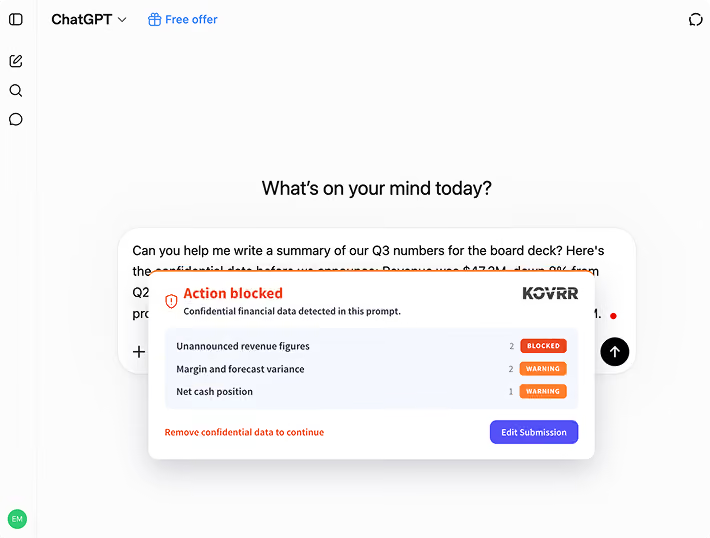
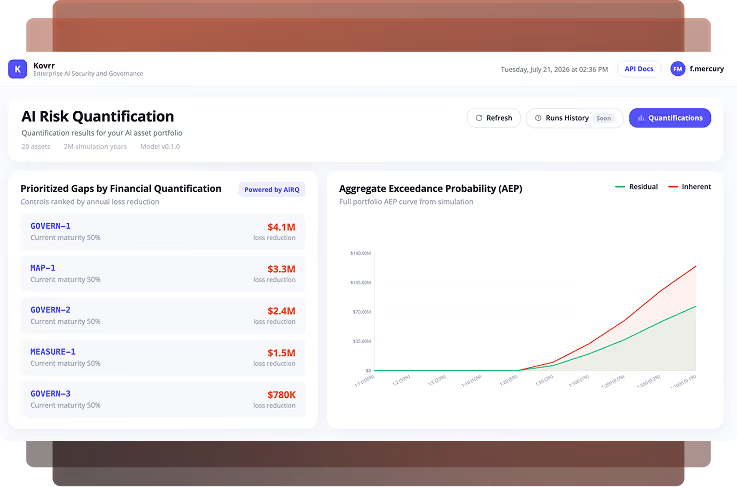
The same records feed asset inventory, policy enforcement and AI risk quantification (AIRQ), so the figure a board sees and the records an auditor examines come from one source rather than two that have to be reconciled.
Related Terms


Full AI Visibility. Full Control. One Connected Platform.
Enterprise AI is expanding faster than most governance programs can track. Kovrr connects every AI signal across browser, endpoint, network, identity, and vendor systems into a single platform so security, governance, and risk teams work from the same evidence.