
Colorado AI Act (SB 205)
The Colorado AI Act (SB 205), signed in May 2024, is the first comprehensive AI law in the United States, regulating developers and deployers of high-risk AI systems that make consequential decisions affecting individuals in Colorado.
What the Colorado AI Act Requires
The law places obligations on both developers of high-risk AI systems and deployers who use them. Developers must document how their systems work, disclose training data information, and provide risk documentation to deployers. Deployers must implement risk management programs, conduct impact assessments, notify individuals affected by AI decisions, and report algorithmic discrimination to the state attorney general.
"High-risk AI" under the law is defined by use case: AI that makes or is a substantial factor in decisions with material effects on employment, education, financial services, housing, healthcare, insurance, legal services, and essential government services.
Why the Colorado AI Act Matters
As the first US state to enact comprehensive AI legislation, Colorado has effectively established a template that other states are following. Organizations operating across US states are increasingly building compliance programs against the Colorado standard, expecting it to be adopted or approximated elsewhere.
The law takes effect February 1, 2026, giving organizations a defined timeline to build compliance readiness.
Colorado AI Act and Other Frameworks
The Colorado AI Act draws heavily on the NIST AI RMF for its risk management program requirements. Organizations already aligned with NIST AI RMF start with much of the required infrastructure in place. See AI regulations and frameworks: preparing for compliance and resilience.
Related Terms


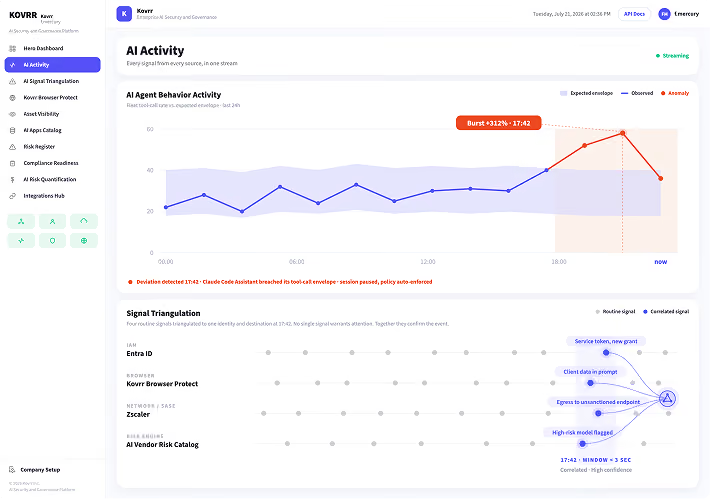
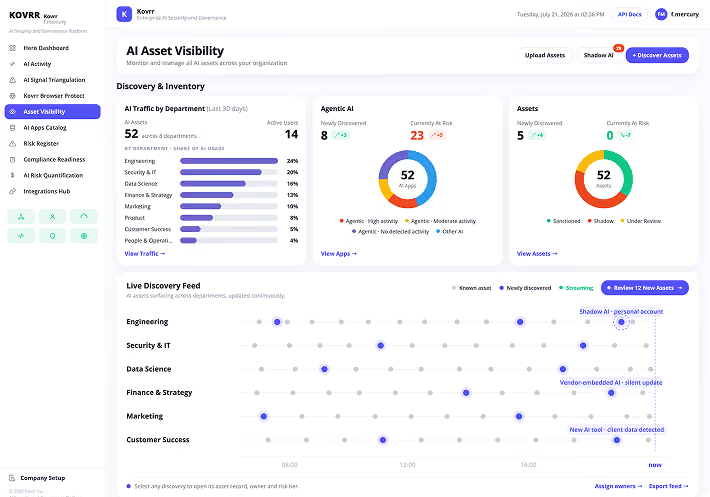
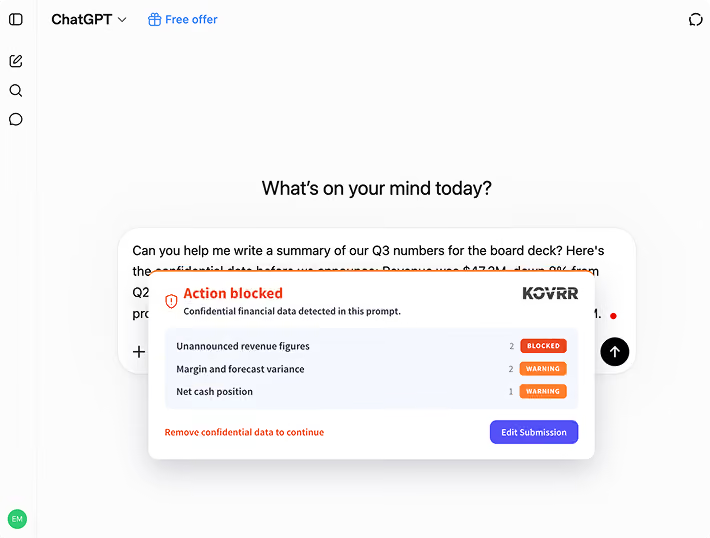
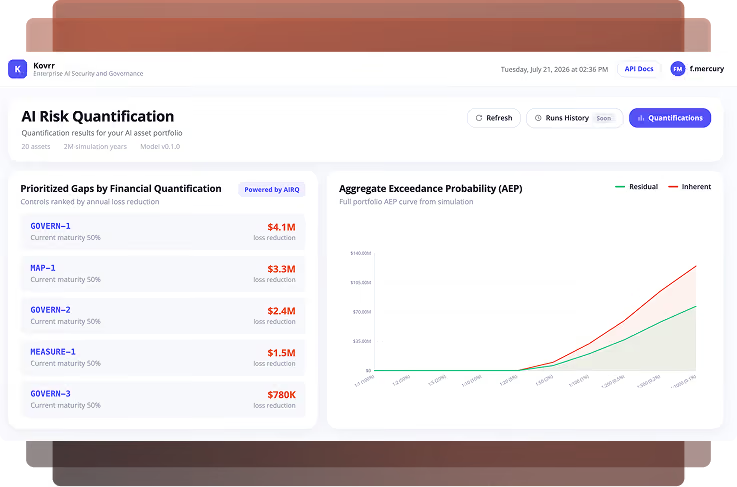
Full AI Visibility. Full Control. One Connected Platform.
Enterprise AI is expanding faster than most governance programs can track. Kovrr connects every AI signal across browser, endpoint, network, identity, and vendor systems into a single platform so security, governance, and risk teams work from the same evidence.