
AI Use Case Inventory
An AI use case inventory is the catalog of how AI is being applied across an enterprise, mapping specific business purposes and workflows to the AI systems supporting them, along with associated risk classifications and controls.
Use Case Inventory vs. Asset Inventory
An AI asset inventory catalogs the AI systems themselves. An AI use case inventory catalogs what those systems are being used for. The two are complementary but different. One AI system can support many use cases. One use case can involve multiple AI systems.
Regulators typically care about use cases, not just systems. Whether an AI system is "high-risk" under the EU AI Act, for example, often depends on how it is being used, not just what it is.
What a Use Case Inventory Contains
Each use case entry typically documents the business purpose, the AI systems involved, the affected populations or business processes, the applicable regulations and their risk classifications, the assigned controls, and the ownership. This gives governance teams the view they need to determine whether specific use cases require additional controls or are prohibited entirely.
Why Use Case Inventories Are Emerging
The shift toward use-case-based AI regulation, particularly the EU AI Act's approach of classifying risk based on application rather than technology, has made use case inventories operationally necessary. An organization cannot demonstrate compliance without being able to point to specific documented use cases and their associated controls.
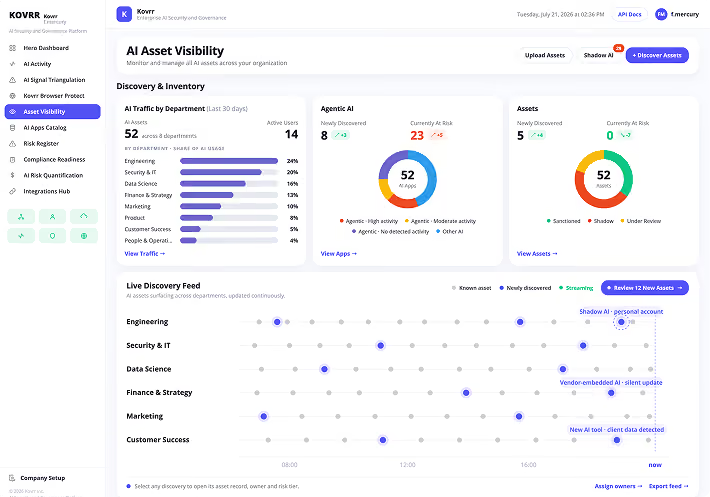
See how to identify and track AI use across business units.
Related Terms


Full AI Visibility. Full Control. One Connected Platform.
Enterprise AI is expanding faster than most governance programs can track. Kovrr connects every AI signal across browser, endpoint, network, identity, and vendor systems into a single platform so security, governance, and risk teams work from the same evidence.