
AI Explainability
AI explainability is the ability to describe how an AI system arrived at a specific output or decision, in terms a human reviewer, auditor, or affected party can understand and evaluate.
What Explainability Requires
Explainability sits at two levels. Global explainability describes how a model behaves in general, what features it weights heavily, what patterns it has learned. Local explainability describes how the model produced a specific output for a specific input.
The two levels serve different audiences. Global explainability supports governance teams and regulators. Local explainability supports individuals affected by AI decisions who want to understand why a specific outcome occurred.
Why Explainability Is a Regulatory Requirement
The EU AI Act requires explainability for high-risk AI systems. Sectoral regulations in credit, employment, and insurance increasingly require explanations for adverse decisions. GDPR Article 22 gives individuals rights around automated decision-making that include meaningful information about the logic involved.
Explainability is also a business requirement independent of regulation. Enterprise buyers of AI systems, especially in regulated industries, require explainability documentation as part of procurement.
Explainability and Modern Model Architectures
Explainability is easier for some model types than others. Traditional ML models often have well-established explanation techniques. Modern LLMs and deep neural networks are harder, because their internal representations do not map neatly to human-understandable features. This is the technical reality behind the "AI black box" concern.
Mature AI programs address this through a combination of model choice, post-hoc explanation techniques, structured documentation, and clear communication about the limits of explanation for specific system types.
Related Terms


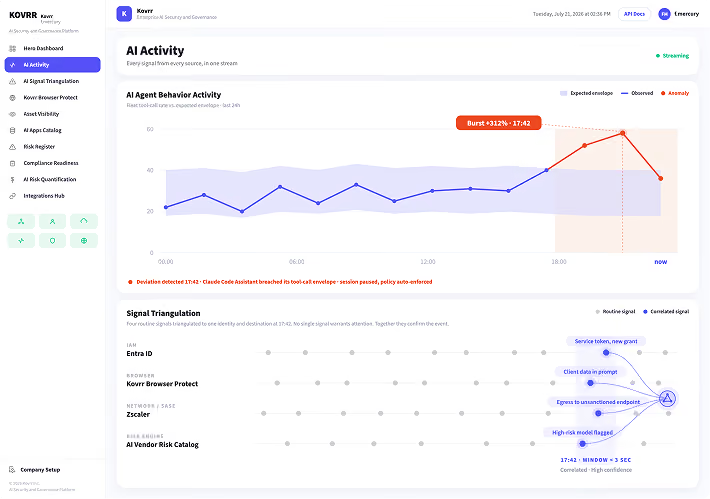
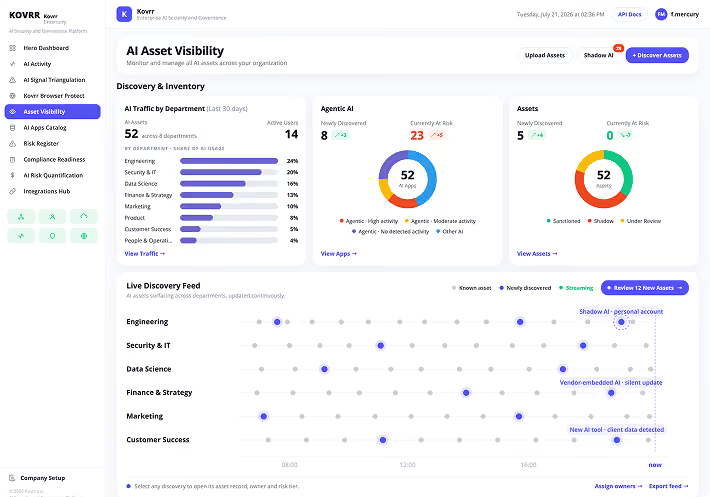
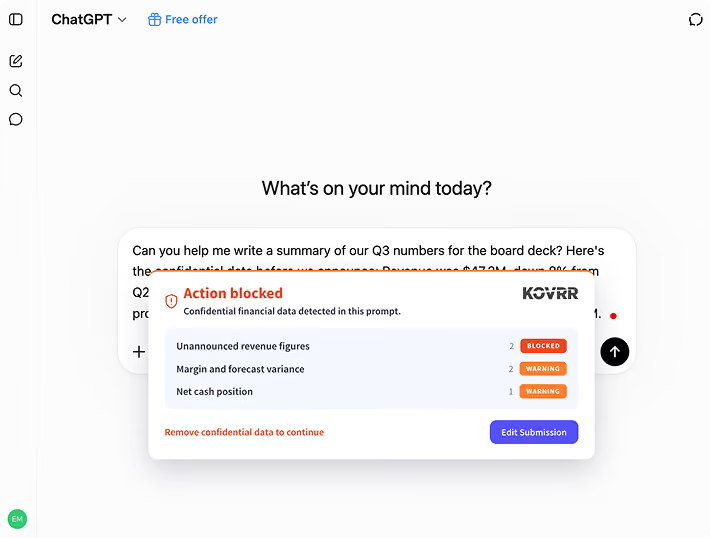
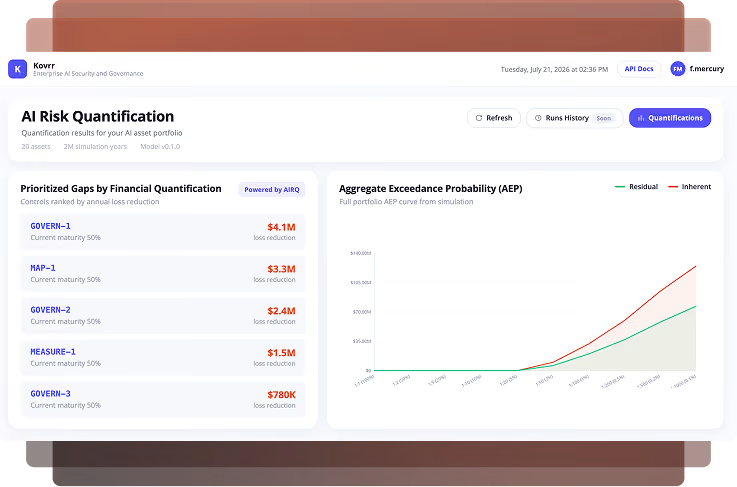
Full AI Visibility. Full Control. One Connected Platform.
Enterprise AI is expanding faster than most governance programs can track. Kovrr connects every AI signal across browser, endpoint, network, identity, and vendor systems into a single platform so security, governance, and risk teams work from the same evidence.