
Blog Post
Shadow AI Monitoring: Keeping Watch After Discovery
August 10, 2026
Shadow AI discovery produces a list, and the list starts decaying the moment it is printed. An enterprise that ran a thorough discovery exercise in March holds an accurate picture of March. Employees adopt new tools weekly, vendors ship AI features into software already approved, and agents acquire permissions nobody granted deliberately.
Monitoring is the part that keeps the picture true, and it is a different discipline from finding things once. Detection asks what exists. Monitoring asks what changed, whether the change matters, and who needs to know. What follows covers the second question, since the detection methods themselves are well documented elsewhere.
Why Discovery Alone Decays
A discovery exercise is a photograph of a moving subject. Three forces pull the estate away from the record, and none of them involves anyone breaking a rule.
The Estate Changes Faster Than the Register
New AI tools reach general availability constantly, and trying one takes a work email and thirty seconds. Individual teams solve local problems without a procurement conversation, so the register ages against a footprint that grows in small increments. AI sprawl accumulates through ordinary behavior rather than deliberate circumvention, which is why enforcement framed as a discipline problem tends to fail. The same pattern repeats with autonomous software, where agent sprawl grows from teams solving their own problems rather than from anyone bypassing review.
Sanctioned Tools Become Shadow AI on Their Own
The most overlooked path requires no employee action at all. A vendor pushes an update that embeds a generative feature into a tool your organization approved two years ago, and a toggle appears that sends content to a model nobody assessed. The tool remains sanctioned, the AI inside it was never reviewed, and no installation event exists to detect. Monitoring vendor updates across the SaaS estate is the only way that surfaces, and tracking AI use across business units has to account for features arriving rather than tools appearing.
Agents Change Their Own Access
An autonomous agent authorized once can extend its reach through the tools it calls, and its data access pattern next month may not resemble the one approved at onboarding. Permission scoping set at deployment describes intent rather than current state, so the delta between the two is itself a monitoring target. Attribution matters as much as scope, because an agent acting under a delegated credential is invisible in user logs unless agent identity is tracked separately from the person who deployed it.
What Continuous Monitoring Watches
Monitoring everything produces noise nobody reads. Three signal classes carry most of the value.
- New AI Surfaces: Features appearing inside approved tools, not just new tools appearing on the network.
- Permission Grants: OAuth and API authorizations connecting corporate data to external model endpoints.
- Behavioral Change: Volume, destination and pattern moving away from an established baseline for each user and agent.
Permission Grants Are the Highest-Value Signal
An employee connecting a public AI assistant to a corporate document store creates real exposure through an ordinary consent screen. The grant is logged, the data movement that follows often is not, and the connection persists long after the person forgets making it. Reviewing newly granted scopes against external model endpoints catches a class of AI data leakage that content inspection misses entirely, because the data leaves through an authorized channel.
Behavior Rather Than Presence
Presence monitoring answers whether a tool is in use. Behavioral monitoring answers whether its use resembles what was approved. A sanctioned assistant handling ten prompts a day and the same assistant handling four hundred describe different risk positions, and only one of them appears in an inventory. The same logic extends to machine traffic, where monitoring agent behavior in production watches API call patterns and query volume rather than uptime.
Where Monitoring Has to Sit
Placement determines what is visible, and the popular placements have known blind spots. Network filtering sees domains and misses everything inside an authorized session. Identity logs see authentications and miss what happened afterward. Neither sees a browser extension operating in a side panel.
The Browser Is the Blind Spot
Much shadow AI now runs as an extension or an embedded side panel, generating no new domain request a network tool would notice. Browser-level telemetry sees the interaction itself, including what was pasted into a prompt, which is the difference between knowing a tool is present and knowing what left the building through it. Coverage at that layer also captures the in-session activity that makes up the surface agents expose.
Third-Party AI Needs Its Own Watch
Vendors embedding AI in the services you buy expand the estate without touching your network. Monitoring here means tracking vendor disclosures and feature releases rather than traffic, and third-party AI risk monitoring operates on a different cadence than internal telemetry because the signal arrives as a changelog rather than a packet.
Baselines Beat Blocklists
A blocklist encodes what was known when it was written, and shadow AI defeats it by being new. Baselines invert the problem by describing normal for each user, team and agent, then flagging departures from it. Building the baseline requires an inventory that already exists, which is why an AI asset inventory comes before any monitoring design rather than alongside it. Departure is a better trigger than identity, because an unfamiliar tool used lightly by one analyst matters less than an approved tool suddenly consuming ten times its usual volume.
What Not to Alert On
Alert fatigue kills monitoring programs faster than missing signals does. First use of a new tool by one person rarely warrants an alert, while the same tool spreading to a third team within a week does. Volume changes inside an established band are noise. A sanctioned tool sending data to a destination it has never used before is not. Tuning thresholds to team size and role keeps the queue small enough that somebody reads it, and continuous monitoring only works when its output stays actionable.
Monitoring as Compliance Evidence
Post-market monitoring is an explicit obligation rather than a best practice. The EU AI Act requires providers of high-risk systems to monitor performance across the operational life of the system and to report serious incidents, with those obligations applying from December 2027 following the Digital Omnibus. Records generated for security purposes generally satisfy the requirement when retained deliberately.
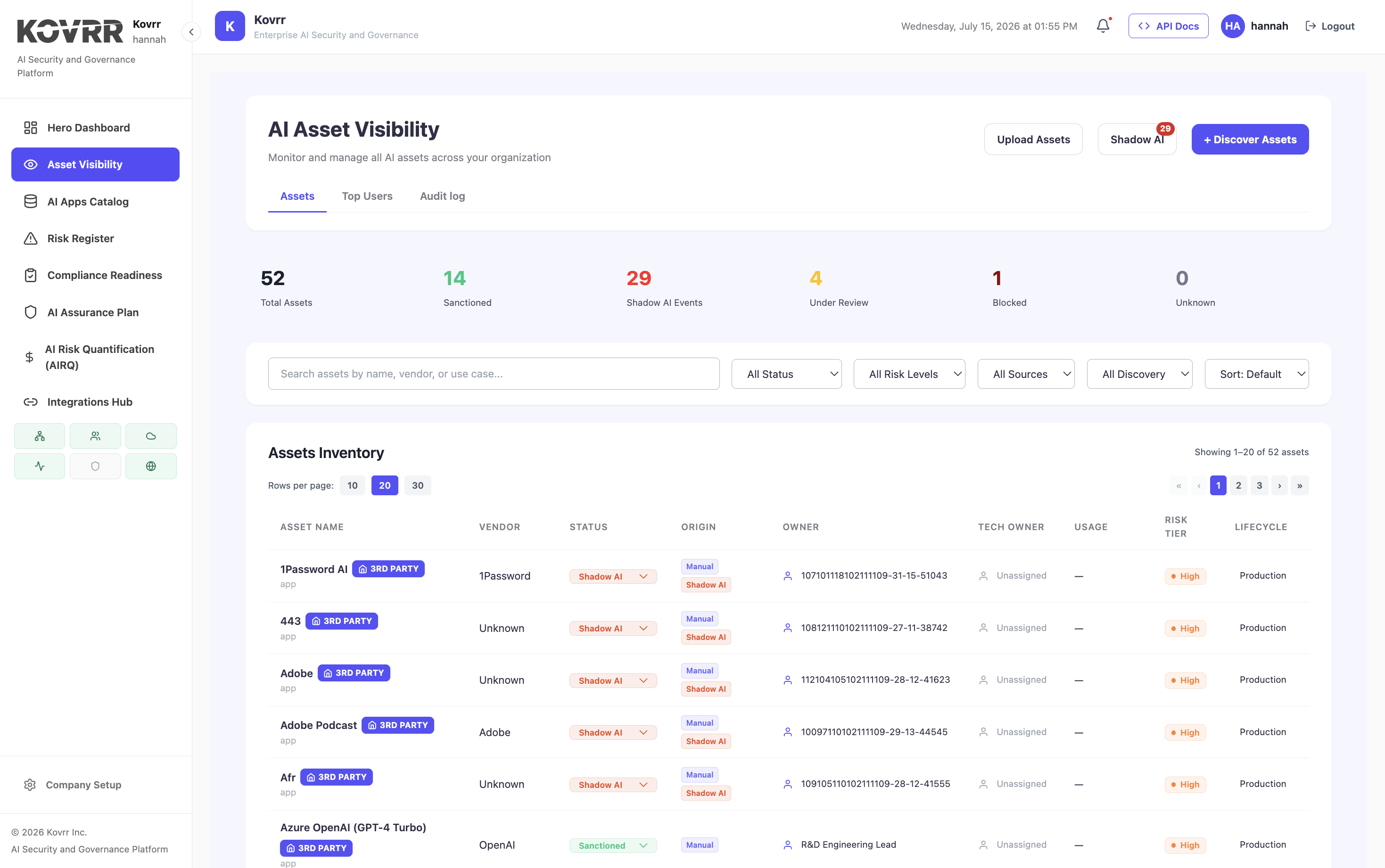
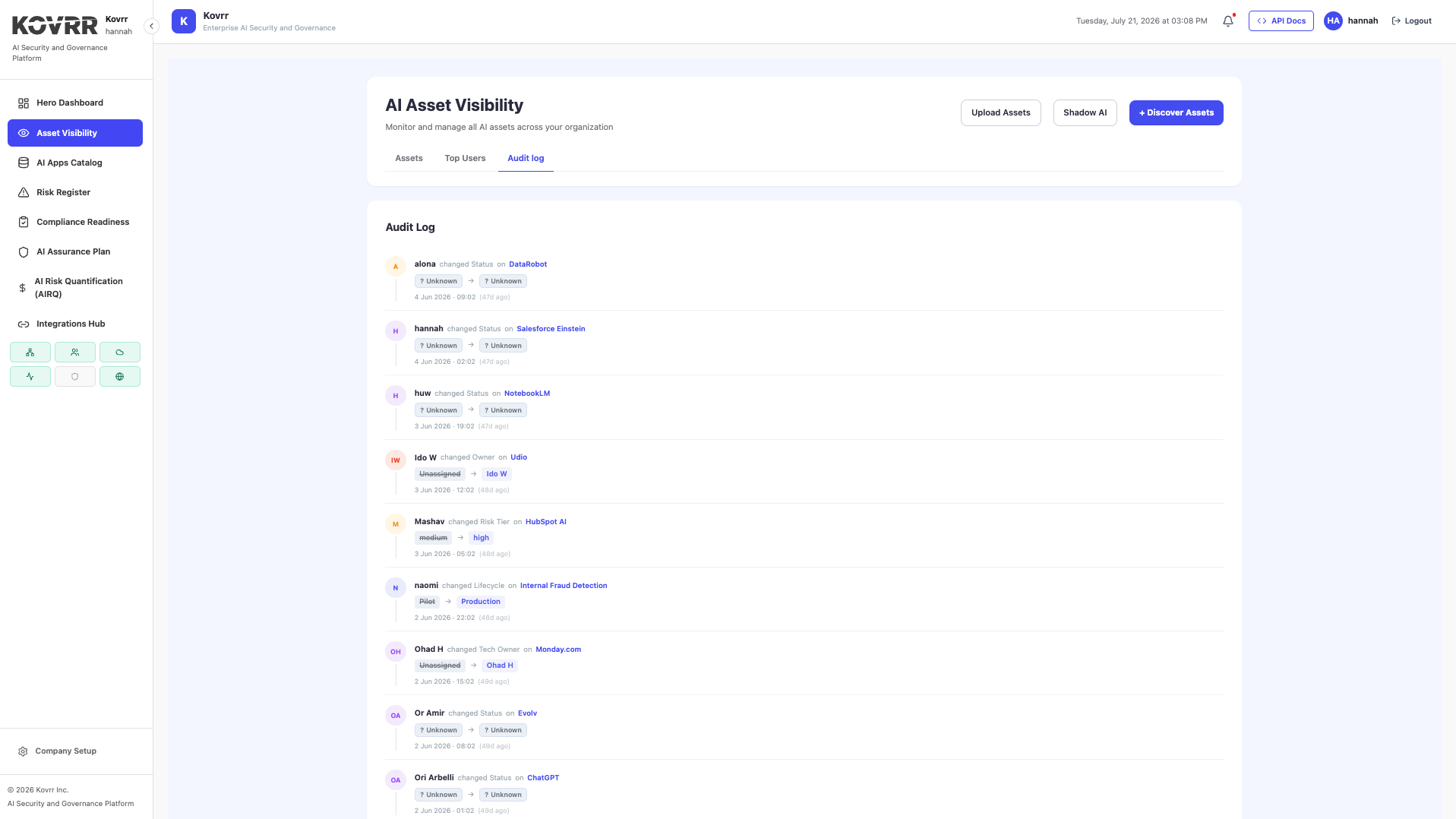
Monitoring output also feeds the register rather than sitting beside it. Monitoring without a destination produces dashboards nobody acts on, so every finding needs a record it updates. A tool whose risk tier changes because usage grew, or whose lifecycle moved from pilot to production, belongs in the AI risk register with the change recorded and dated. Auditors examine the trail rather than the current state, so the history is the evidence.
When Monitoring Should Change a Decision
Monitoring earns its cost only when findings alter something. Three triggers should route to a decision rather than a dashboard.
- Risk Tier Movement: Usage growth or a new data type pushing a tool from medium to high changes its control requirements.
- Lifecycle Promotion: A pilot entering production inherits obligations the pilot never carried.
- Ownership Drift: An asset whose named owner has left needs reassignment before the next assessment cycle.
Enforcement Follows Monitoring, Not the Reverse
Blocking a tool before understanding its use produces workarounds and destroys the telemetry that made the decision possible. Monitoring first establishes who uses what for which purpose, which turns an enforcement decision into a sanctioning decision with a named owner and an approved scope. Policy written against observed behavior survives contact with employees, and enforcing an acceptable use policy works considerably better when the policy reflects what monitoring found.
Treating the Register as a Living Record
Discovery answers a question once. Monitoring keeps the answer true, and the difference shows up the first time a vendor ships an AI feature into software nobody reassessed. A program built on periodic sweeps will find that change months late, while one built on baselines and permission review finds it the week it lands. Kovrr's AI asset visibility keeps discovery and monitoring on one inventory, so a change in behavior updates the same record an auditor reads.
To see which AI is running in your environment today and what has changed since last month, book a demo mapped to your own estate.

Shadow AI Monitoring FAQs
Speak to an ExpertWhat is shadow AI monitoring?

How is monitoring different from shadow AI discovery?
Can a sanctioned tool become shadow AI?
What signals matter most in shadow AI monitoring?
Does the EU AI Act require monitoring?
Should you block shadow AI as soon as you find it?