
Multi-Agent System
A multi-agent system is a group of AI agents that coordinate, communicate, and delegate tasks among themselves to accomplish objectives that would exceed the capacity of any single agent.
How Multi-Agent Systems Work
In a multi-agent architecture, a coordinating agent (sometimes called an orchestrator) receives an objective, decomposes it into sub-tasks, and dispatches those sub-tasks to specialized agents. Each specialized agent handles its portion, returns results to the coordinator, and the coordinator synthesizes the outputs into a final response.
The pattern is popular because it lets each agent be smaller and more focused than a monolithic system, while still handling complex objectives through collaboration.
Why Multi-Agent Systems Amplify Risk
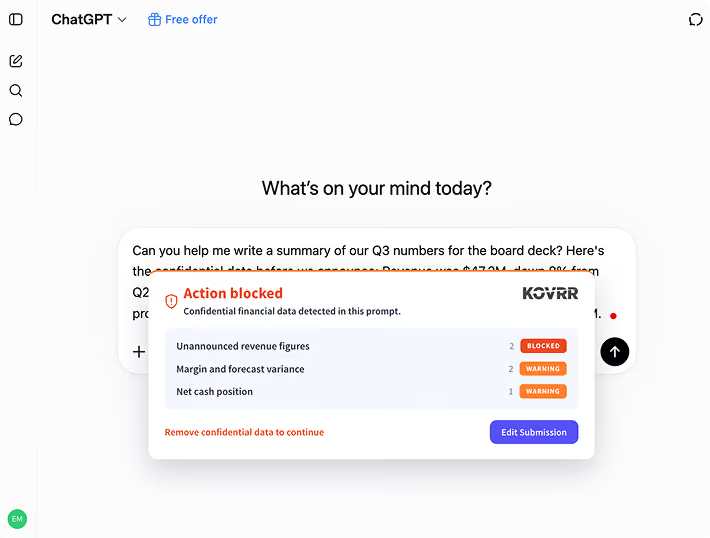
Every agent in a multi-agent system carries its own attack surface, its own permissions, and its own potential failure modes. Attacks against one agent, particularly through prompt injection or indirect prompt injection, can cascade to others. The blast radius of a compromise is the union of all connected agents' capabilities.
Multi-agent architectures also make behavior harder to reason about. When something goes wrong, tracing the failure through a chain of agent-to-agent interactions is harder than debugging a single-agent system.
Governing Multi-Agent Systems
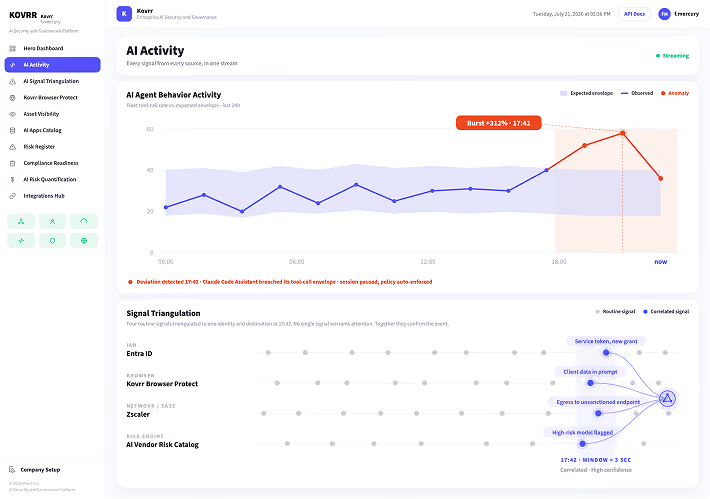
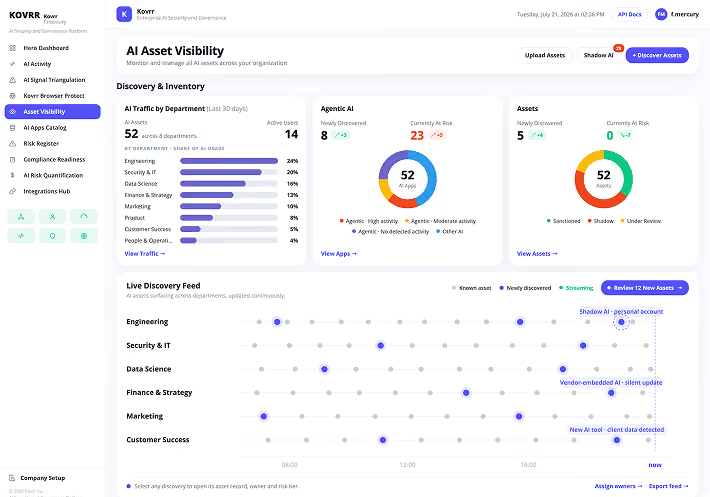
Effective governance treats each agent as a distinct asset, maps agent-to-agent communication paths in the AI asset inventory, applies scoping controls at each agent, and monitors inter-agent traffic for anomalies. See the security risks of AI agents in the enterprise.
Related Terms


Full AI Visibility. Full Control. One Connected Platform.
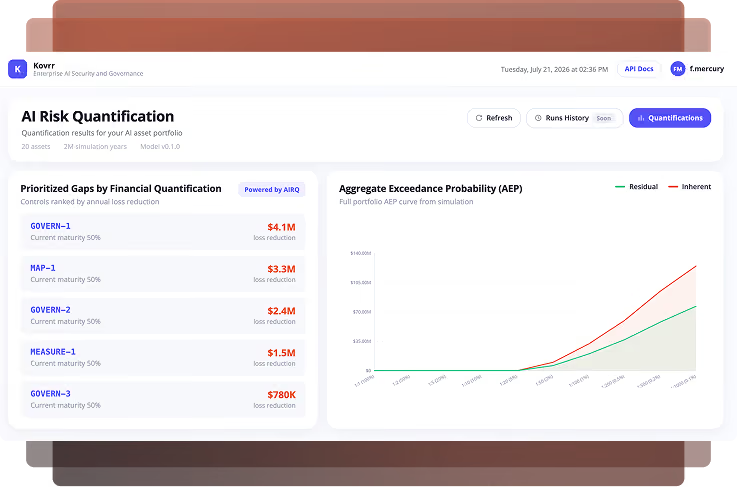
Enterprise AI is expanding faster than most governance programs can track. Kovrr connects every AI signal across browser, endpoint, network, identity, and vendor systems into a single platform so security, governance, and risk teams work from the same evidence.