



Triangulate AI Signals Into a Single View of Enterprise Exposure
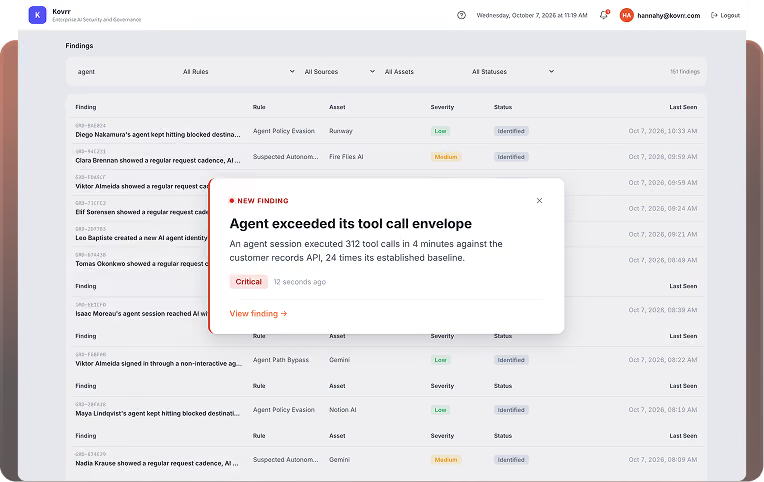
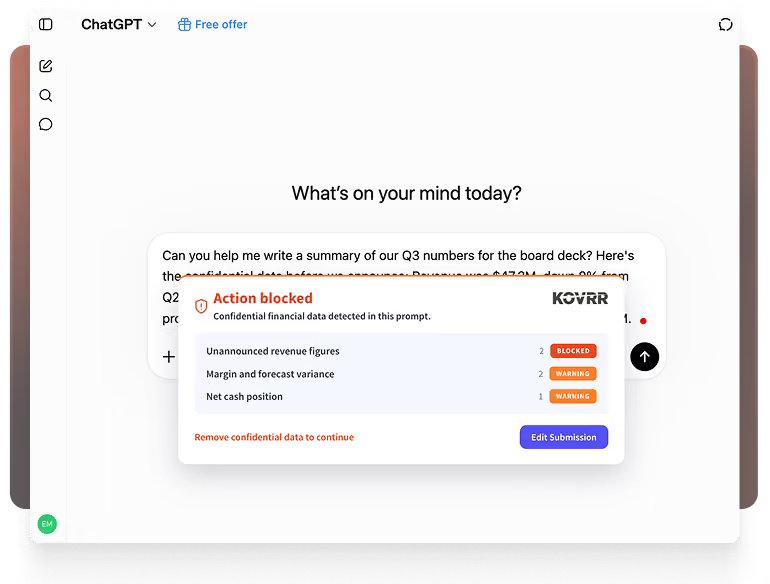
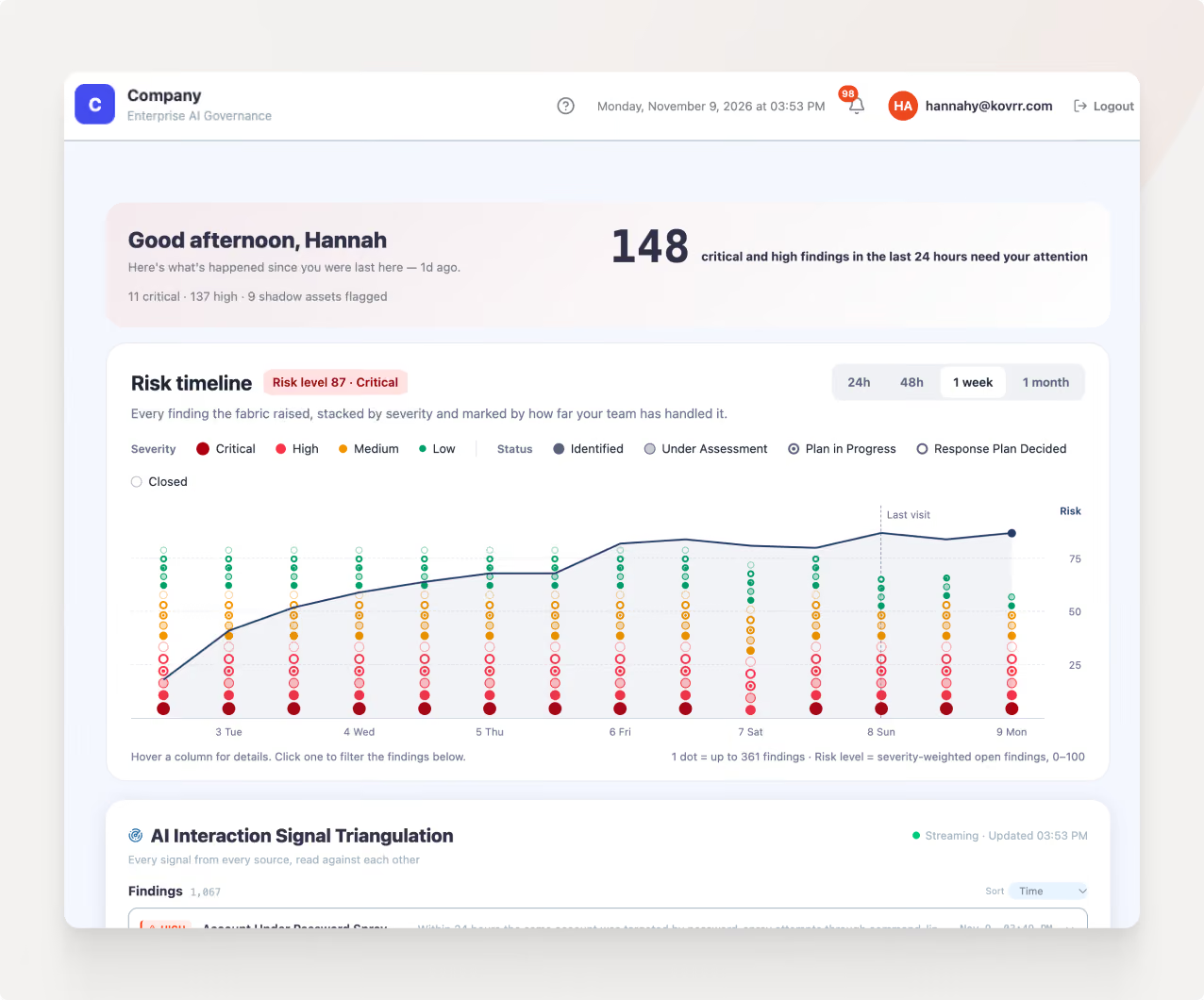
The AI Security and Governance Platform triangulates isolated telemetry from browser, identity, network and endpoint into a unified view of AI application use, compliance readiness, and autonomous agent behavior. Those findings drive runtime controls that enforce responsible AI policy the instant a rule is broken, and connect to quantified financial exposure so leadership can act on AI risk in concrete business terms.

Govern AI and Agentic Workflows on Live Evidence
Strengthen Oversight and Accountability
AI responsibilities often span multiple departments, leaving ownership and decision rights undefined. Kovrr connects AI signals from across the enterprise to give GRC teams one view of AI usage, with every interaction attributed to a named user. The platform assigns accountability and documents oversight for regulators and stakeholders, so leadership decides on evidence rather than expert judgment alone.
Gain Continuous Visibility Across AI Ecosystems
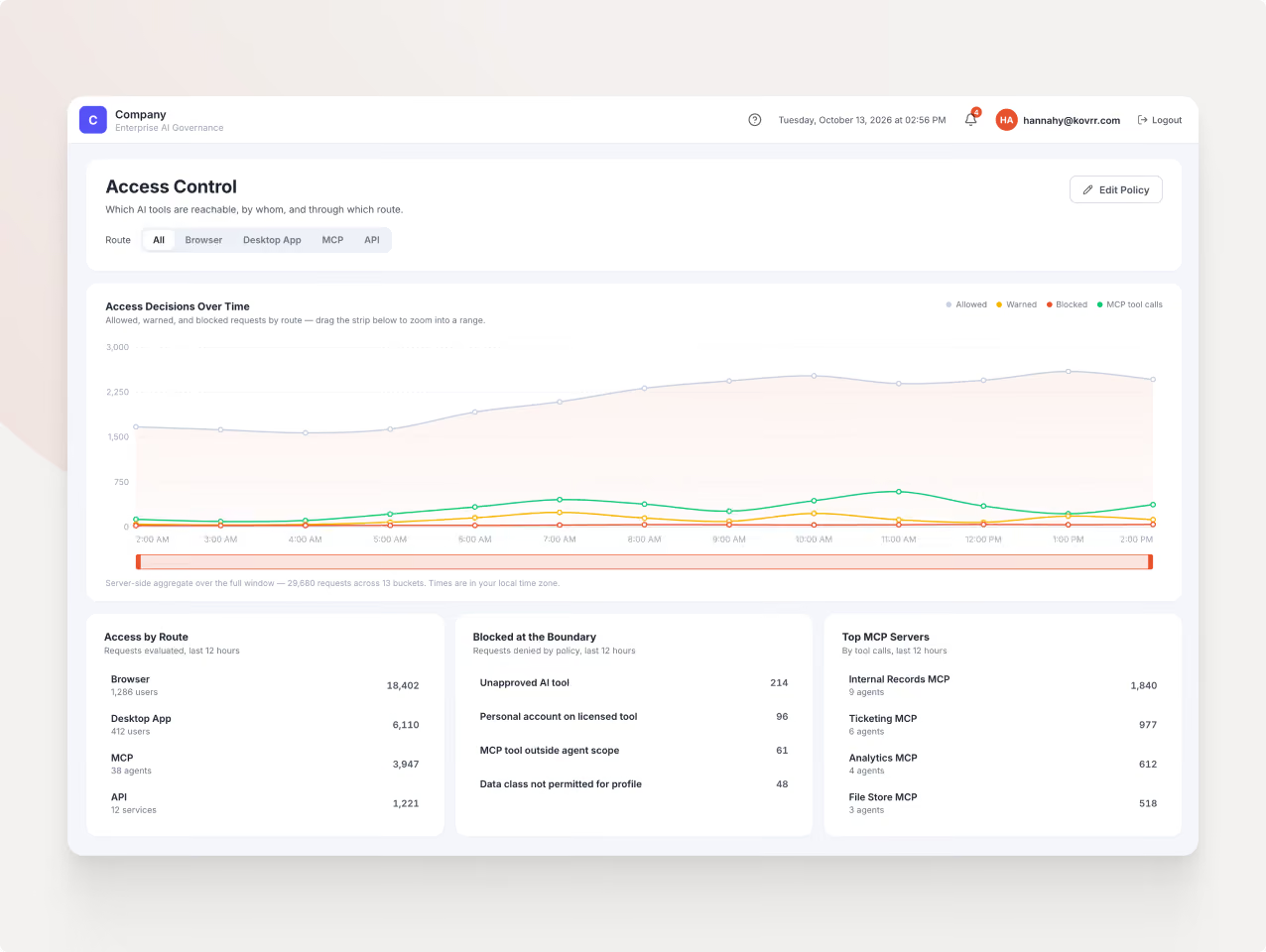
AI systems and autonomous agents change daily, outpacing compliance programs built on periodic review. Kovrr reads telemetry from browser, identity, and network as it happens, monitoring AI operations, data interactions, and safeguard performance. Runtime controls hold agentic workflows to policy, aligned to the attack classes in the OWASP Top 10 for LLM Applications, and intervene while a violation is still in progress.
Connected Across the Enterprise Security Stack
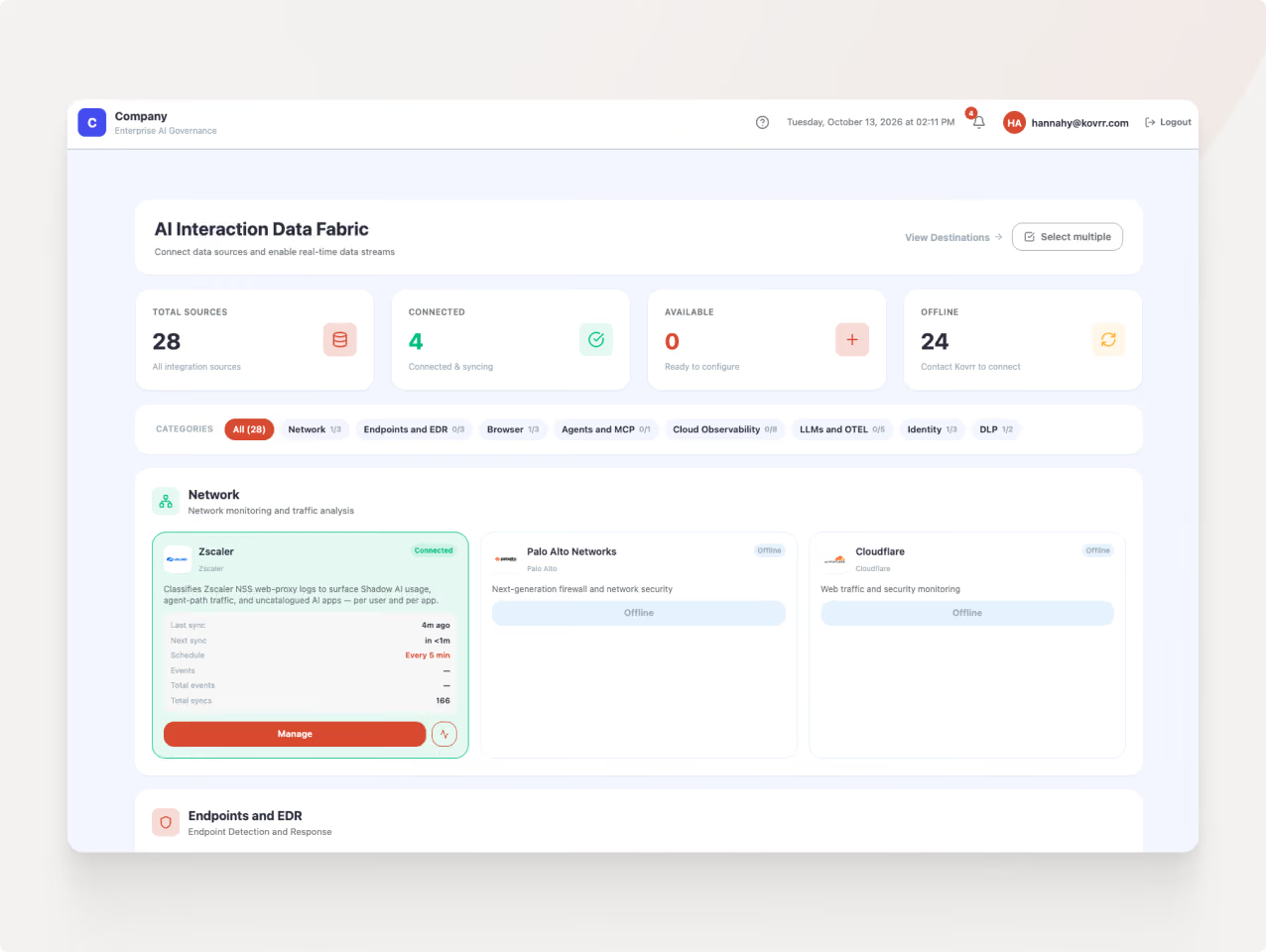
Kovrr's AI Interaction Data Fabric (AIDF) fuses your existing security stack into one finding, with no new sensor, drawing signals from network, endpoints, browser, agents and MCP, cloud, LLM streams, identity, and DLP. Each connector contributes a partial record of AI activity, and custom integrations are available through a REST API. Triangulated across eight sources, the engine produces findings that no single system holds on its own.
Prioritize AI Risk by Modeled Loss Reduction
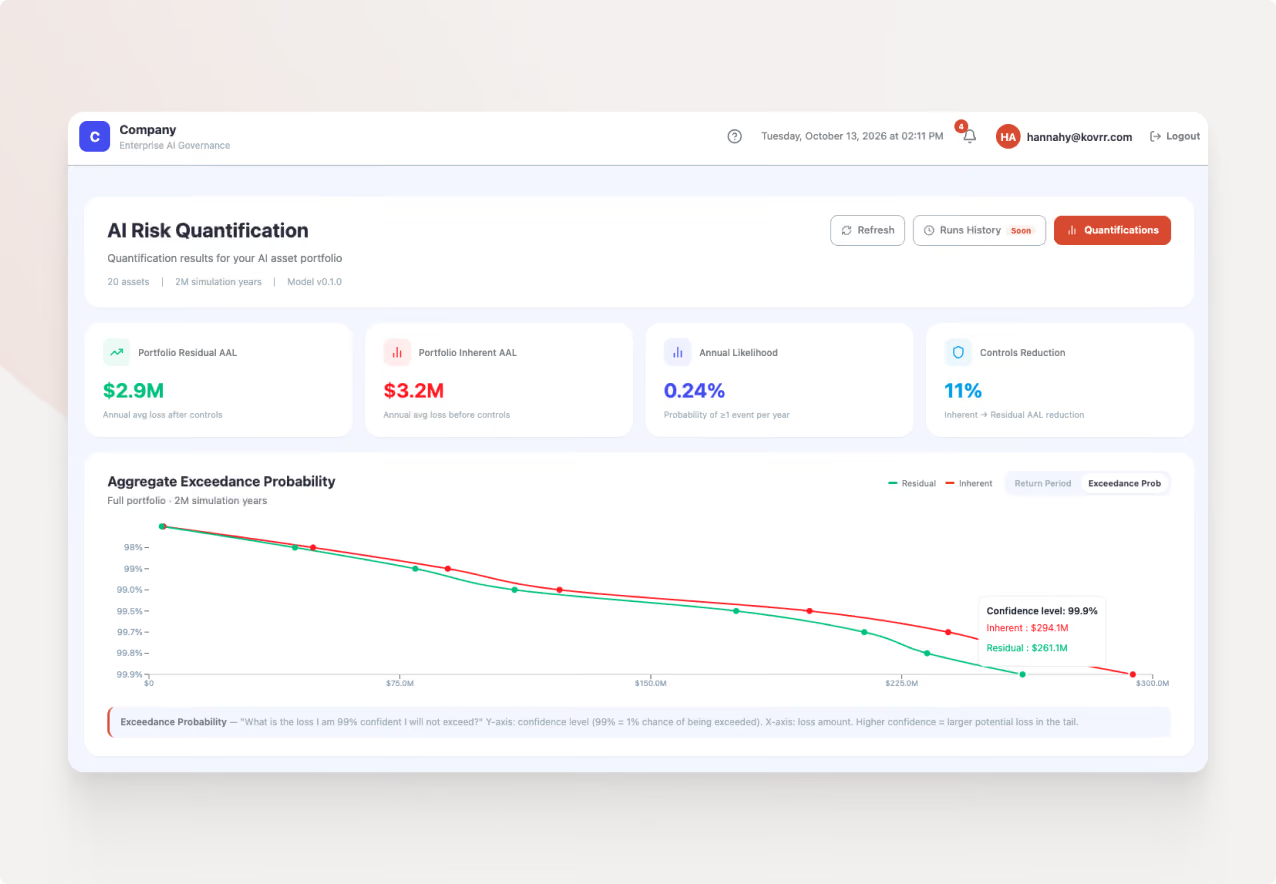
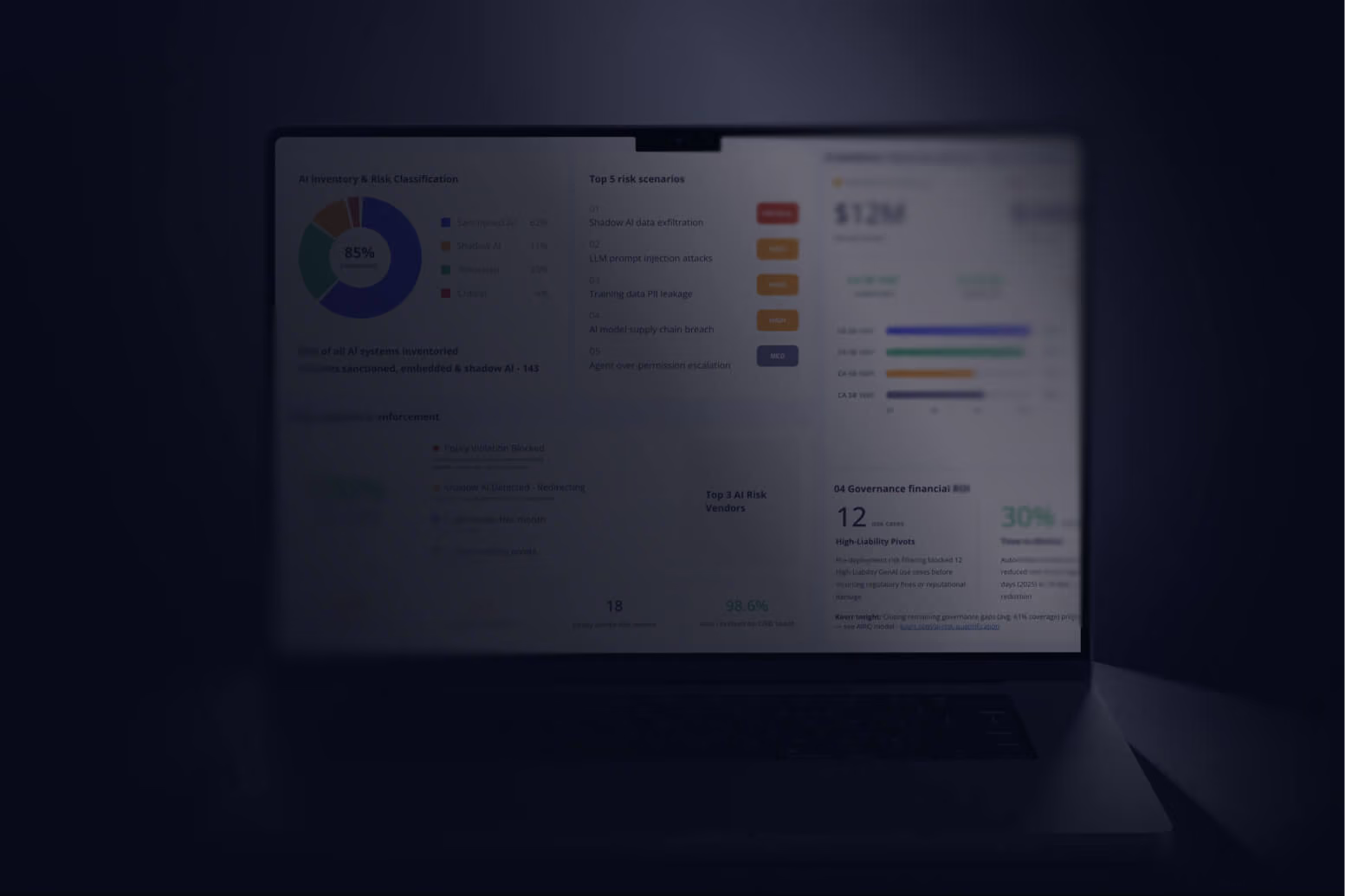
Governance gains authority when control weaknesses are ranked by consequence. Kovrr’s AI Risk Quantification (AIRQ) maps security and compliance assessments to projected loss impact across AI applications and autonomous agent workflows, so remediation goes where it removes the most exposure.
Demonstrate Regulatory Compliance and Earn Trust
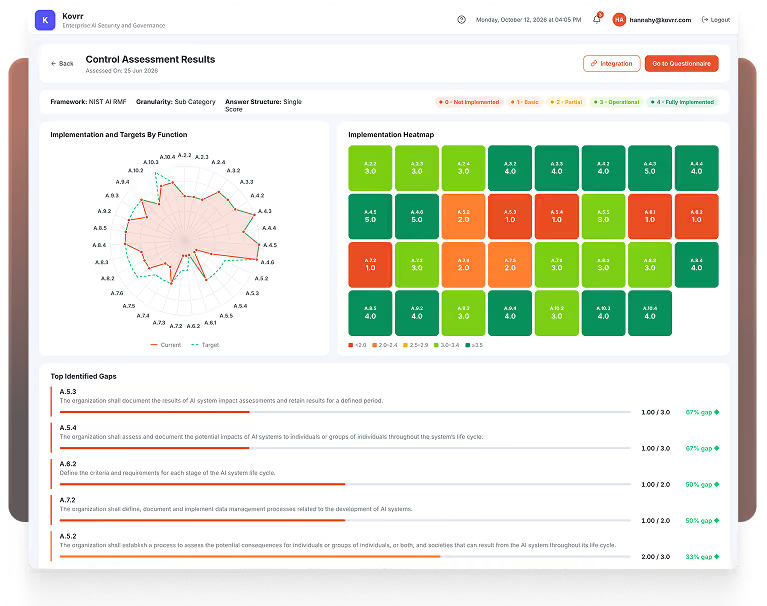
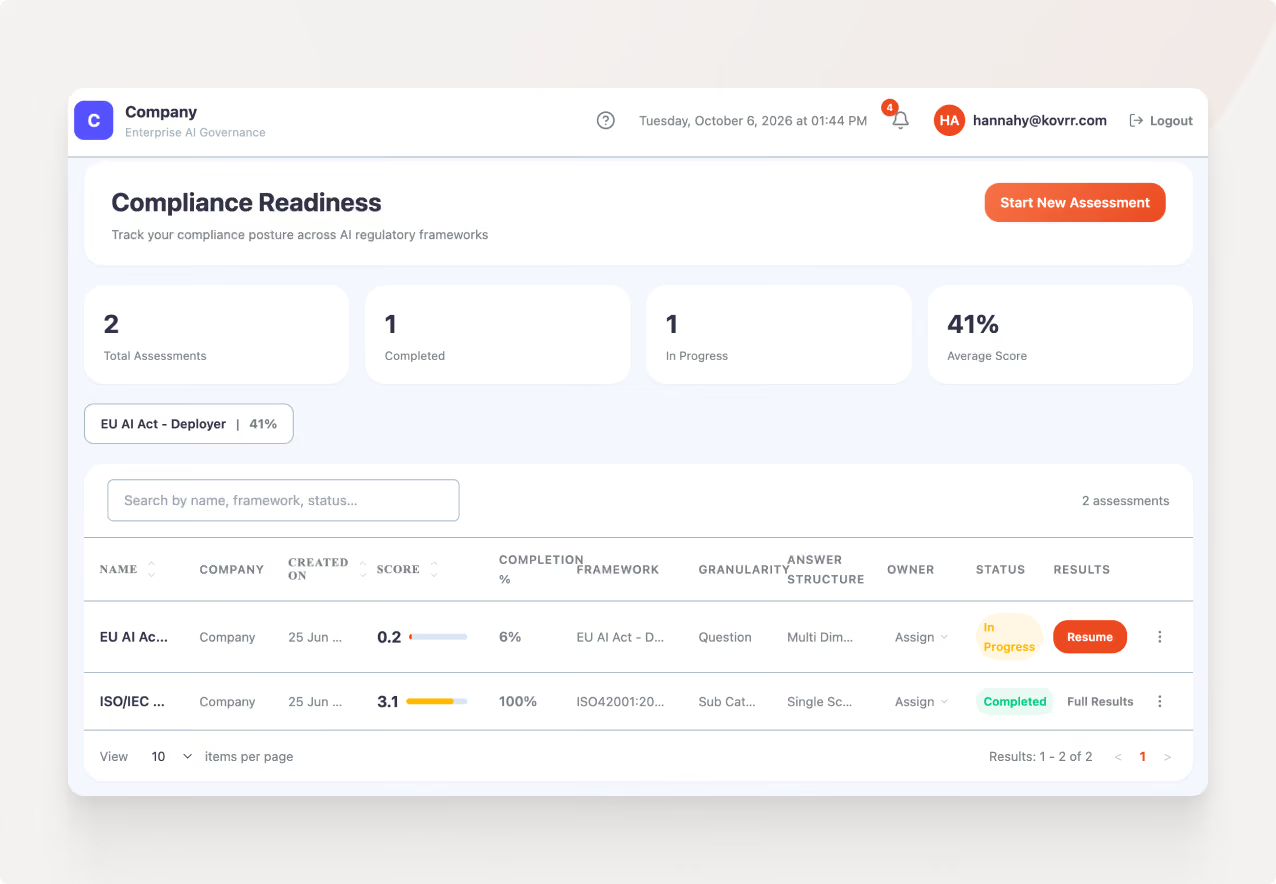
AI adoption requires verifiable evidence of responsible AI use for regulators and stakeholders. Kovrr collects that evidence continuously, maintaining a centralized audit trail and automated reporting that maps security activity to the NIST AI Risk Management Framework (AI RMF), ISO/IEC 42001, and the EU AI Act. Evidence is produced from live telemetry, so an audit request is answered from what the platform already holds.
AI Security and Governance Platform


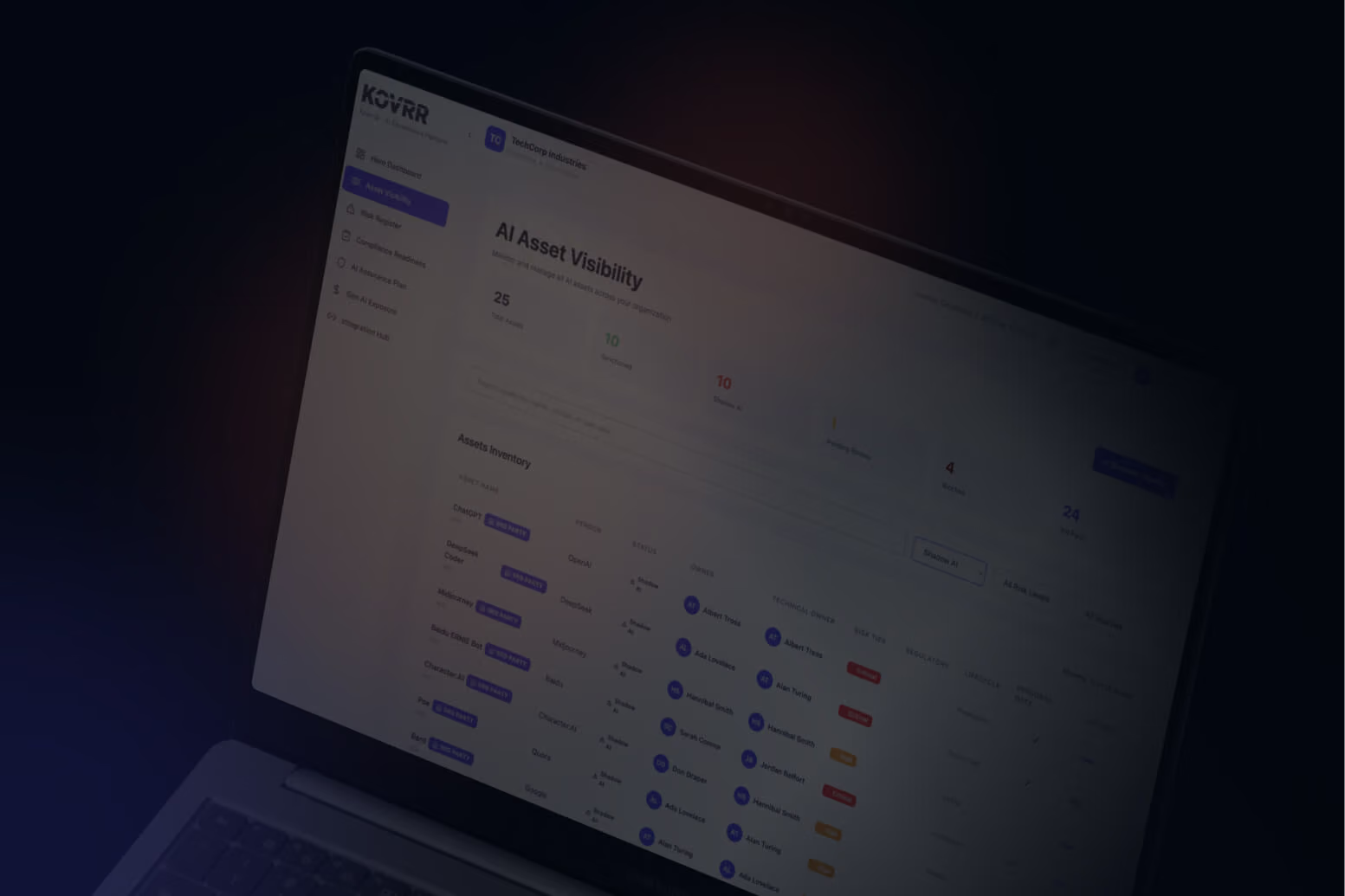
Identify every sanctioned, shadow, and embedded AI system or agent across the organization. Eliminate blind spots and track data interactions to maintain rigorous audit trails and deep visibility into how AI engages with the enterprise.
Evaluate control maturity against frameworks and regulatory expectations, such as the NIST AI RMF, including its Generative AI Profile (NIST AI 600-1). Generate precise, structured inputs for financial exposure modeling.
Translate assessment findings into financial and operational impact. Rank mitigation initiatives by modeled loss reduction and ROI, match safeguards to exposure, and build a defensible, data-backed roadmap.
Maintain oversight through runtime controls, ongoing agent security, third-party risk evaluation, and financial exposure analysis. Governance practices keep pace as the organization’s AI estate changes.



AI Security and Governance FAQs
Schedule a DemoWhat is AI security and governance?

Why is AI governance software becoming essential for enterprises?
How can organizations measure the maturity of their AI governance programs?
How can organizations measure the financial impact of AI exposure?
How does the AI Security and Governance Platform address agentic AI risk?
How does Kovrr differ from other AI security and risk platforms?
What is the difference between AI governance and AI usage control?

