
Blog Post
AI Security Posture Management: What It Covers and What It Misses
August 12, 2026
AI Security Posture Management arrived as a term before it arrived as a definition. Vendors announced products under the label through 2025 and in volume at RSA Conference 2026, each describing a somewhat different scope, and buyers now evaluate a category whose boundaries depend on who is selling. The lineage is evident, since AI-SPM follows cloud and data security posture management, and the inherited assumptions are where the difficulty starts.
What follows sets out what the term consistently covers across vendors, what the posture framing requires that most discussion omits, and the portion of enterprise AI risk that sits outside the category as currently built.
What the Term Consistently Covers
Definitions converge on four capabilities. A product describing itself as AI-SPM without these is using the label loosely.
- Discovery and Inventory: Finding managed model services and self-hosted models across cloud environments rather than relying on a register.
- Pipeline Mapping: Tracing which data reaches training, fine-tuning and retrieval augmented generation.
- Misconfiguration Detection: Over-permissioned access, exposed endpoints, unsecured keys and insecure model parameters.
Attack path analysis completes the set, connecting an exposed interface to the sensitive store it could reach so a finding carries consequence rather than existing as an isolated misconfiguration. Threat coverage for model poisoning, prompt injection, model theft and inference attacks is generally claimed too, and the depth varies considerably across products.
The Cloud Inheritance Shapes the Scope
Cloud posture management assumes assets live in an account you own and can be enumerated through an API. Data posture management assumes the same about stores. AI-SPM inherits both assumptions, which works well for a model deployed on managed infrastructure and poorly for an assistant an employee opened in a browser tab. The category is strongest where the AI resembles cloud infrastructure and weakest where it resembles software as a service. Enumerating the second kind takes a different method, and tracking AI use across business units reaches what an account scan cannot.
Posture Implies a Baseline Nobody Names
Posture is a comparative concept. A system has good posture relative to a defined target state, and continuous assessment without that target produces findings rather than a position. Most discussion of AI-SPM describes detection at length and the baseline barely at all.
Attributes Make the Baseline Testable
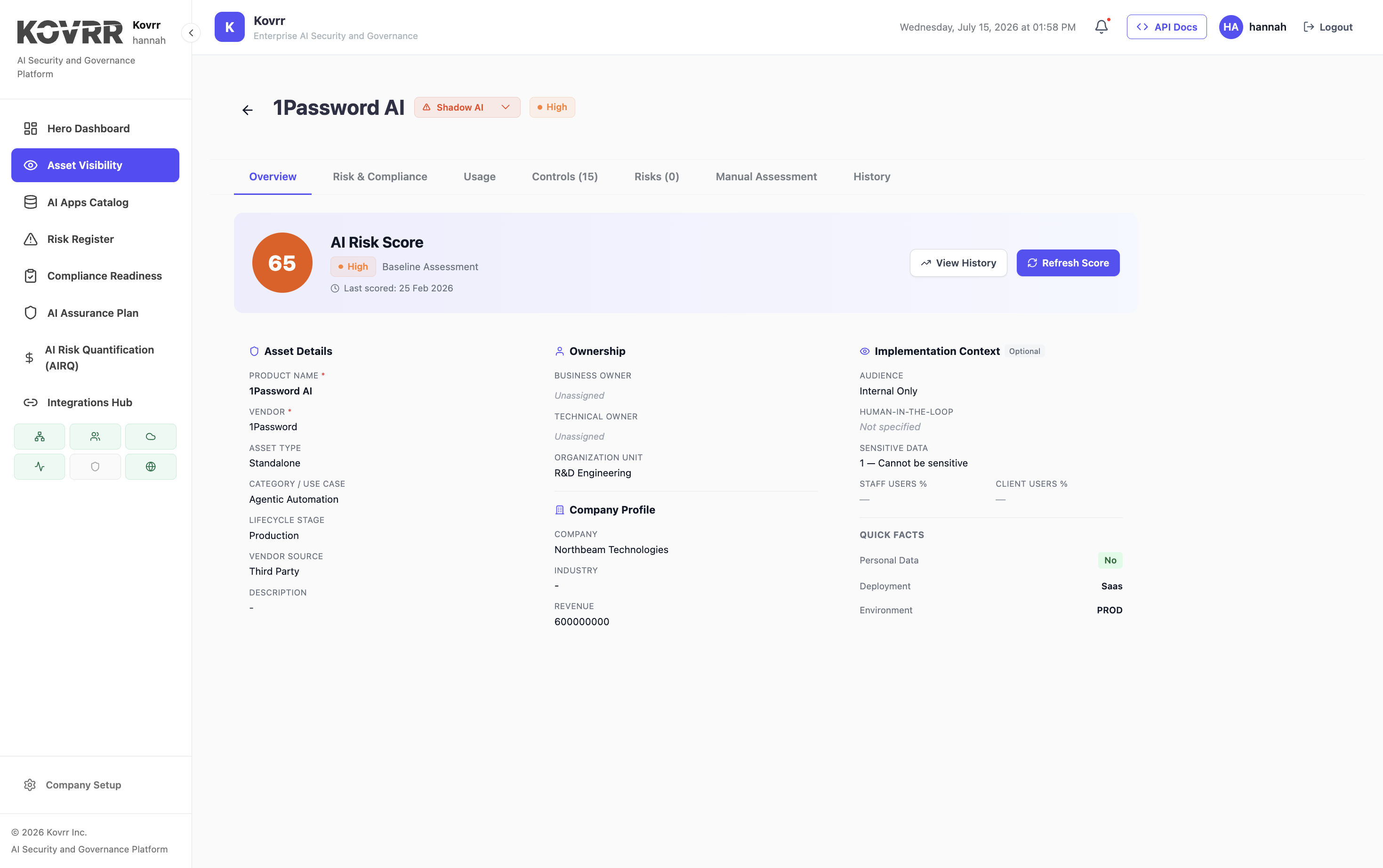
A target posture expressed as a policy statement cannot be evaluated automatically. The same target expressed as attributes can, covering whether the system handles sensitive data, whether a human reviews its output, which environment it runs in, and where it sits in its lifecycle. A production system touching regulated data with no human in the loop is a posture finding independent of any misconfiguration, and categorizing systems by attribute is what turns that into something a tool can check.
Drift Is the Signal That Matters
Configuration recorded once ages immediately, so the useful measurement is distance from the approved state rather than the state itself. A system promoted from pilot to production inherits obligations its configuration was never updated to reflect, and nothing in the environment announces the change. Continuous monitoring earns its name only where an approved baseline exists to drift from.
The Dependency Layer Belongs in Posture
AI systems inherit vulnerabilities from the frameworks and libraries underneath them, and that exposure behaves differently from a misconfiguration because it arrives without anyone changing anything. A published vulnerability in a widely used machine learning library affects every system depending on it, including systems whose configuration is entirely correct.
An AI Bill of Materials Is the Mechanism
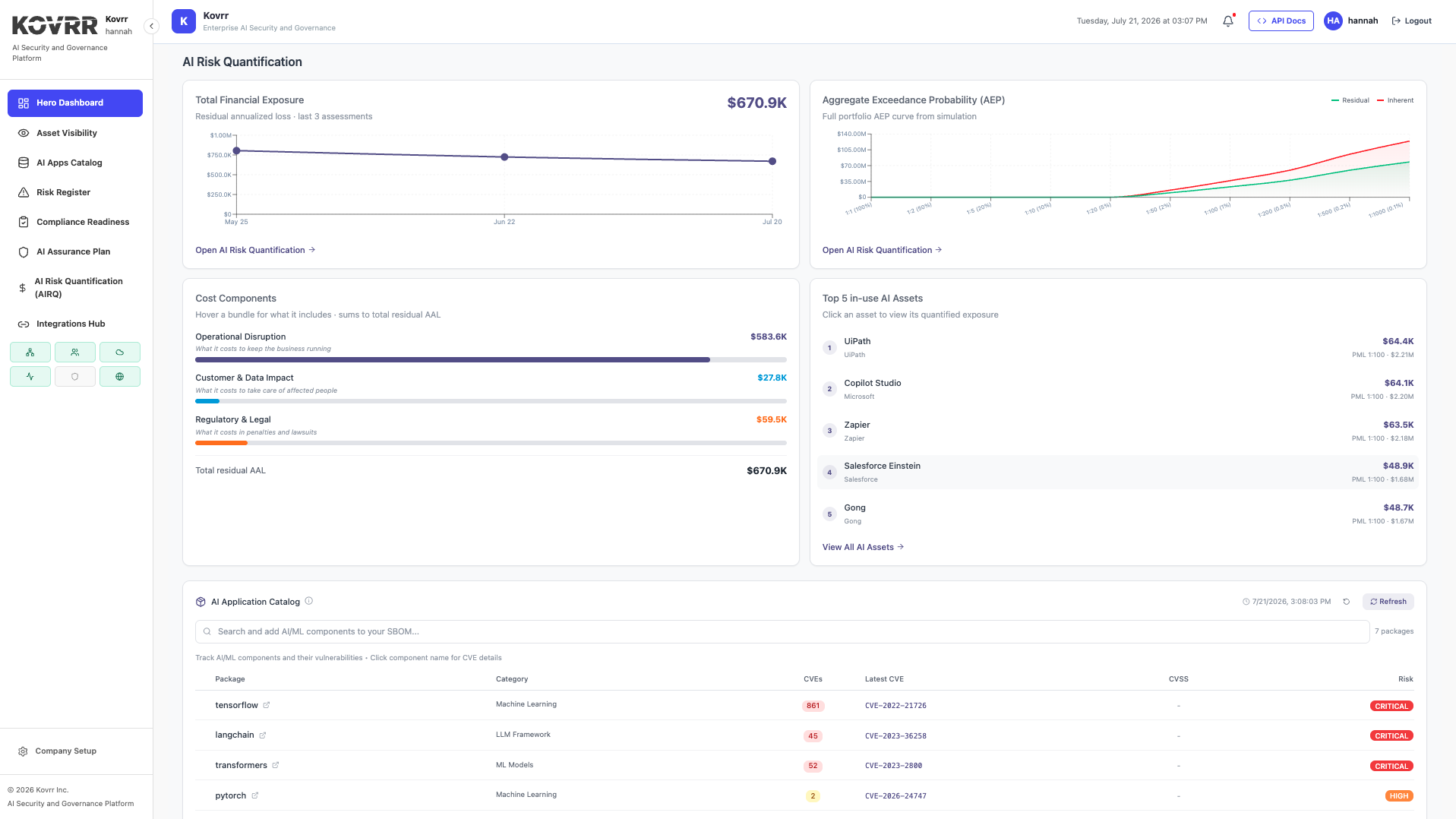
Answering which systems depend on a given library requires a recorded component inventory rather than a scan at incident time. An AI bill of materials serves that purpose, and it extends to model provenance as well as code, since a fine-tuned model carries the lineage of whatever it was derived from. Treating AI supply chain risk as part of posture rather than as a separate exercise avoids maintaining two inventories.
Where the Category Does Not Reach
Gartner has predicted that through 2026 at least eighty percent of unauthorized AI transactions will result from internal violations of enterprise policy rather than from malicious attacks. The figure is worth sitting with, because cloud-native posture management is built for the other twenty percent.
An employee using a consumer assistant in a browser generates no cloud resource, appears in no account inventory and triggers no misconfiguration finding. The activity is invisible to a product scanning managed model services, and it represents the majority of what a security team should be worried about. Understanding where shadow AI hides explains why the two views barely overlap.
Embedded Vendor AI Is Equally Invisible
A generative feature switched on inside an approved application creates no asset in any cloud account. The vendor ships it, a toggle appears, and data begins reaching a model nobody assessed. Detecting that requires watching vendor releases and browser behavior rather than cloud configuration, which is a different discipline running on a different cadence. Enforcement at that layer is a separate argument, and the browser as an enforcement point covers where it sits.
Agents Act Rather Than Sit
Posture describes a state and agents produce a sequence of actions, so a correctly configured agent can still behave in ways nobody sanctioned. Coverage here means monitoring behavior in production against a baseline of normal, and attribution to a machine identity rather than to the person who deployed it, which agent identity makes possible.
What Posture Cannot Tell You
A posture score answers how far the environment sits from its intended configuration. It does not answer what a failure would cost, which is the question that decides funding.
Two organizations with identical findings can face very different exposure depending on what their systems touch and what a failure would interrupt. Ranking remediation by severity produces ties, while ranking by expected loss produces an order, and the second is what survives a budget conversation. Programs pairing posture measurement with quantified exposure for autonomous systems get both the technical position and its consequence from one exercise.
Compliance Is a Third Question
Posture, exposure and regulatory position are three separate measurements that overlap in their evidence. A secure system can still fail an EU AI Act documentation requirement, and a compliant system can be badly configured. Treating them as one number produces a figure that answers none of the three. Tool-calling agents widen the distance further, since agents connecting to external tools create exposure that no configuration record describes. A shared control set still helps, and a structured assessment can generate all three from a shared control set.
Evaluating a Product That Claims the Label
The term's looseness makes a few direct questions more useful than a feature comparison.
- Show non-cloud AI: A browser-based assistant or an embedded vendor feature appearing in the inventory.
- Show the baseline: The approved state a finding is measured against, not just the finding.
- Show the dependency view: Which systems inherit a given library vulnerability, answered from a record rather than a scan.
Expect the category to become a feature inside broader cloud protection platforms while standalone products persist for organizations running AI at scale. Consolidation is already visible in the acquisitions merging data posture and AI governance capabilities, so a purchase made today should assume the boundary moves. Broader criteria sit in what to look for in an AI security platform.
A Useful Term With a Stated Boundary
AI-SPM describes something real. Discovering models across cloud environments, mapping what data reaches them, and detecting misconfiguration and dependency exposure is necessary work that traditional tooling handles poorly. The limitation is scope rather than quality, since the category inherited assumptions from cloud posture management that hold for infrastructure and fail for a browser tab. Kovrr's AI asset visibility covers the interaction layer alongside the infrastructure layer, and the governance platform around it carries the regulatory and financial questions posture does not answer.
To see posture, exposure and regulatory position measured against the same AI inventory, book a demo mapped to your own environment.

AI-SPM FAQs
Speak to an ExpertWhat is AI Security Posture Management?

How does AI-SPM differ from CSPM and DSPM?
What does AI-SPM not cover?
What baseline should AI posture be measured against?
Does AI posture include software dependencies?
Is a posture score enough to prioritize AI security work?